
Best overall: API-driven energy marketplaces. Best for steady high volume with locked capital: self-staked energy through TRON's native Stake 2.0. Best for small teams: Telegram-based rental. Best for rare transfers: burning TRX. That is the 2026 ranking for the best TRON energy rental services with API access, sorted by who each option fits.
- API-driven energy marketplaces win in 2026 for exchanges and payment flows that need programmatic energy.
- Self-staking through Stake 2.0 beats renting only when you can lock TRX and wait 14 days to unstake.
- Telegram and dashboard rentals suit small teams; skip them for automated, high-volume payouts.
- Burning TRX is the fallback for occasional USDT transfers, not a strategy for volume.
Why this matters in 2026
Every smart-contract call on TRON consumes energy. A USDT transfer costs roughly 65,000 energy when the recipient already holds USDT, and roughly 130,000 when the recipient does not. Without energy, the network burns TRX from the sender's balance to cover it.
If you move USDT a few times a month, that burn is a rounding error. If you run payouts, deposits or customer withdrawals all day, it is a line item. Renting energy instead of burning TRX is how operators with volume cut that cost.
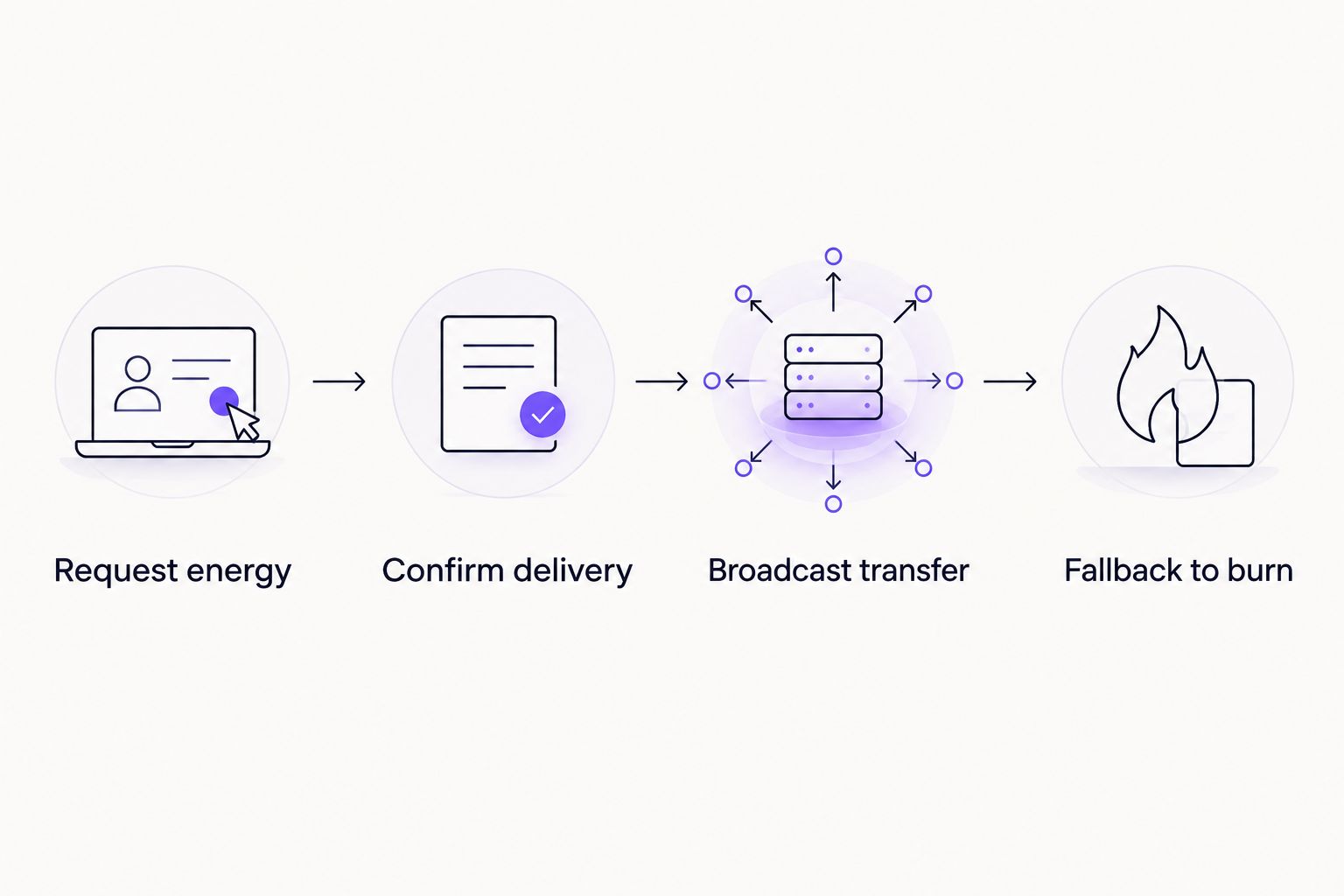
API access changes the question. A dashboard you click through is fine for one person. A system that pays out hundreds of users needs to request, confirm and top up energy without a human in the loop. This guide ranks the options on that basis.
For context on how pricing and speed compare across providers, see the ranking by delivery speed. Provider prices change often, so check live rates before you commit.
What makes the best TRON energy rental service with API access
Use these six criteria to audit the ranking below.
- Programmatic ordering. You can request energy for an address through an authenticated call, not a form.
- Delivery confirmation. The service returns a status you can check before you broadcast the transfer.
- Delegation, not custody. Energy is delegated to your address. Your keys and your TRX stay with you.
- Predictable cost model. You can see the rate before you order, and it does not change mid-request.
- Failure handling. The API returns clear errors when an order fails, so your system can retry or fall back to burning TRX.
- Operational fit. The service matches how your team works: backend job, bot, or manual dashboard.
TRON energy rental options at a glance
| Option | Best for | Standout feature | Key limitation |
|---|---|---|---|
| 1. API-driven energy marketplace | Exchanges, payment processors, payout systems | Order and confirm energy from code | Depends on a third party's uptime |
| 2. Self-staked energy (Stake 2.0) | Steady high volume with spare capital | No rental middleman; native protocol | TRX locked, 14-day unstake period |
| 3. Telegram-based energy rental | Small teams and ops staff | Order from a chat, no integration work | Weak fit for fully automated flows |
| 4. Web dashboard rental | Occasional manual top-ups | Simple, visual ordering | Manual steps do not scale |
| 5. Burning TRX (no rental) | Rare transfers | Zero setup | Costs more per transfer at volume |
1. API-driven energy marketplace: best TRON energy rental for exchanges and payout systems
An API marketplace lets your backend request energy for a specific address, then check delivery before sending the transaction. This is the closest match to the query: rental plus API access.
API marketplace pros:
- Orders happen in code, so payouts run without an operator.
- Energy is delegated to your address; your funds stay in your wallet.
- You pay for energy when you need it, with no large TRX lock-up.
- Works with the standard transfer flow: order, confirm, broadcast.
API marketplace cons:
- You depend on the provider's availability. Build a fallback to burning TRX.
- Rates vary by provider and over time, so you must monitor cost.
- Integration needs engineering time and key management.
API marketplace pricing: check the provider's live rate card; do not hard-code a rate into your system.
Best for: exchanges, payment processors and any team running automated USDT payouts. If you are in that group, read the guide to energy providers for crypto exchanges.
Verdict: Buy.
2. Self-staked energy through Stake 2.0: best for steady volume with spare capital
TRON's native Stake 2.0 lets you freeze TRX for energy and, if you want, delegate that energy to other addresses. No rental middleman is involved.
Self-staking pros:
- Native protocol feature; you control it end to end.
- Delegation to your own sub-addresses is supported, which suits wallets split by function.
- Energy regenerates over a 24-hour window, so steady usage keeps a pool replenished.
- No third-party uptime risk.
Self-staking cons:
- Your TRX is locked. Unstaking takes 14 days.
- You need enough capital staked to cover peak volume.
- Under-sizing the stake means falling back to burn costs on busy days.
Self-staking pricing: no rental fee; the cost is the capital you lock.
Best for: operators with predictable, high daily volume and TRX they can park.
Verdict: Hold. Strong for steady flows, wrong for spiky ones. Combine it with an API marketplace to cover peaks.
3. Telegram-based energy rental: best for small teams and ops staff
Some providers take orders through a Telegram bot. You message the bot with an address, pay, and receive delegated energy.
Telegram rental pros:
- Ordering happens where many crypto teams already work.
- No integration project; an ops person can run it.
- Fast to start for a small business.
Telegram rental cons:
- Chat-based ordering is awkward to automate.
- Quality varies by bot. Verify the operator before sending funds.
- Hard to audit at volume without extra tooling.
Telegram rental pricing: varies by bot; check the live rate in the chat.
Best for: small teams doing moderate transfer volume with a human in the loop. See the small business rental guide for that profile.
This is also where operations tooling matters. Nbtrx builds Telegram business operations tools, covering member operations, partner workflow and customer operations. A team that already runs its day in Telegram benefits from keeping energy orders in a trackable workflow rather than scattered across chats. Nbtrx provides no guarantee of business results, and this guide does not claim Nbtrx supplies energy.
Verdict: Hold. Good starter, weak ceiling.
4. Web dashboard rental: best for occasional manual top-ups
A dashboard lets you paste an address, pick an amount and pay. It is the simplest way to rent energy for a one-off batch.
Dashboard pros:
- Clear, visual ordering.
- Nothing to build or maintain.
- Easy to hand to a non-technical teammate.
Dashboard cons:
- Manual steps break at volume.
- No API means no automation and no programmatic fallback.
- Easy to forget a top-up before a payout run.
Dashboard pricing: see the provider's live rates.
Best for: individuals and small teams with irregular transfers.
Verdict: Skip if you need API access. It is on this list because many buyers start here.
5. Burning TRX: best for rare transfers
If your address has no energy, the network burns TRX to pay for the call. No setup, no account.
Burning TRX pros:
- Works instantly with nothing configured.
- Useful as the automatic fallback when a rental order fails.
Burning TRX cons:
- At volume it costs more than renting or staking energy.
- Costs rise when recipients are new addresses, since the transfer needs roughly 130,000 energy instead of roughly 65,000.
Best for: occasional users and as a safety net inside an automated system.
Verdict: Skip as a primary strategy. Keep it as the fallback.
How these options were ranked
The ranking follows the six criteria above. API ordering, delivery confirmation and failure handling carried the most weight, because the query asks for API access. Capital efficiency and ops fit broke ties. No option wins on every dimension, so the list reads as a decision tree, not a leaderboard.
How to build a reliable energy flow in 2026
Most production setups combine two options. Stake a base amount for predictable daily volume, rent through an API for peaks, and let burning TRX catch failures.
- Check before you send. Confirm the target address has enough energy before broadcasting.
- Size for new recipients. Budget for roughly 130,000 energy on first-time USDT recipients.
- Cap retries. If a rental order fails twice, burn TRX and log it.
- Log every order. You need an audit trail of what was ordered, delivered and spent.
If your payouts are USDT-heavy, the USDT transfer rental guide covers that pattern. For cost comparison across providers, use the price ranking.
Run Telegram operations cleanly
Practical Telegram business tools for member and partner workflow.
Which TRON energy rental service should you choose?
Pick an API-driven energy marketplace if you run automated payouts or exchange flows in 2026. Add staking for your base load and burning TRX as the fallback.
Pick Telegram or dashboard rental only if a person handles each order. Pick self-staking alone only if your volume is steady and you can lock TRX for the 14-day unstake period.
FAQ
What is the best TRON energy rental service with API access?
An API-driven energy marketplace is the best fit for automated payouts in 2026. It lets your backend order and confirm energy before broadcasting each transfer.
How much energy does a USDT transfer on TRON need?
A USDT transfer needs roughly 65,000 energy when the recipient already holds USDT. It needs roughly 130,000 when the recipient has no USDT yet.
Is renting energy better than burning TRX?
Renting is better at volume. Burning TRX is simpler for rare transfers and works as the fallback when a rental order fails.
Is staking TRX better than renting energy?
Staking is better for steady, predictable volume if you can lock capital. Unstaking under Stake 2.0 takes 14 days, so it handles spikes poorly.
Does rented energy give the provider access to my funds?
No. Energy is delegated to your address, so your TRX and keys stay in your wallet.
Can I rent TRON energy through Telegram?
Yes. Some providers take orders through Telegram bots. They suit small teams but are hard to automate, so verify the operator first.
How fast does energy regenerate on TRON?
Energy regenerates over a 24-hour window, so a staked or delegated pool refills steadily as you use it.
One last thing
The cost spike most teams miss is the new-recipient case. A payout batch to first-time USDT holders needs roughly double the energy of a batch to existing holders. Size your energy order from the recipient mix, not the average transfer.