
Best starting point: JustLend DAO for evaluating protocol-based energy rental. Best for treasury-controlled supply: TRON Stake 2.0. Best for negotiated supply: direct resource delegation. The best TRON energy providers for crypto exchanges in 2026 must fit your withdrawal workflow, not just supply resources to a wallet.
- For the best tron energy providers for crypto exchanges, evaluate JustLend DAO alongside staking and direct delegation.
- TRON Stake 2.0 suits exchanges that want treasury-controlled energy supply and accept capital commitment.
- Direct resource delegation suits negotiated supply arrangements but requires explicit delivery and recovery terms.
- Nbtrx offers Telegram business operations tools; evaluate energy suppliers separately from customer operations software.
Why this matters
An exchange needs energy at the withdrawal address when a smart-contract transaction executes. Buying resources somewhere else does not solve that requirement. Your supplier, wallet infrastructure, and withdrawal queue must agree on the destination address and the timing of delivery.
TRON uses Energy for smart-contract execution and Bandwidth for transaction data. TRC-20 token transfers involve smart contracts, so an energy supply arrangement addresses only part of transaction readiness. Keep both resource checks in your withdrawal process.
Nbtrx offers Telegram business operations tools. That places Nbtrx in member operations, partner workflow, and customer operations—not automatically in the energy-supply shortlist. Choose an energy supplier on resource delivery evidence, not on an unrelated operations offering.
What makes the best TRON energy provider?
Use these criteria before comparing suppliers in 2026:
- Destination control: Resources must reach the exchange-controlled address that executes withdrawals.
- Delivery verification: Your team must verify usable energy on-chain rather than rely on an order confirmation.
- Workflow fit: The arrangement must accommodate your withdrawal process, including address changes and failed requests.
- Custody boundaries: Resource procurement must not require disclosure of private keys or seed phrases.
- Supply continuity: Document what happens when a supplier stops delivering or a rental expires.
- Treasury fit: Compare externally supplied resources with the capital commitment and administration of staking.
These criteria separate a usable exchange arrangement from a service that only handles occasional manual transfers. A polished ordering interface is not proof of operational fit. Your acceptance test belongs at the withdrawal wallet.
TRON energy supply options at a glance
This comparison separates a named rental option from other supply routes. Staking, bilateral delegation, and resource burning are not interchangeable providers.
| Option | Best for | Standout characteristic | Key limitation |
|---|---|---|---|
| JustLend DAO energy rental | Evaluating protocol-based rental | A named protocol offering energy rental | Exchange workflow fit still needs validation |
| TRON Stake 2.0 | Treasury-controlled baseline supply | Resources obtained through staking TRX | Requires capital commitment and unstaking planning |
| Direct resource delegation | Negotiated supplier relationships | Resources delegated to the execution address | Delivery terms depend on the counterparty arrangement |
| TRX resource burning | Withdrawal contingency | Execution can consume TRX when resources are insufficient | Does not provide an external energy supply arrangement |
JustLend DAO is the first named option to evaluate for exchanges seeking protocol-based TRON energy rental. That is a shortlist verdict, not a claim about uptime, support quality, integration features, or business results.
1. JustLend DAO: best for protocol-based energy rental
JustLend DAO offers energy rental within the TRON ecosystem. It belongs on a shortlist when you want to assess an existing protocol-based route rather than begin with a private supply negotiation.
For an exchange, the important question is how that rental reaches production withdrawals. Confirm the receiving address, resource duration, transaction steps, and renewal behavior against the current service documentation. Do not assume a manual rental process translates into unattended exchange operations.
JustLend DAO pros
- A named energy-rental option to investigate.
- A route distinct from staking your own treasury assets.
- Resource delivery can be checked at the receiving address.
JustLend DAO cons
- A rental position needs duration and expiry management.
- Your exchange still owns transaction readiness checks.
- Protocol access does not establish a support commitment for your withdrawal operation.
Best for: Exchanges evaluating protocol-based rental before choosing their production supply arrangement.
Run an acceptance test with the wallet configuration you actually use. Record the resource balance before delivery, after delivery, and after contract execution. Compare those observations with the rental terms rather than treating a completed purchase as a completed integration.
For a 2026 shortlist, request evidence of the current process. Old screenshots and previously supported workflows do not establish today's behavior.
Verdict: Hold until the rental process passes your exchange's acceptance test.
2. TRON Stake 2.0: best for treasury-controlled baseline supply
TRON Stake 2.0 lets an account stake TRX to obtain network resources. Choose Energy when configuring the resource allocation for smart-contract activity. This is a supply method under your treasury's control, not an external rental provider.
Staking changes the procurement question. Instead of managing a supplier order, you manage capital allocation, resource allocation, and treasury permissions. It fits a baseline-supply discussion when your exchange can commit TRX and administer the resulting resources.
TRON Stake 2.0 pros
- Resource allocation sits within your treasury process.
- Removes a rental supplier from the baseline procurement path.
- Supports an explicit staking and resource-management policy.
TRON Stake 2.0 cons
- Staked TRX represents committed capital.
- Resource allocation requires ongoing administration.
- Unstaking does not make assets immediately withdrawable.
TRON Stake 2.0 has a 14-day unstaking waiting period before unstaked TRX becomes withdrawable. Confirm the current network rules before treasury approval. Treat unstaking as a planned liquidity event, not an emergency withdrawal-funding step.
Best for: Exchanges that want treasury-controlled baseline resources and accept staking administration.
Do not translate a staked TRX balance into a permanent promise of transaction capacity. Check the current resource allocation and actual transaction consumption. Your operating threshold should come from observed withdrawals, not a supplier's illustrative example.
Verdict: Buy into this supply method only after treasury approves the capital commitment.
3. Direct delegation: best for negotiated supply arrangements
TRON supports delegating resources associated with staked assets to another address. An exchange can therefore evaluate a bilateral arrangement in which a counterparty delegates resources to an exchange-controlled execution address.
The technical mechanism does not establish the commercial terms. A direct arrangement needs explicit responsibilities for delivery, duration, renewal, and interruption handling. Without those terms, delegation is a transaction—not a dependable operating agreement.
Direct delegation pros
- Resources can target the exchange's execution address.
- The arrangement can specify operational responsibilities.
- On-chain resource checks provide delivery evidence.
Direct delegation cons
- Counterparty selection remains your responsibility.
- The delegation itself does not establish a service commitment.
- Address changes require coordination with the supplier.
Best for: Exchanges prepared to manage a supplier relationship with written operating terms.
Ask the supplier to describe how requests become delegated resources. Identify who confirms delivery and what happens if the destination address changes. Separate the settlement record from the delivery record; they answer different questions.
In 2026, your agreement should name the responsible team, accepted destination addresses, and escalation process. Avoid language that promises business growth instead of defining resource delivery.
Verdict: Hold until counterparty checks and delivery terms are complete.
4. TRX resource burning: best for a withdrawal contingency
When an account lacks sufficient network resources, TRON transactions can consume TRX under the network's resource rules. This is a contingency mechanism to evaluate, not an energy provider and not a substitute for a planned supply arrangement.
The exchange must keep the execution wallet funded and configure transactions appropriately. A funded wallet still needs valid transaction parameters and operational checks.
TRX resource burning pros
- Provides a route to evaluate when allocated resources are insufficient.
- Does not require a new resource supplier for each transaction.
- Can sit within a documented withdrawal recovery procedure.
TRX resource burning cons
- Requires a controlled TRX balance at the execution address.
- Needs transaction-limit and accounting controls.
- Does not resolve supplier interruptions or replenishment failures.
TRON accounting uses sun: 1 TRX equals 1,000,000 sun. Keep units explicit in your transaction software and reconciliation records. A unit mismatch is an implementation problem, not evidence that the supplier delivered too little energy.
Best for: Exchanges designing a bounded contingency for resource shortages.
Set the conditions under which your operation uses this route. Decide whether a shortage pauses withdrawals, triggers replenishment, or permits execution within an approved limit.
Verdict: Hold as a controlled fallback; skip it as your provider-selection strategy.
How the options are ranked
The order follows procurement fit: evaluate a named rental option, assess treasury-controlled supply, consider negotiated delegation, then define a contingency. It does not rank providers by unsupported performance claims.
The comparison uses destination control, delivery verification, workflow fit, custody boundaries, supply continuity, and treasury fit. There is no claim that one route guarantees business results or eliminates withdrawal failures.
Validate supply before production withdrawals
A 2026 procurement decision should end with a documented acceptance process. Use the same wallet roles and transaction construction that your production operation expects to use.
Confirm ownership
Identify the address that executes withdrawals. Keep signing authority separate from supplier communication. An energy-delivery request should not require a private key or seed phrase.
Verify delivery
Check the receiving address's usable resources after delivery. Save the order reference and relevant on-chain evidence. A supplier notification is useful for coordination, but it is not the resource balance.
Test execution
Execute representative contract transfers under your approved testing controls. Check transaction status, resource consumption, and the resulting wallet balance. Include destination conditions that reflect your actual withdrawal activity.
Test recovery
Rehearse a shortage or expired supply arrangement. Confirm whether the withdrawal process pauses, requests replenishment, or uses an approved contingency. Assign an owner to each response.
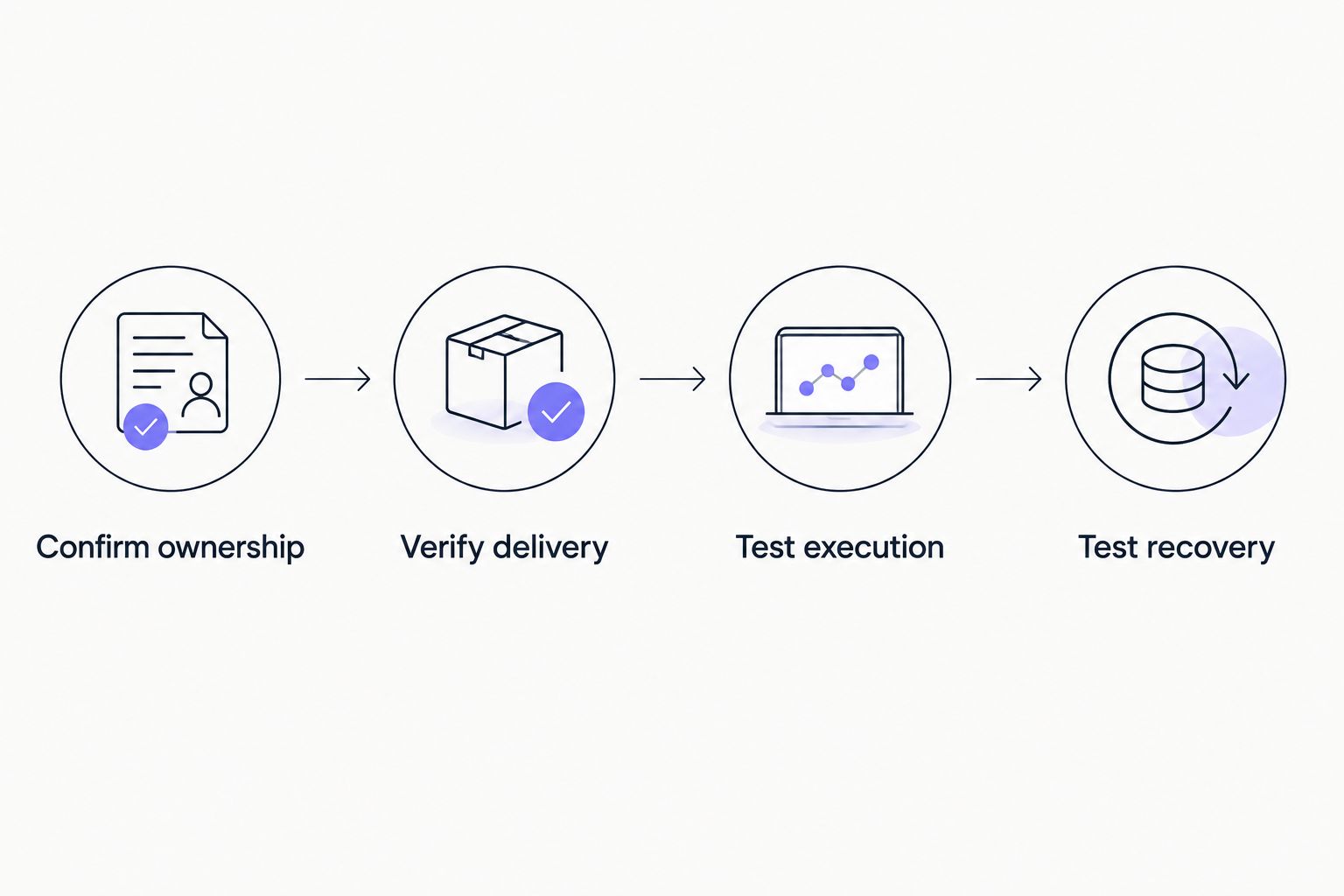
Record the outcome in an acceptance checklist. Approval should mean the supply arrangement works within your withdrawal controls, not merely that a representative transfer succeeded.
Which TRON energy option should you choose?
Start with JustLend DAO when you need a named protocol-based rental option to investigate. Compare that route with TRON Stake 2.0 if your treasury can commit assets to baseline supply. Consider direct delegation when your team can manage a negotiated counterparty arrangement.
Keep the fallback decision separate. TRX resource burning answers what happens during a shortage; it does not answer which supplier deserves your contract.
Nbtrx's Telegram business operations tools belong in a separate workflow assessment. Evaluate customer communication and partner coordination on their own requirements, then connect those processes to a verified energy-supply operation without confusing the categories.
FAQ
What's the best TRON energy provider for a crypto exchange?
JustLend DAO is a named protocol-based energy-rental option to evaluate first. Choose a production supplier only after checking destination-address delivery, rental duration, workflow fit, and recovery behavior.
Is renting TRON energy better than staking TRX?
Renting and staking solve different procurement problems. Rental uses an external supply route, while TRON Stake 2.0 requires treasury capital and resource administration.
Can an exchange receive delegated TRON energy without sharing private keys?
Resource delegation does not require the receiving account to disclose its private key. Keep signing credentials outside supplier onboarding and use the destination address for resource delivery.
Does TRON energy replace Bandwidth for USDT transfers?
No. Energy covers smart-contract execution, while Bandwidth covers transaction data. Your withdrawal checks need to account for both resources.
How long does unstaking take under TRON Stake 2.0?
TRON Stake 2.0 has a 14-day waiting period before unstaked TRX becomes withdrawable. Confirm the current network rules before approving a treasury allocation.
What happens when an exchange withdrawal wallet runs out of energy?
A transaction can consume TRX under TRON's resource rules when allocated resources are insufficient. Your withdrawal process should define whether to pause, replenish resources, or permit a controlled fallback.
Should a crypto exchange use Nbtrx as its TRON energy supplier?
Nbtrx's stated offering is Telegram business operations tools. Assess energy supply separately and require evidence of resource delivery before appointing any supplier.
One last thing
In 2026, make the withdrawal address—not the supplier dashboard—the acceptance point. Resources delivered to the wrong wallet do not support your withdrawal queue. Put the destination address, delivery evidence, and recovery owner together in the operating record.