
Unused rented TRON energy stops being available to your wallet when the provider withdraws the resource delegation; an unused balance does not automatically become TRX, a refund, or credit toward another rental. The rental agreement determines when the provider can reclaim the delegation and whether unused capacity qualifies for any refund or extension.
- Unused rented TRON energy is temporary resource capacity, not a redeemable TRX balance.
- TRON resource recovery does not extend your rental agreement or prevent a provider from reclaiming its delegation.
- Check the receiving address, rental deadline, and refund terms before scheduling another smart-contract call.
- A displayed energy balance does not prove that your rental has renewed.
What happens to unused rented TRON energy?
You lose access to the rented capacity when its delegation is withdrawn, not because you failed to spend a token balance. TRON energy is an account resource used for smart-contract execution. Renting it generally means receiving access to resources backed by another account's staked TRX.
That distinction explains the outcome. You are using delegated capacity, not holding an asset that you can automatically redeem after the rental ends. Start with how TRON energy rental works if your order screen makes the arrangement look like a token purchase.
| Situation | What happens to unused capacity | What you should check |
|---|---|---|
| Rental remains active | Available energy can support eligible smart-contract execution | Current energy availability and the order deadline |
| Rental deadline passes | The provider can reclaim the delegation according to the rental terms and protocol constraints | Whether the delegation remains on-chain |
| Delegation is withdrawn | The wallet no longer has that delegated resource allocation | Remaining resources from other sources |
| You request a refund | The rental agreement determines eligibility | Written refund and cancellation terms |
| You place another rental | The new order has its own terms | Whether it replaces, extends, or overlaps the existing order |
The practical rule for 2026 is simple: treat the rental deadline as your operating boundary. Do not schedule work after that deadline merely because a wallet still displays available energy.
Why this matters
An unused allocation and an unfinished transaction queue are different problems. The first concerns capacity you did not need. The second concerns work that still needs resources after your rental window closes.
For customer operations, the deadline matters more than the unused balance alone. A wallet can show resources while your right to continued access is about to end. Conversely, a rental can remain active while recent transactions have consumed its available energy.
Check both the resource state and the rental state. Neither screen replaces the other, and neither proves that a future smart-contract call will have sufficient resources.
If your rental is still active
Unused available energy remains useful while the supporting delegation remains in place. You can use it for eligible smart-contract execution from the receiving address, subject to the resources required by that execution.
The benefit is flexibility: you do not need to consume the entire allocation immediately. The limitation is timing. Waiting does not preserve the rental beyond its agreed duration, and resource availability does not guarantee that every contract call will succeed.
Before submitting work, confirm:
- The intended receiving wallet has the delegated resources.
- The rental remains within its agreed operating window.
- Available energy covers the planned execution estimate.
- The wallet has any other resources or balance needed for the transaction.
For your 2026 operating checklist, record 1 receiving address per order record. If you operate several wallets, do not treat their energy balances as interchangeable.
If the rental deadline has passed
A rental deadline is a commercial agreement. Resource delegation and withdrawal are on-chain actions. Those events are related, but they are not the same event.
An expired order does not prove that the delegation has already been withdrawn at that exact moment. A delegation that remains visible does not prove that your rental has been extended. Use the agreed deadline for scheduling, then use on-chain records to confirm the resource state.
The advantage of checking both is clarity. You can separate an order-status question from an actual loss of delegated capacity. The limitation is that a wallet display alone cannot settle a dispute about the provider's contractual obligations.
Keep 2 timestamps in your record: the agreed rental deadline and the observed withdrawal time, if withdrawal occurs. Label them separately rather than treating one as evidence of the other. For duration questions, see how long rented TRON energy lasts.
If the provider has withdrawn the delegation
Once the delegated allocation has been withdrawn, your wallet cannot continue using that allocation. Any resources remaining in the account need to be understood separately: they can come from your own staking or another active delegation.
Withdrawal does not automatically transfer a refund into your wallet. It also does not turn unused energy into a token that you can send elsewhere. The resource relationship has changed; any commercial settlement remains a separate matter.
Recheck resources before submitting the next transaction. If available energy is insufficient, smart-contract execution can consume TRX under TRON's resource rules, subject to the transaction's limits. Do not assume an old rental continues to protect a later transaction from resource charges.
Why unused rented TRON energy varies
The amount left unused depends on how the rental window lines up with your actual work. A large remaining balance is not, by itself, evidence that the provider delivered incorrectly or that your wallet failed to use the allocation.
- Rental duration: A short operating window leaves less time to use the delegated capacity.
- Transaction timing: Delayed approvals or postponed payouts can push execution outside the useful window.
- Contract execution: Different smart-contract calls require different amounts of energy; a transaction count alone is not a resource estimate.
- Resource recovery: Consumed energy recovers over time, so the displayed balance is not simply the original allocation minus lifetime consumption.
- Other resource sources: Your own staking or another delegation can affect the account's total available resources.
- Withdrawal timing: A provider's reclamation changes the capacity available to your account, separately from transaction consumption.
For a 2026 reconciliation, keep these drivers distinct. Buying a longer rental does not solve an incorrect receiving address, and buying more capacity does not solve work scheduled after the agreed deadline.
Does rented TRON energy recover if you do not use it?
24 hours is TRON's standard recovery window for consumed energy; it is not an automatic rental extension. Energy availability and rental duration describe different things. Resource recovery restores consumed account capacity over time, while the rental agreement governs access to the delegated allocation.
Unused energy does not need to recover because it has not been consumed. If you use some energy while the delegation remains active, recovery can affect the account's available balance during that period.
The important limit is continued access. Recovery does not stop the provider from withdrawing a delegation when withdrawal is permitted. Do not plan a later transaction around a recovered balance unless the rental also covers that later execution time.
Can you get a refund for unused rented TRON energy?
Unused rented TRON energy does not create an automatic protocol-level refund. A refund, partial credit, cancellation, or extension depends on the terms of the rental service and the particular order.
Check the wording before assuming that unused capacity is refundable. A provider can distinguish between an unused order, a delivered delegation, an incorrect address, and a service issue. Those categories do not necessarily receive the same treatment.
If you contact support, describe the event rather than just saying that energy is left over. State whether the delegation arrived, whether any transactions ran, and whether the agreed window has ended. That gives the provider a specific order issue to resolve.
Can you carry unused rented TRON energy into another rental?
Unused rented TRON energy does not automatically roll into a new rental. An extension or carryover arrangement needs explicit support in the provider's terms or order confirmation.
A new delegation can change the resources visible in your wallet without proving that the previous order carried over. Keep the old order and the new order separate until the provider confirms how they relate.
For your 2026 records, distinguish an extension from a replacement. An extension changes the agreed access period; a replacement is another allocation with its own terms. Do not infer either outcome from a larger energy figure alone.
How to check unused energy before the deadline
Use this sequence before a planned payout batch or other smart-contract operation. It separates what you bought, what reached the wallet, and what the next transaction requires.
- Check the order. Confirm the receiving address, agreed resource allocation, rental window, and any stated withdrawal conditions.
- Check the delegation. Inspect the receiving account's resource information and relevant on-chain delegation records.
- Check the balance. Read current available energy, not just a past delivery confirmation or original order quantity.
- Check the transaction. Estimate the intended contract call and inspect its execution limits before signing.
- Record the outcome. Save the transaction result and resource usage, then update the remaining work queue.
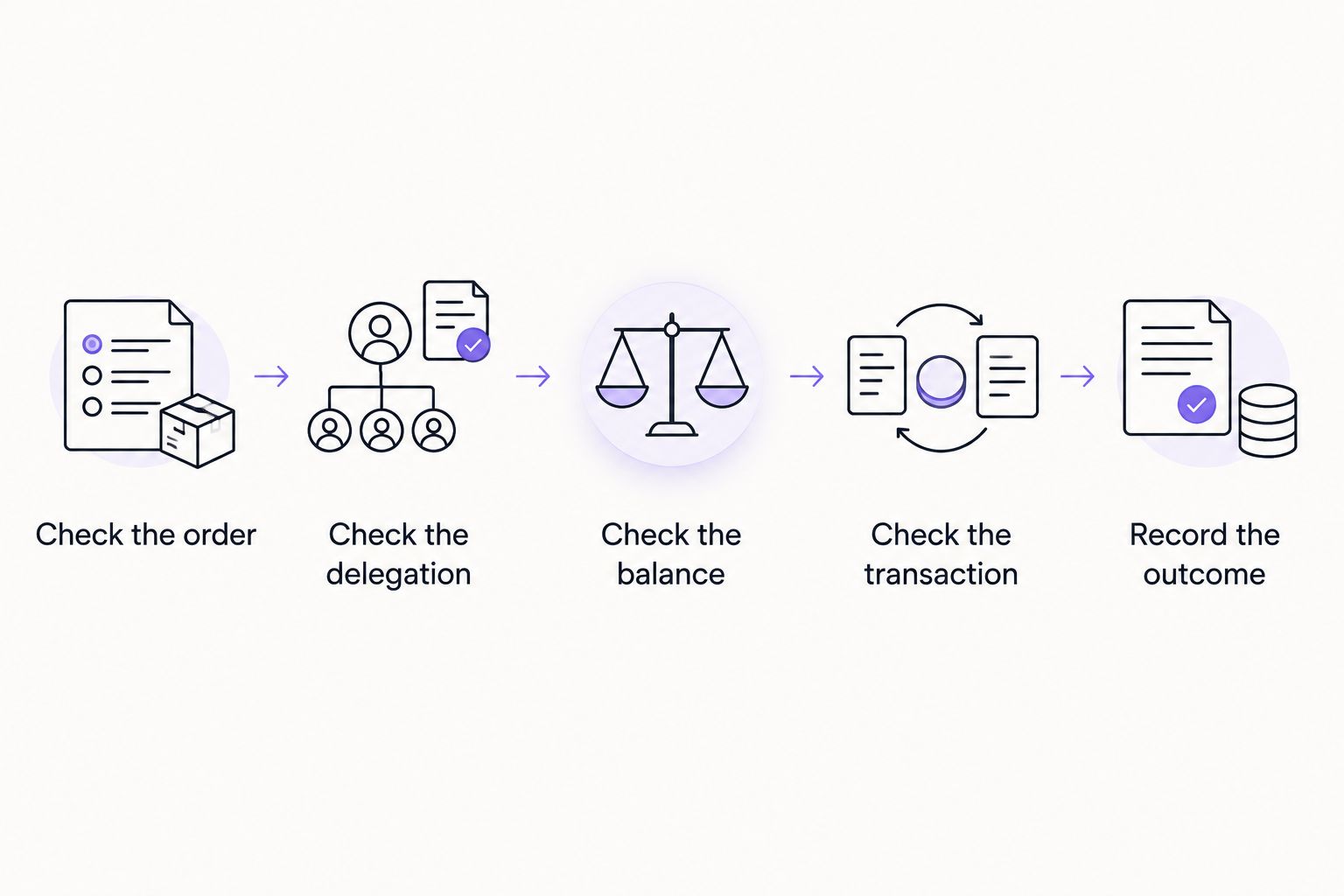
Keep 3 records together: the rental confirmation, the delegation evidence, and the transaction result. They answer different questions. A payment receipt proves a payment event; it does not, on its own, establish the resources available when a later transaction executed.
If you organize customer operations through Telegram, Nbtrx offers Telegram business operations tools. Keep the rental provider's order terms and on-chain evidence attached to the relevant workflow rather than treating a chat message as proof of continued resource access.
FAQ
Will unused rented TRON energy turn into TRX?
Unused rented TRON energy does not automatically turn into TRX. It represents access to account resources, not a token balance redeemable when the rental ends.
Does unused rented TRON energy disappear exactly when the rental ends?
Your access to the delegated allocation ends when the provider withdraws it. The agreed rental deadline and the on-chain withdrawal can be separate events, so do not assume a visible balance means an extension.
Can I save unused rented energy for tomorrow?
You can rely on rented energy tomorrow only if the rental covers that time and the delegation remains active. A balance visible today does not guarantee continued access tomorrow.
Does TRON energy recovery renew my rental?
TRON energy recovery does not renew a rental. Consumed energy recovers over a standard 24-hour window, while the provider's agreement controls the rental period.
Can I send unused rented energy to another wallet?
You cannot send unused rented energy like a token transfer. Changing which account receives delegated resources requires the relevant delegation permissions and the provider's support.
Will I get money back if I never use the energy?
A refund depends on the rental agreement, not simply on whether you used the energy. Check whether the terms distinguish an undelivered order from a delivered but unused delegation.
What should I check before renting more energy in 2026?
Check your current resources, remaining work, and the existing rental deadline before renting more energy in 2026. Confirm whether the next order extends the current arrangement or creates a separate delegation.
One last thing
Unused energy is not always wasted capacity. A deliberate buffer can leave resources unused while keeping planned work within its execution budget. The mistake is not the leftover balance; it is paying for a window that does not match when you actually submit transactions.
Before your next rental, move the scheduling decision ahead of the purchase decision. Confirm when the work is ready, which wallet will execute it, and what happens if that work is delayed.