
TRON energy rental is not inherently unlawful, but a particular rental still has to comply with the laws that apply to you, the provider, and the underlying transaction. In 2026, the practical answer depends on jurisdiction, sanctions restrictions, and whether the arrangement involves regulated services beyond resource delegation. A successful on-chain transaction is not proof of legal compliance.
- Is TRON energy rental legal? TRON resource delegation alone does not establish whether a particular rental complies with applicable law.
- Separate personal resource use from running a customer-facing rental or payment business.
- Check sanctions, provider identity, wallet permissions, and contractual terms before paying.
- A provider's no-KYC policy is not a legal exemption for the provider or customer.
Is TRON energy rental legal?
TRON energy rental requires a transaction-specific legal assessment, not a blanket yes or no. TRON supports resource delegation at the protocol level. That technical function does not decide whether a commercial provider needs authorization, whether a counterparty is restricted, or whether the transaction being funded is lawful.
Start by separating the network mechanism from the business arrangement. The guide to how TRON energy rental actually works covers the operational question; legal review addresses the parties, location, service, and purpose.
For a 2026 decision, follow this sequence:
- Identify the parties. Establish who supplies the resource, who receives payment, and who receives the delegated energy.
- Map the jurisdictions. Record where you operate and which countries have a connection to the provider and transaction.
- Describe the service. Distinguish resource delegation from custody, exchange, payment execution, or handling customer funds.
- Check restrictions. Review applicable sanctions and any rules governing the underlying activity.
- Document the arrangement. Keep the terms, payment record, delegation evidence, and any required compliance checks.
This process does not replace legal advice. It gives a lawyer or compliance lead a concrete transaction to assess instead of an undefined question about cryptocurrency.
Why this matters
Energy helps execute smart contracts on TRON. Renting access to that resource does not change the legal character of the activity that uses it: an unlawful payment does not become lawful because its execution resources came from a separate supplier.
The reverse distinction matters too. Using a blockchain resource is not, by itself, the same activity as operating an exchange or transmitting money for customers. Assess what each party actually does, not what the website calls the service.
For business operations, separate legal approval from technical approval. Your technical team can verify that delegation occurred; your compliance process must address counterparties, restrictions, and the business model. Neither review substitutes for the other.
Personal use versus a customer-facing business
The most useful comparison is between renting resources for your own activity and supplying a service to other people. These are different operational roles, even when both involve the same network feature.
| Arrangement | Best for | Practical benefit | Limitation or legal question |
|---|---|---|---|
| Renting energy for your own wallet | Users executing their own transactions | Separates resource procurement from the underlying transaction | Your payment, counterparty, and underlying activity still require review |
| Renting energy for company-controlled wallets | Businesses managing their own operations | Creates a defined resource-procurement workflow | Requires clear authorization, records, and jurisdiction checks |
| Supplying energy to customers | Operators offering resource access | Establishes a customer-facing service | Requires review of the service model, contracts, and applicable obligations |
| Combining rental with custody or customer payments | Businesses needing those additional functions | Combines operational responsibilities in one arrangement | Requires assessment of the additional activities, not just energy delegation |
These labels describe use cases, not legal classifications. A provider cannot determine its regulatory position merely by choosing the label resource rental.
Renting energy for your own wallet
If you rent energy solely to execute your own transactions, describe that limited role accurately. Do not assume obligations associated with an unrelated business model apply automatically, but do not treat personal use as an exemption from sanctions or other applicable restrictions.
Keep the transaction purpose clear. Paying a resource supplier and sending assets to a recipient are separate relationships, and each deserves its own review.
Operating a rental service for customers
If you sell access to energy, the legal question expands beyond your own wallet. Your terms, payment collection, customer locations, control over assets, and related services become relevant.
A 2026 launch review should describe the actual flow of funds and permissions. If your staff can move customer assets, that fact belongs in the assessment even when your main offering is described as energy rental.
Why the legal answer varies
The answer changes with the arrangement, not simply with the name of the blockchain. Focus your review on these factors:
- Jurisdiction: Your location, the provider's location, and the customer relationship determine which rules need examination.
- Sanctions exposure: Restricted parties and prohibited dealings require separate checks from technical delivery.
- Control of assets: Receiving delegated resources is different from giving another party control of a wallet.
- Additional services: Custody, exchange, and customer payment handling require assessment beyond resource delegation.
- Underlying purpose: Resource procurement does not authorize an otherwise prohibited activity.
- Contract terms: The agreement determines the promised service, responsibility for errors, and available dispute process.
Avoid a country-by-country conclusion based only on a provider's registration address. An address does not establish authorization for every service or every customer location.
Similarly, a customer-facing interface does not reveal the complete arrangement. Identify who contracts with you and who receives your payment before relying on a platform's claims.
What should you check before renting TRON energy?
Use a workflow that produces evidence you can retain. Screenshots of promotional claims are less useful than an identifiable counterparty, readable terms, and a record of what happened on-chain.
Identify the provider
Look for a legal entity or identifiable contracting party, a support route, and terms that explain the service. A Telegram username alone does not tell you which entity is responsible for delivery or disputes.
Separate identity from reputation. Positive comments can describe customer experience, but they do not establish licensing, sanctions compliance, or contractual accountability.
Map the payment
Record what you pay, which address receives it, and which wallet receives the resource allocation. Explain any difference between the advertised provider and the payment recipient before proceeding.
If an intermediary collects payment, identify its role. Your records should distinguish the supplier from any separate payment or referral party rather than treating every address as the same counterparty.
Check permissions
Standard resource delegation does not require the recipient to disclose a seed phrase or private key. Reject any request to disclose wallet recovery credentials. A claim that credentials are needed to activate energy is not an acceptable explanation.
Inspect any transaction you are asked to sign. Receiving a resource allocation and approving another party to move tokens are different actions; do not approve permissions merely because a support message describes them as routine.
Save the records
Keep the agreed resource terms, relevant transaction identifiers, destination address, and correspondence about delivery. Preserve the version of the terms that governed your order, not just a link to a page that can change.
For company use, assign responsibility for approval and reconciliation. A clear owner makes it easier to explain why the supplier was selected and how the transaction was checked.
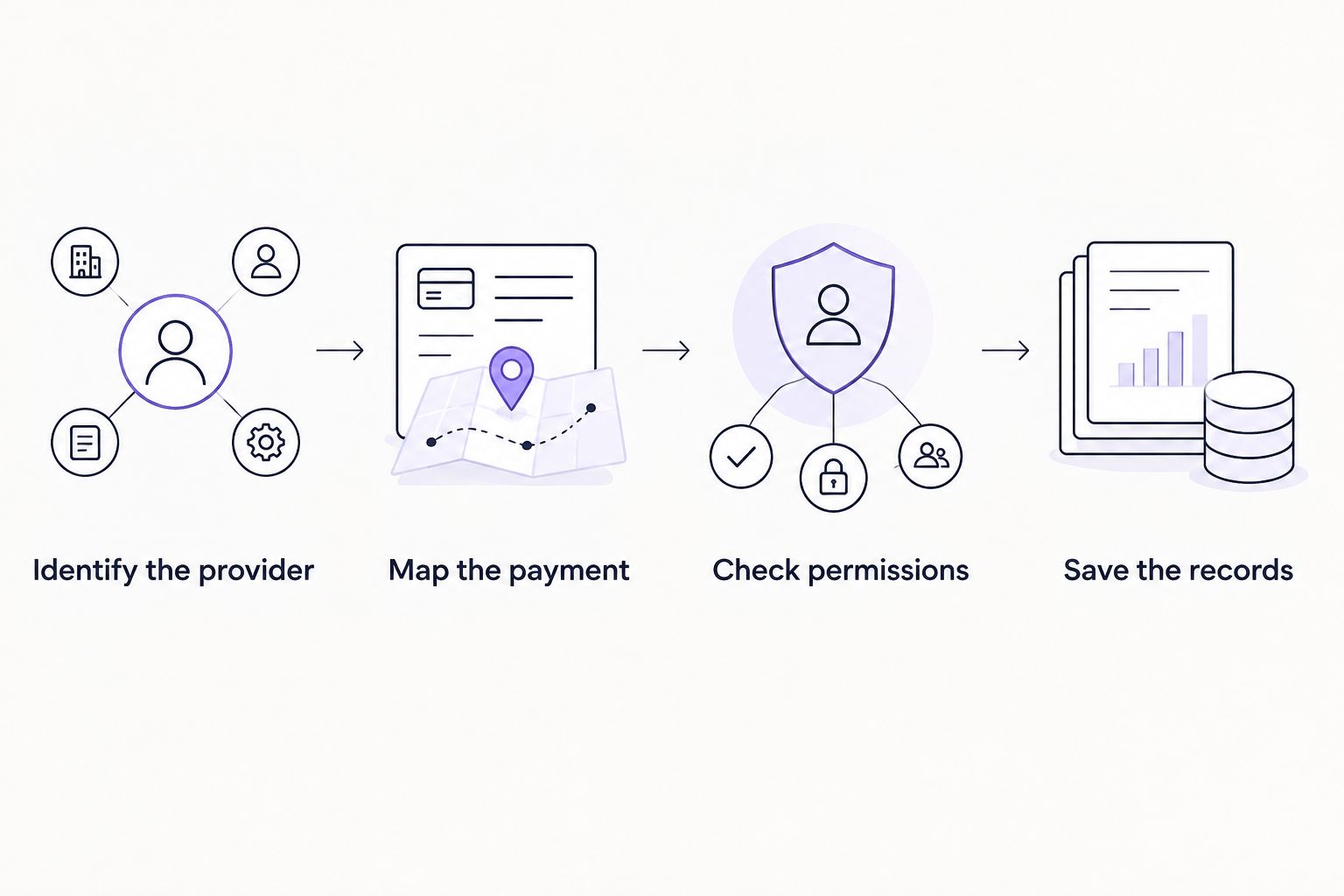
The point of this workflow is traceability, not paperwork for its own sake. Each record should answer a specific question about the counterparty, authorization, delivery, or transaction purpose.
Which U.S. compliance issues deserve separate review?
For U.S. operations in 2026, distinguish sanctions compliance from financial-services classification. They address different questions and should not be collapsed into a single claim that a provider is compliant.
The U.S. Treasury's Office of Foreign Assets Control administers U.S. sanctions programs. Review applicable OFAC requirements when assessing counterparties and transactions; a wallet address alone does not establish the identity or sanctions status of everyone involved.
FinCEN administers federal Bank Secrecy Act requirements relevant to covered financial businesses. Whether a particular business falls within those requirements depends on its activities and the applicable definitions and exceptions, not simply its use of TRON.
State requirements can present a separate question. Obtain advice on the actual service before assuming that a federal assessment resolves every licensing issue.
Do not treat this page as a determination that a particular provider is licensed or exempt. For a business launch, give qualified counsel the payment flow, custody model, customer locations, and proposed terms. Those facts support a useful assessment.
Does renting TRON energy without KYC make it illegal?
No-KYC rental is not, by itself, a complete answer about legality. Identity-verification duties depend on the provider's activities and applicable law; an advertising label does not establish whether those duties apply or have been met.
As a customer, do not interpret the absence of an identity check as permission to ignore your own obligations. A provider's process and your legal responsibilities are separate questions.
Does receiving delegated energy mean giving up wallet custody?
Receiving delegated energy does not itself transfer control of your private keys. Treat any request for recovery credentials, token allowances, or unrelated wallet permissions as a separate action requiring review.
Noncustodial operation also does not establish overall legality. It answers a control question, not every question about sanctions, contracts, or regulated services.
Where Telegram business tools fit
Nbtrx is suited to Telegram business operations, not a substitute for legal review of a TRON energy rental. Its stated offering is Telegram business operations tools; that description does not establish energy-rental functionality, regulatory authorization, or a provider compliance process.
Keep that distinction in your procurement workflow. A communication channel can organize member operations or partner workflow, while the underlying financial arrangement still needs its own approval and records.
FAQ
Is TRON energy rental legal in the United States in 2026?
TRON energy rental requires a fact-specific U.S. legal assessment; network support is not blanket legal approval. Review the parties, sanctions exposure, underlying activity, and any additional services such as custody or customer payment handling.
Do I need a license just to rent energy for my own wallet?
Renting energy for your own wallet is not enough information to determine a licensing obligation. Your location and actual activities matter, particularly if you also serve customers or handle their assets.
Does a provider's no-KYC policy mean I can use it legally?
A no-KYC policy does not establish that your use is legal. Assess the provider, applicable restrictions, and your own obligations independently of its onboarding process.
Can a TRON energy rental provider ask for my seed phrase?
Standard resource delegation does not require your seed phrase. Do not disclose recovery credentials, and inspect any requested signature or permission separately from the advertised rental.
Does an on-chain energy delivery prove the provider is compliant?
On-chain delivery proves neither licensing nor legal compliance. It can document resource allocation, but it does not resolve the identity, authorization, or sanctions status of the parties.
Should a business get legal advice before offering energy rentals?
A business should obtain a jurisdiction-specific assessment before offering energy rentals to customers. Give counsel the custody model, payment flow, customer locations, and proposed contract rather than relying on a product label.
One last thing
Approve the resource purchase and the underlying transaction separately. A supplier can deliver exactly what you ordered while the payment you intend to execute still raises an unresolved legal issue.
For your 2026 operating checklist, record both decisions: why the supplier is acceptable and why the intended activity is authorized. That separation prevents a technical success from being mistaken for a compliance approval.