
No. TRON energy rental does not require you to stake TRX first: a provider delegates Energy backed by its own staked resources to your receiving address. Renting Energy does not remove every transaction requirement; you still need sufficient Bandwidth and must account for any uncovered resource consumption. The renter receives access to resources, not ownership of the provider’s staked TRX.
- Does TRON energy rental require staking TRX? No. The provider supplies delegated Energy to your receiving address.
- TRON Energy and Bandwidth are separate resources. Renting Energy does not automatically cover Bandwidth.
- Verify delegated resources on the receiving address before submitting your smart-contract transaction.
- Keep your private key and recovery phrase private. Resource delegation does not require sharing either.
Does TRON energy rental require staking TRX first?
You do not need to stake your own TRX to receive rented Energy. TRON supports resource delegation: an account with eligible staked resources delegates their use to another account. Rental services build a commercial arrangement around that network function.
The distinction is who supplies the stake. With self-staking, you commit your own TRX to obtain resources. With rental, the provider supplies the underlying staked resources while you receive delegated capacity under the rental terms.
The guide to how TRON Energy rental works explains the resource flow behind that distinction. For your decision in 2026, compare the funding method, the operational responsibility, and what remains outside the arrangement.
| Method | Best for | Must you stake TRX yourself? | Main advantage | Main limitation |
|---|---|---|---|---|
| Rent delegated Energy | A defined smart-contract workload without self-staking | No | Separates resource access from your own stake | Requires checking delivery, duration, and sufficient capacity |
| Stake TRX for Energy | An ongoing workload managed through your own resources | Yes | Gives you direct responsibility for your staked resource allocation | Commits TRX and requires unstaking management |
| Use TRX for uncovered consumption | Transactions without enough available resources | No | Does not require a separate rental arrangement | Consumes TRX rather than supplying delegated Energy |
These methods are not mutually exclusive. Your address can have its own resources and delegated resources, while TRX covers eligible shortfalls according to network rules and transaction limits.
Why this matters
Confusing rental with staking creates the wrong checklist. Instead of checking whether the provider delivered usable Energy, you start looking for a staking transaction that the rental model does not require.
It also creates a security risk. A request for your recovery phrase is not a normal prerequisite for resource delegation. The provider needs the destination address for delegation, not control of the wallet holding your assets.
For a 2026 rental workflow, keep the commercial order separate from the network result. Payment confirmation establishes that an order was paid; it does not establish that the intended address has received usable resources.
Renting Energy: no personal stake required
Energy rental gives your address access to delegated resources. It does not transfer the provider’s underlying stake into your wallet, and it does not make that stake yours to withdraw.
The practical advantage is clear: you can arrange resources for a transaction without first committing your own TRX through staking. The limitation is equally clear: your access depends on the actual delegation and the arrangement’s terms.
Best for a defined transaction workload: choose rental when you want resource access without managing a personal stake. Before proceeding, check the receiving address, the resource amount, the usable period, and the provider’s delivery conditions.
Do not treat an order receipt as a wallet balance. The operational checkpoint is the receiving account’s resource state, not the provider’s confirmation message alone.
Staking TRX: your own resource allocation
Self-staking is a different route to obtaining Energy. You stake your own TRX and select the relevant resource allocation rather than obtaining delegated resources through a rental arrangement.
This gives you responsibility for managing the stake and its resources. It also means you must account for staking and unstaking rules when planning access to your TRX.
Best for an ongoing resource plan: assess self-staking when you intend to manage recurring demand through your own stake. Do not choose it merely because a rental checkout mentions Energy; the resource name does not make self-staking a prerequisite.
Neither method establishes guaranteed savings. A sound comparison needs your actual transaction demand, resource availability, and current terms—not a general claim that renting or staking always wins.
How to rent Energy without staking first
Use this sequence in 2026 to separate wallet preparation, delivery verification, and transaction execution. Each checkpoint answers a different operational question.
- Confirm the address. Identify the exact TRON address that will execute the smart-contract transaction. For a token transfer, this is normally the sending address, not the recipient’s address. Check the full address before placing the order.
- Estimate the workload. Estimate the Energy required for the intended contract call using current contract and account conditions. Do not assume that every transfer consumes the same resources or that a previous transaction guarantees the next result.
- Check existing resources. Inspect the address’s available Energy and Bandwidth. Existing resources affect what remains to be covered; a wallet that already has delegated Energy does not necessarily need another full allocation.
- Confirm delivery. After arranging the rental, inspect the receiving account’s resources and the delegation record. Match the address and resource type. Do not submit the intended transaction solely because a payment succeeded.
- Execute the transaction. Review the contract, destination, amount, and applicable transaction settings before signing. Your wallet signs your transaction; the rental provider does not need your recovery phrase to supply resources.
- Review the result. Check the transaction receipt and remaining resources. If execution failed, inspect the failure reason before retrying. A retry is another transaction attempt, not proof that the original resource allocation was adequate.
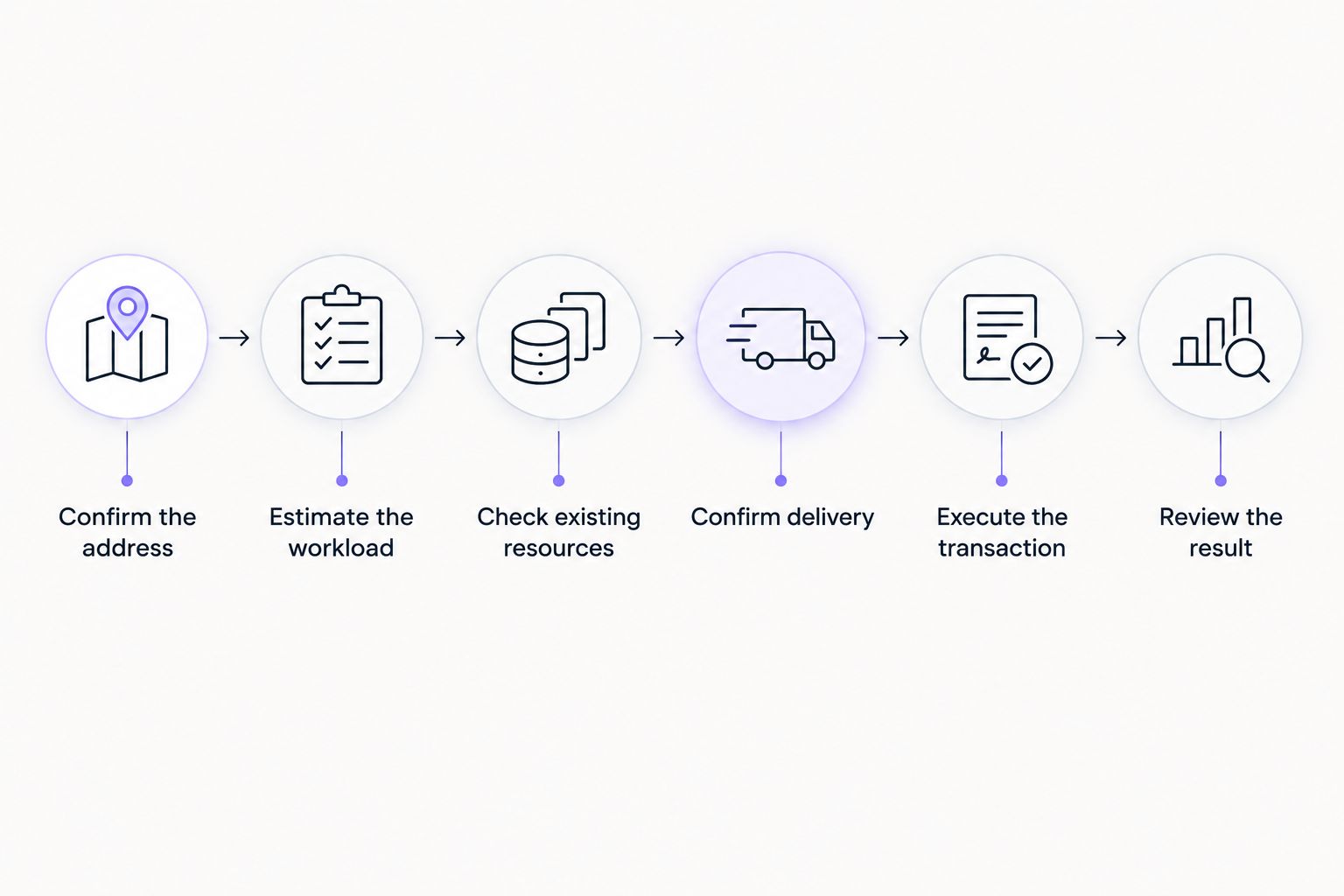
For the verification checkpoint, use the guide to verifying a TRON Energy rental transaction on-chain. Check the receiving account, not just the order status.
A workflow can start in a messaging channel, but wallet authorization remains a separate responsibility. Nbtrx provides Telegram business operations tools; keep member operations and partner workflow separate from the checks that establish resource delivery and transaction success.
Why your rental requirements vary
The answer to the staking question stays the same in 2026: receiving delegated Energy does not require your own stake. The preparation still depends on the transaction and the receiving account.
- Contract execution. Energy measures smart-contract computation. Different execution paths can consume different amounts, so match the estimate to the actual action you intend to perform.
- Existing resources. Your available Energy changes the uncovered requirement. Check what is usable now rather than relying on an earlier wallet screenshot.
- Bandwidth coverage. Bandwidth is separate from Energy. An Energy rental does not, by itself, establish that transaction data consumption is covered.
- Receiving-account status. Check whether the destination account exists on-chain and meets the network’s delegation requirements. A generated address and an activated account are not the same thing.
- Rental terms. Delivery conditions and the usable period belong to the service arrangement. Read those terms before relying on delegated resources for a scheduled transaction.
These factors explain why a rental workflow needs checks even though it does not need personal staking. They do not justify a request for wallet secrets or a claim that transaction success is guaranteed.
Do I still need TRX if I rent Energy?
No personal stake does not mean no possible TRX requirement. Rental payment arrangements, account activation, Bandwidth shortfalls, and uncovered Energy consumption are separate from staking. Check the transaction’s requirements and your account’s resources before signing; an Energy allocation alone does not prove every requirement is covered.
Can someone delegate Energy without my private key?
A provider can delegate Energy to your eligible address without your private key. Your public receiving address identifies where resources should go. Any separate wallet connection or signature request needs its own purpose and review; it is not evidence that you must disclose wallet secrets to receive Energy.
Does rented Energy mean my transfer cannot fail?
Rented Energy does not guarantee transaction success. A contract call can fail for reasons unrelated to resource delivery, including contract conditions or incorrect transaction inputs. Check both resource coverage and the intended contract action rather than treating rental confirmation as execution approval.
What to check before approving anything
A clean 2026 workflow separates resource delegation from asset permissions. Before signing a request, identify what the signature authorizes and whether it matches the action you intended.
Use these checks:
- Destination: Does the request concern the address that will use the resources?
- Action: Is it a payment, a contract interaction, or a permission change?
- Scope: Does it grant authority beyond the intended transaction?
- Secrets: Does anyone ask you to type or send a private key or recovery phrase?
Do not approve a permission change simply because a page describes it as Energy activation. Resource delegation is not the same as granting another party authority over your tokens or account.
The same discipline applies after delivery. A visible resource allocation confirms resources, not the legitimacy of a token contract, the identity of a recipient, or the safety of a signature request.
FAQ
Does TRON Energy rental require staking TRX first?
No. You can receive delegated Energy without staking your own TRX. The provider supplies the underlying staked resources, while your address receives access to delegated capacity.
Can I rent TRON Energy with no staked TRX in my wallet?
Yes. Having no personally staked TRX does not prevent an eligible TRON account from receiving delegated Energy. Account eligibility, payment arrangements, and transaction resource coverage still need separate checks.
Do I need to give an Energy rental provider my recovery phrase?
No. Resource delegation does not require sharing your recovery phrase or private key. Keep both private and review any separate signature request before approving it.
Does renting Energy also give me Bandwidth?
An Energy rental does not automatically provide Bandwidth. They are separate TRON resources, so inspect both balances before submitting a transaction.
Is renting Energy better than staking TRX?
Renting suits a defined workload without personal staking; self-staking suits a resource plan you manage through your own stake. Compare your actual demand and current terms rather than assuming either method always produces a better outcome.
How do I know rented Energy reached the right wallet?
Check the intended receiving account’s available resources and the on-chain delegation record. Match the full address and resource type; a payment receipt alone does not confirm delivery.
Does unused rented Energy become TRX I can withdraw?
No. Delegated Energy is resource access, not ownership of the provider’s staked TRX. Unused capacity does not become a withdrawable TRX balance in your wallet.
One last thing
The address that spends the Energy is the address executing the contract call. If you are sending a token, directing the rental to the token recipient instead of the sender does not supply resources to the intended sending account.
Make address matching the final checkpoint in your 2026 workflow. Confirm the sender, verify resources there, and only then submit the transaction. That check matters more than whether a checkout page uses the words rent, buy, or delegate.