
Best overall: API-based TRON energy rental. Best for steady high-volume payout flows: self-staked TRX energy. Best for price shopping: energy marketplaces. Payment processors on TRON need predictable fees on every USDT transfer, and the provider model you pick in 2026 decides whether you get them.
- API-based energy rental is the best TRON energy provider type for payment processors in 2026.
- Self-staking TRX wins only when transfer volume is steady and you can lock capital.
- Burning TRX for fees is a fallback, not a strategy, for processors sending USDT at scale.
- Pick a provider type first, then compare vendors on delivery speed, minimum order and API access.
Why this matters
A USDT (TRC-20) transfer consumes energy. When the recipient wallet already holds USDT, a transfer uses roughly 65,000 energy. When the recipient holds none, it uses about double that, near 130,000. The guide to TRON energy for USDT transfers covers these transfer-level mechanics in more detail.
Without energy on the sending wallet, the network burns TRX to cover the gap. For a payment processor, that cost repeats on every payout, sweep and refund. A processor that pays out thousands of times a day feels the difference between sourcing energy and burning TRX directly in its margin line.
Nbtrx builds practical Telegram business operations tools, and the same operational logic applies to energy: fewer manual steps, fewer surprises per transaction. Nothing in this guide promises a specific saving. Your result depends on your volume, your recipient mix and the rates you are quoted in 2026.
What makes the best TRON energy provider for a payment processor
Five criteria decide the ranking. Check them before you read the table.
- Automation. Can your system request and receive energy without a human? Payout services that run all day cannot wait for a manual order.
- Delivery speed. Energy has to land before the transfer is broadcast. Slow delivery means a failed transaction or a TRX burn.
- Order flexibility. Small and variable order sizes matter when payout volume swings day to day.
- Cost predictability. You need to know the energy cost per transfer before you quote fees to your own merchants.
- Operational fit. Alerts, balances and reporting should plug into how your team already works, including chat-based workflows.
A provider that scores well on four criteria but fails automation still loses for a processor. Manual steps compound with every payout.
TRON energy providers at a glance
| Rank | Provider type | Best for | Standout feature | Key limitation |
|---|---|---|---|---|
| 1 | API-based energy rental | Automated payout flows | Energy requested per transfer by code | Depends on one vendor's uptime and integration quality |
| 2 | Self-staked TRX energy | Steady, high-volume processors | You control the supply | Capital is locked and capacity is fixed |
| 3 | Energy marketplaces | Comparing rates across sellers | Multiple sellers in one place | Quality varies by seller |
| 4 | Chat or bot-based manual rental | Low volume and ops-led teams | Fast to start, no integration | Manual steps do not scale |
| 5 | Burning TRX for fees | Emergency fallback | Needs no provider at all | Most expensive path per transfer at volume |
1. API-based energy rental: best TRON energy provider for automated payouts
An API-based provider lets your payout system request energy for a specific wallet right before a transfer. The energy is delegated to the sending address, the transfer goes out, and you pay for what you used. Nothing sits idle on your balance sheet.
API-based rental pros:
- Fits payout engines that run without human review
- No TRX locked up as idle capital
- Scales up and down with daily volume
- Easy to log per transfer for reconciliation
API-based rental cons:
- Your payouts depend on the vendor's availability
- Integration work is required before the first transfer
- Rates and terms are the vendor's to change, so review them regularly
Best for: payment processors that send USDT all day and want fees they can predict per transfer. For the technical side, see the guide to TRON energy rental services with API access.
Verdict: Buy. API-based rental is the default TRON energy provider type for most payment processors in 2026.
2. Self-staked TRX energy: best for steady high-volume processors
You stake TRX on the network and receive energy in return. Energy regenerates over time, so a processor with flat, predictable volume can run much of its load on its own supply.
Self-staking pros:
- No per-transfer vendor fee
- Full control over supply and wallets
- No third-party dependency for the energy itself
Self-staking cons:
- Capital stays locked in TRX, with price exposure
- Capacity is fixed, so volume spikes fall back to burning TRX
- Sizing the stake wrong either wastes capital or leaves gaps
Best for: processors with stable daily volume and treasury capacity to commit. Many teams pair a stake for the baseline with a rental provider for peaks.
Verdict: Hold. Strong for the baseline load, weak as the only source.
3. Energy marketplaces: best for comparing sellers
A marketplace lists several energy sellers. You compare rates and terms, then buy from whoever fits the order.
Marketplace pros:
- Easy way to see the spread between sellers
- Useful for sourcing a one-off large order
- Lowers lock-in to a single vendor
Marketplace cons:
- Seller quality and delivery behavior differ
- Not every listing supports automation
- More vendor checks for your compliance and ops teams
Best for: teams shopping on cost. Benchmark rates here, then test delivery with small orders before moving real payout volume.
Verdict: Hold. Good for sourcing and benchmarking, secondary for core payouts.
4. Chat or bot-based manual rental: best for low volume
Some providers sell energy through a chat interface or a simple web form. You send the order, pay, and receive delegated energy on the wallet you name.
Manual rental pros:
- Live in minutes, no engineering needed
- Good for testing demand before building an integration
- Suits teams already running operations from chat
Manual rental cons:
- Every order needs a person
- Breaks down once payouts run around the clock
- Hard to reconcile at scale
Best for: early-stage processors and small payout runs.
Verdict: Hold. Fine to start, plan the move to the API model before volume forces it.
5. Burning TRX for fees: fallback only
If a sending wallet has no energy, the network burns TRX to cover the cost. Nothing needs to be set up, and every transfer still goes through.
Burning pros:
- Zero setup and zero vendor risk
- Keeps payouts moving when other sources run dry
Burning cons:
- Costs more per transfer than renting or staking at scale
- Fee cost moves with the TRX price
- Hard to forecast margins
Best for: emergencies and very low volume.
Verdict: Skip as a primary model. Keep TRX in sending wallets as a safety net only.
“Treat burned TRX as insurance, not as your energy plan.”
How to rank vendors inside a provider type
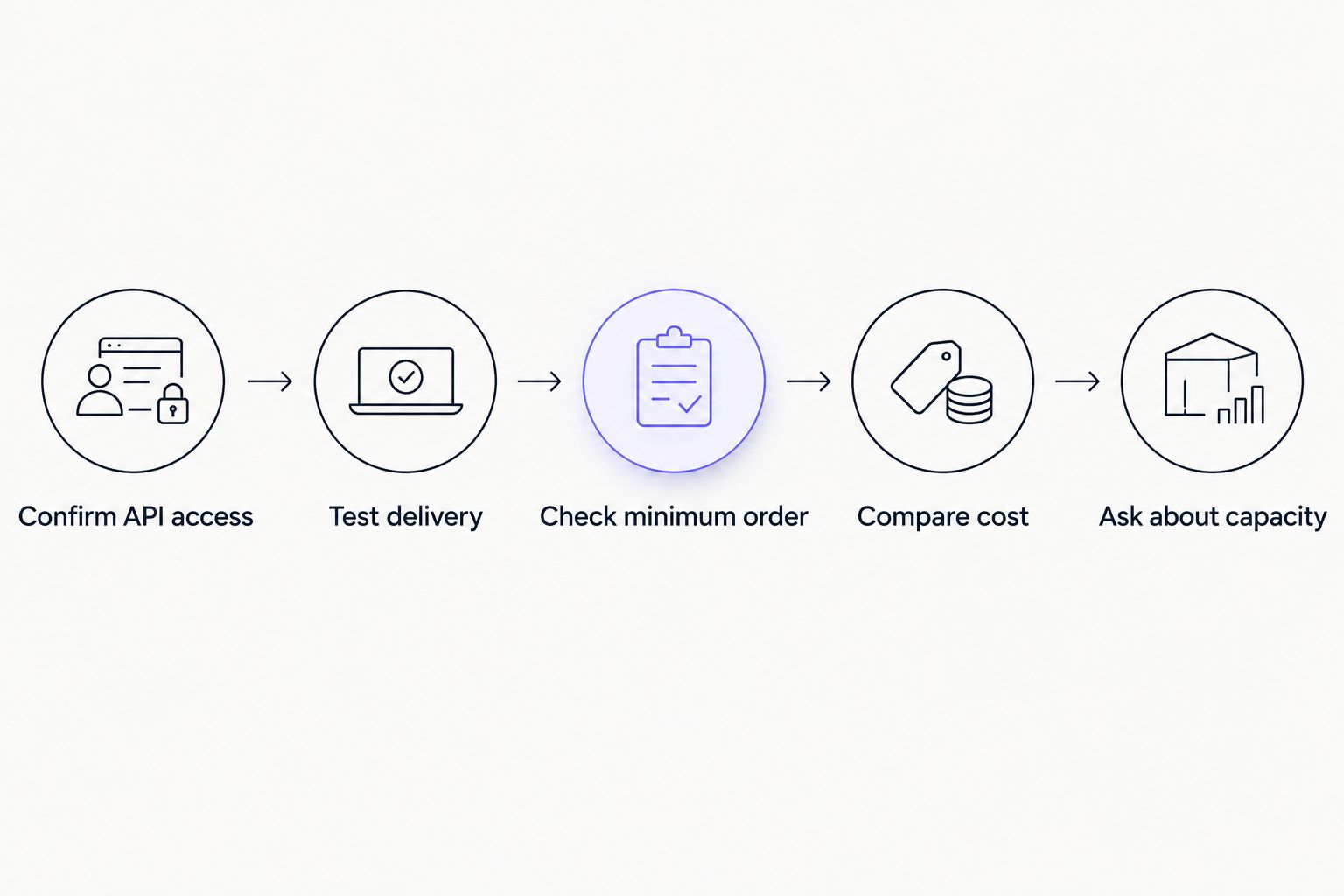
Once you have chosen a model, apply the five criteria to individual vendors. Run these checks in order:
- Confirm API access and read the documentation before anything else.
- Test delivery with small orders and note how long energy takes to arrive.
- Check minimum order size against your smallest realistic payout batch.
- Compare cost per transfer with the quoted rate, using your own recipient mix.
- Ask about capacity: what happens when the vendor runs out?
The order matters. A vendor without usable API access fails the first check, and there is no point testing anything else.
Speed is the criterion that breaks payout systems first. The ranking of TRON energy rental services by delivery speed is the place to start that check.
Payout patterns that change the pick
Your payout shape matters as much as the provider. Three patterns shift the recommendation:
- Many first-time recipients. Transfers to wallets with no USDT use about double the energy. Size orders for the higher figure or you will burn TRX on every new merchant or user.
- Batch payouts at fixed times. Predictable windows make self-staking or a scheduled rental order viable.
- Continuous payouts. Round-the-clock transfers need API-based rental. Nothing else keeps up without staff.
Most processors run a mix. Map your last month of transfers against these three patterns before signing with any vendor in 2026.
How we ranked
The ranking weights automation and cost predictability highest, because a payment processor depends on repeatable per-transfer economics. Delivery speed and order flexibility come next. Operational fit breaks ties. A model that requires a person on every transfer cannot rank first for a processor, however cheap it looks.
Which TRON energy provider should you choose in 2026?
- Pick API-based rental if payouts run automatically and volume swings. This is the right default.
- Add self-staked energy once daily volume is flat enough to size a stake, and keep rental for the peaks.
- Use a marketplace to benchmark rates, not to run core payouts.
- Start with manual rental only to validate demand, and move off it as volume grows.
- Keep TRX in sending wallets so a missed order never stops a payout.
If you cannot decide, choose API-based rental and test two vendors side by side for one week with real transfer patterns. Nbtrx publishes TRON energy guides by use case, and the 2026 rankings above are a starting point, not a guarantee of business results.
FAQ
What is the best TRON energy provider for payment processors?
API-based energy rental is the best fit for most payment processors in 2026. It automates energy per transfer and avoids locking capital. Compare vendors on delivery speed, minimum order size and API access.
How much energy does a USDT transfer on TRON use?
A TRC-20 USDT transfer uses roughly 65,000 energy when the recipient already holds USDT. It uses about double that, near 130,000, when the recipient holds none.
Is renting energy better than burning TRX?
For processors sending USDT at scale, yes. Burning TRX needs no setup but costs more per transfer at volume. Keep it as a fallback when energy runs out.
Should a payment processor stake its own TRX for energy?
Only if volume is steady and you can lock capital. Staked energy has fixed capacity, so peaks still need rental or burned TRX.
Why does API access matter for TRON energy rental?
API access lets your payout system request energy before each transfer without human steps. Manual ordering breaks once payouts run around the clock.
How do I compare TRON energy providers?
Confirm API access, test delivery speed with small orders, check minimum order size and calculate cost per transfer with your own recipient mix. Then ask what happens when the vendor runs out of capacity.
Is an energy marketplace good enough for core payouts?
Usually not on its own. Marketplaces are useful for benchmarking rates, but seller quality and automation support vary, so core payouts belong with a tested API provider.
One last thing
Most processors compare energy providers on the quoted rate and ignore the failure path. Ask every vendor one question before you integrate: what happens to a payout when your energy supply is empty? The answer tells you more than the rate card does.