
Crypto casino TRON energy management is the allocation of blockchain execution resources with the aim of keeping smart-contract payouts funded and operational. This guide explains TRON energy for crypto casinos in 2026, where withdrawal queues, wallet permissions, and resource availability need separate controls.
- TRON energy for crypto casinos funds smart-contract execution; it does not replace payout approval or transaction confirmation.
- Estimate TRC-20 USDT withdrawals individually rather than assuming every transfer consumes identical energy.
- Choose staking, delegated energy, or TRX-funded execution according to your withdrawal workload and custody requirements.
- Keep Telegram coordination separate from private keys, resource allocation, and payout signing.
Why TRON energy matters for crypto casinos
TRON smart-contract transactions consume energy. TRC-20 token transfers, including USDT transfers, execute contract code; sending native TRX is a different transaction type. Both transaction types also involve bandwidth, which accounts for transaction data rather than contract execution.
For a casino accepting TRC-20 USDT, withdrawal operations therefore need more than an adequate token balance. The sending account needs a resource plan, an appropriate transaction fee limit, and a controlled signing process. Token balance alone does not establish that a withdrawal can execute.
A rental service's integration belongs inside that process, not above it. Use the guide to TRON energy services with API access to frame integration questions, then verify the actual service terms before connecting a payout wallet.
TRON developer documentation describes energy consumption recovering over 24 hours. That recovery window matters when you reuse a sending account: checking resources at the start of a shift does not establish the resources available for every subsequent withdrawal.
How to manage casino withdrawal energy in 2026
Map your withdrawal workflow
Start manually with a wallet inventory and a transaction log. Identify which accounts receive deposits, which hold treasury funds, and which sign withdrawals. Resource planning must follow the account that executes the contract, not simply the account holding the largest balance.
Record each withdrawal from approval through confirmed execution. Keep customer-facing status separate from technical transaction status. A submitted transaction is not the same as a confirmed payout, and a rejected transaction is not permission to send a replacement without checking the original.
Use these records to distinguish resource failures from signing failures, contract errors, and review holds. Assign an owner to each state so an unresolved withdrawal does not circulate between support and treasury.
- Identify every account authorized to send withdrawals.
- Separate deposit collection from withdrawal execution in your inventory.
- Record the network, token contract, and destination address.
- Store the transaction identifier against the withdrawal record.
- Assign responsibility for approval, signing, and reconciliation.
Estimate energy before you allocate it
Use a node interface or transaction simulation to inspect the proposed contract call. TRON provides interfaces for estimating contract execution, but your node's supported methods and configuration need verification. Treat estimates as planning inputs, not guarantees of execution.
Do not copy a fixed energy figure from an unrelated USDT transfer. Contract behavior and account state affect execution. TRON's dynamic energy model also makes a permanent, universal allowance unsuitable as an operating assumption.
Keep energy units and TRX-denominated limits distinct. TRON uses SUN as its smallest denomination: 1 TRX equals 1,000,000 SUN. A unit-conversion error in a transaction setting is an implementation defect, not an energy shortage.
- Estimate the intended contract call using the intended sender.
- Check the recipient and token contract before simulation.
- Record estimated energy separately from the transaction fee limit.
- Confirm whether your transaction builder expects TRX or SUN.
- Compare estimates with receipts from confirmed transactions.
Separate coordination from wallet authority
Begin with a shared operations register and named approvers. Write down who requests energy, who approves spending, and who authorizes a payout. These are 3 separate controls; combining them in a chat message makes responsibility difficult to audit.
Telegram business tools belong on the coordination side. Nbtrx offers Telegram business operations tools. Nbtrx is best suited to Telegram business operations, not as a substitute for TRON resource management.
When considering Nbtrx Telegram business tools for member operations or partner workflow, check the functions against your actual handoff requirements. An operations tool should support coordination without becoming the place where staff exchange private keys, seed phrases, or unrestricted signing credentials. Establish the manual workflow before adding software.
Use a simple sequence with these labels: Request, Approval, Allocation, Signing, Confirmation. Resource allocation does not authorize a withdrawal; confirmation closes the payment record only after you verify execution.
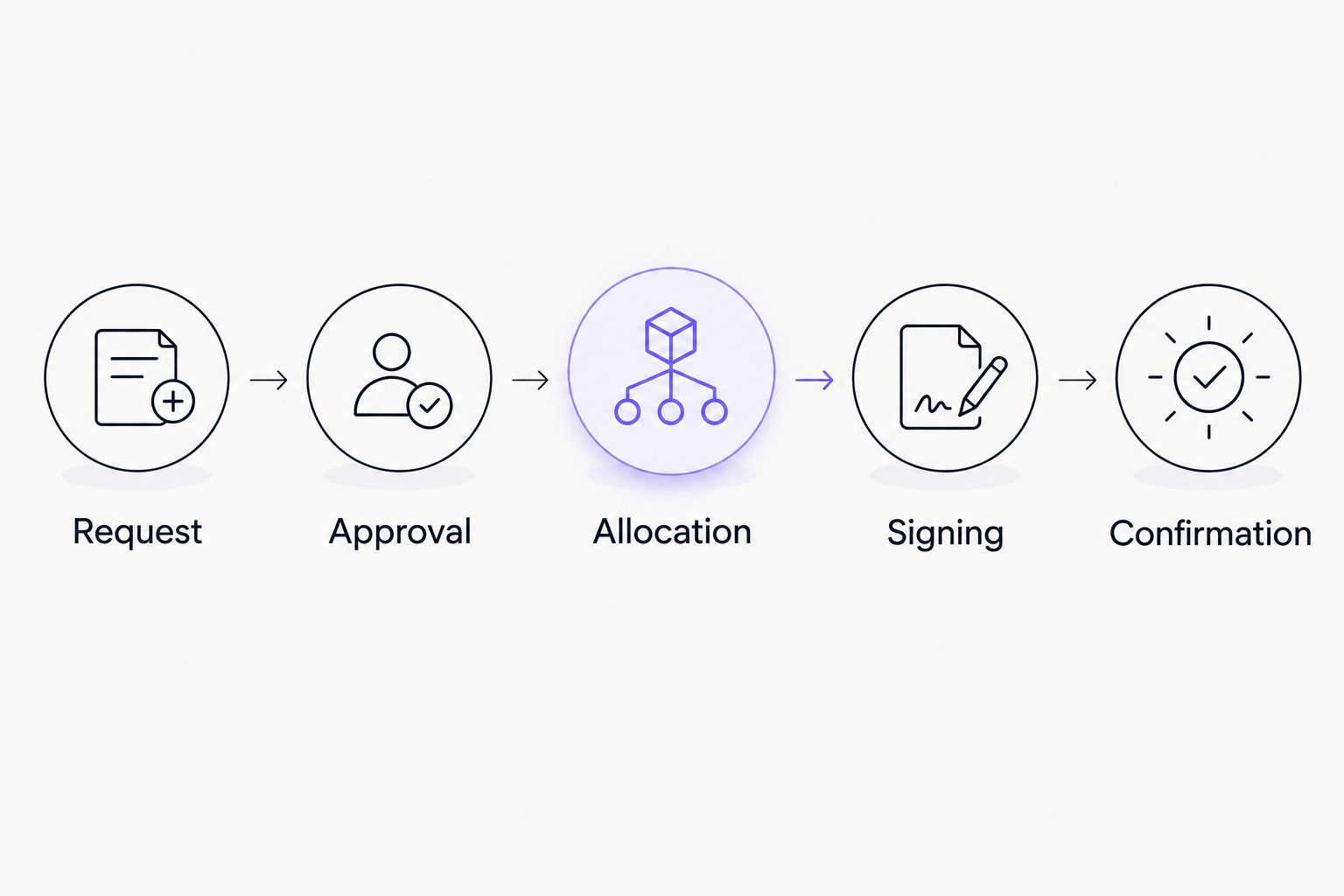
Keep this separation intact when the queue grows. A resource supplier, operations coordinator, and payout signer should each have a defined responsibility rather than shared authority over the whole transaction.
- Record the withdrawal under Request.
- Capture the authorized reviewer under Approval.
- Verify the sending account's resources under Allocation.
- Restrict transaction authorization to Signing.
- Reconcile the receipt and payment record under Confirmation.
Choose how to obtain energy
Start by checking the sending account's available resources and the workload you actually need to execute. Compare obtaining energy through staking, receiving delegated resources through a rental arrangement, and allowing eligible execution costs to consume TRX when resources are insufficient.
Each approach has a different constraint. Staking ties resource access to a stake position. Renting adds a supplier dependency and contractual conditions. TRX-funded execution avoids arranging a separate energy supply, but still requires funded accounts and spending controls.
Choose the resource method from your withdrawal workload, not from a provider's headline promise. Review the mechanics again when you change sending accounts or payout processes in 2026. A resource arrangement attached to the wrong account does not solve the signing account's shortage.
- Check the resources available to the actual sending account.
- Assess whether staking suits your treasury requirements.
- Verify how delegated energy reaches the sending account.
- Define when TRX-funded execution is authorized.
- Document how allocation ends or delegated resources are withdrawn.
Verify delivery before releasing the queue
For manual operations, inspect the receiving account's resource state before signing a payout. A supplier's order confirmation proves that an order was acknowledged; it does not independently establish that the intended account has usable resources.
For an integration, separate order creation, supplier response, and on-chain verification. Require a stable identifier for each request and preserve the original response. Do not treat a network timeout as evidence that an order failed: check the existing order before retrying.
Delegation and transaction signing are different actions. An energy supplier should not need your seed phrase to allocate resources to an account. Requests for wallet secrets belong outside an acceptable energy-supply workflow.
- Verify the destination account before submitting an order.
- Check resource availability through your own node or account inspection.
- Preserve the supplier order identifier and response.
- Check an unresolved order before placing another.
- Reject requests for private keys or seed phrases.
Control execution and exception handling
Start with a written release checklist. Check the destination, token contract, approved amount, available resources, and signing permissions before sending. Keep the transaction fee limit explicit rather than relying on an unexplained default.
Build an exception path for resource shortage, unsuccessful contract execution, submission timeout, and supplier delay. These failures need different responses. Automatically retrying every error can create duplicate orders or a second payment attempt while the first remains unresolved.
A safe 2026 payout process uses receipt inspection to determine what happened. Confirm whether the transaction executed successfully before updating the customer record. Resource consumption is not proof that the requested token transfer succeeded.
- Validate the approved destination and token amount.
- Check energy and bandwidth separately.
- Set and review the transaction fee limit.
- Classify errors before deciding whether to retry.
- Inspect the transaction receipt before closing the withdrawal.
- Escalate unresolved transactions to a named operator.
Measure the workflow you operate
Begin with a spreadsheet populated from withdrawal records, transaction receipts, and supplier orders. Measure withdrawal processing time by stage rather than treating the whole queue as an energy problem. Approval delays and resource delays require different fixes.
Track estimates against actual execution and record any TRX consumed for resource shortfalls. Keep accounting in consistent units. Review supplier delivery against the timing requirement you agreed, not against an assumed industry standard.
For your 2026 operating review, investigate exceptions individually before changing the resource policy. A contract execution error does not justify buying more energy unless the receipt identifies insufficient resources as the cause.
- Compare estimated and consumed energy by transaction type.
- Record TRX consumption associated with resource shortfalls.
- Separate approval time from allocation and confirmation time.
- Reconcile supplier orders with received resources.
- Categorize failed transactions using their receipts.
- Review changes whenever the sending-wallet workflow changes.
Compare TRON energy options for casino operations
Choose an option according to the job it performs. These are resource-management approaches, not interchangeable guarantees of withdrawal speed. None replaces contract validation, payout review, or confirmation monitoring.
| Option | Best for | Practical advantage | Key limitation |
|---|---|---|---|
| Manual resource monitoring | Establishing a baseline workflow | Lets operators inspect accounts and receipts directly | Requires consistent attention and recordkeeping |
| Staking TRX for energy | Operators planning resource access around treasury holdings | Provides an account-based route to energy allocation | Requires a stake position and management of staking conditions |
| Renting delegated energy | Operators seeking temporary resource allocation | Separates an energy request from establishing your own stake position | Adds supplier delivery and delegation dependencies |
| API-managed energy rental | Operators connecting allocation requests to a withdrawal queue | Supports programmatic ordering when the service provides an API | Requires integration testing, order reconciliation, and exception handling |
| TRX-funded execution | Operators choosing direct execution funding within spending controls | Does not require a separate rental order | Requires sufficient TRX and careful transaction-limit management |
Best for an unmeasured workflow: manual resource monitoring first. Automating a process before you understand its failure states simply makes those failures harder to inspect. Add automated ordering only after you can reconcile a resource request with the account that uses it.
Common mistakes crypto casinos make
Treating deposits and withdrawals as the same resource job
An incoming token transfer does not establish the energy requirements of your outgoing withdrawal account. Plan resources around the account executing each contract call. Include deposit-sweeping transactions separately if your workflow uses them.
Buying against a fixed transfer allowance
A copied allowance hides differences in contract execution and account state. Estimate the intended transaction and compare the result with its receipt. Do not turn a past observation into a permanent operating limit.
Giving a supplier wallet authority
Resource allocation does not require handing a supplier unrestricted signing control. Keep treasury credentials outside support chats and order messages. Review any integration permission that extends beyond the resource-management task.
Retrying before checking the original payout
A submission timeout leaves the transaction state unresolved; it does not prove failure. Check the original transaction before sending a replacement. Tie both the resource order and payout attempt to the withdrawal record.
Reporting energy delivery as payment completion
Received resources only establish that an allocation occurred. They do not prove that a withdrawal executed or that the recipient received the intended token amount. Customer operations should report the payment's verified state, not the supplier's order state.
FAQ
What is TRON energy for crypto casinos?
TRON energy for crypto casinos is the execution resource used by smart-contract transactions such as TRC-20 token withdrawals. Casino operators need to manage it alongside bandwidth, transaction limits, and payout authorization.
Do TRC-20 USDT withdrawals need energy?
TRC-20 USDT withdrawals consume energy because they execute a token contract. If available energy is insufficient, TRON's execution rules can consume TRX, subject to the account balance and transaction settings.
Is renting energy better than staking TRX?
Renting energy suits temporary allocation needs, while staking suits operators managing resource access through a stake position. The decision depends on your workload, treasury requirements, and willingness to depend on a supplier.
How much energy does every casino withdrawal need?
There is no single energy allowance that establishes the requirement for every casino withdrawal. Estimate the intended contract call and compare the estimate with confirmed transaction receipts.
How long does consumed TRON energy take to recover?
TRON developer documentation describes consumed energy recovering over 24 hours. Operators should inspect current account resources rather than assuming the original allocation remains fully available.
Does an energy rental service need my private key?
An energy rental service does not need your private key to delegate resources to your account. Keep signing credentials separate from supplier orders and operations messages.
Does energy delivery mean a withdrawal is complete?
Energy delivery does not mean a withdrawal is complete. Verify successful contract execution and reconcile the transaction with the withdrawal record before marking the payment complete.
One last thing
Inspect the last failed withdrawal before changing your energy policy. Its receipt can distinguish insufficient resources from a different execution problem. Buying resources is the wrong correction when the failure belongs elsewhere.
Keep Nbtrx Telegram business tools in the coordination layer of your 2026 workflow. Keep resource verification, wallet authority, and payment confirmation in their own controlled processes. That separation gives each operator a specific job and each exception a clear owner.