
Yes, you can get free TRON Energy through resource delegation or a smart contract that covers eligible execution, but neither is an unconditional network entitlement. Staking TRX also generates Energy without purchasing a separate allocation, although it commits your capital. Energy does not cover every transaction requirement, so check Bandwidth and any remaining charges before you sign.
- To get free TRON Energy, check delegated resources or contract-sponsored execution; neither is guaranteed.
- Staking TRX generates Energy but commits capital and introduces withdrawal constraints.
- TRON Energy and Bandwidth are separate resources; an Energy allocation does not cover every transaction requirement.
- Verify resources at the sending address before authorizing a smart-contract transaction.
Is it possible to get free TRON energy?
Yes—but distinguish an allocation you receive from resources you generate with your own staked TRX. A third party can delegate eligible resources to your address. A contract can also assign part of its execution resource burden to its originator, subject to its settings and available resources.
Neither arrangement means every transaction becomes free. Before relying on an offer in 2026, follow the checks in how to verify a TRON Energy rental transaction on-chain, even when the allocation is described as a gift rather than a rental.
| Route | Best for | Main advantage | Main limitation |
|---|---|---|---|
| Receive delegated resources | Users with a willing resource provider | The receiving wallet does not need to stake the provider's TRX | The allocation depends on the provider and delegation terms |
| Stake your own TRX | Holders who want to generate their own resources | You generate an Energy allocation from your stake | Capital remains committed and withdrawal rules apply |
| Use contract-sponsored execution | Users of a contract configured to share execution resources | The contract originator covers eligible execution | Coverage depends on contract settings and available resources |
| Use testnet resources | Developers testing applications | You can test without using mainnet assets | Testnet resources cannot fund mainnet transfers |
These are different arrangements, not interchangeable offers. Choose a route based on the transaction you need to execute, not the word “free” in an advertisement.
Why this matters
A wallet can hold tokens without having enough resources to move them through a smart contract. A token balance and an executable transaction are different things. Receiving tokens does not automatically provide the resources needed to send them onward.
TRON uses 2 resource types relevant here: Energy for smart-contract execution and Bandwidth for transaction data. When available resources do not cover a transaction, the network's charging rules determine the remaining requirement. An Energy offer alone is not proof that you can complete a transfer without spending TRX.
For a 2026 transfer workflow, separate three questions: what the transaction needs, what your sending address currently has, and who supplies the difference. That separation makes an offer easier to verify and prevents a resource claim from becoming a blind signing decision.
Receiving delegated Energy
Best for: users who already have a willing resource provider. TRON supports delegating resources associated with eligible staked TRX to another address. The receiving address benefits from the resource allocation without receiving ownership of the provider's staked tokens.
If someone supplies that allocation without asking you for payment, it is free to you under that arrangement. The provider still supplies the underlying stake. Delegation does not create resources from nothing or establish a permanent entitlement for your wallet.
The advantage is separation of ownership and use. The limitation is dependence on the delegation: its size, duration, and any applicable lock conditions matter. Check the actual receiving address rather than accepting a screenshot or a message saying that delivery is complete.
Delegating resources does not require handing over your seed phrase. A request for wallet recovery words is not a normal resource-delivery requirement. Treat it as a reason to stop, not as an onboarding step.
Generating Energy by staking TRX
Best for: TRX holders who want to generate resources from assets they already hold. Staking lets you obtain an Energy allocation when you select Energy as the resource type. Holding unstaked TRX alone does not generate that allocation.
The benefit is a direct relationship between your stake and your resource allocation. The drawback is committed capital. You must also account for the network's unstaking and withdrawal process rather than treating staked TRX as immediately spendable funds.
Under TRON's Stake 2.0 withdrawal process, unstaked TRX has a 14-day waiting period before withdrawal. Check the current network parameter before making a staking decision in 2026. That waiting period is a liquidity consideration, not a charge for each transaction.
Your Energy allocation is also not a fixed promise of a particular number of token transfers. Network resource allocation and the contract's execution requirements determine what your balance can support. Estimate the intended action instead of relying on a transfer count quoted for another wallet.
Using contract-sponsored execution
Best for: users interacting with a contract that explicitly shares execution resources. TRON smart contracts can assign an execution resource share to the contract originator. Whether the user receives that benefit depends on the contract's configuration, applicable limits, and the originator's available resources.
This can reduce the Energy burden on the caller. It does not establish a blanket rule for all contracts or all token transfers. A sponsored action in one application says nothing about an unrelated transaction from the same wallet.
The advantage is that resource support can be part of the application's transaction design. The limitation is scope: the support belongs to that execution arrangement. Confirm the transaction estimate instead of assuming that a website's description guarantees full coverage.
For 2026 operations, keep contract sponsorship separate from delegated Energy in your records. Sponsorship concerns how execution resources are shared; delegation concerns resources assigned to an address. Confusing them makes failed-transfer diagnosis harder.
Using testnet resources
Best for: developers checking transaction logic before mainnet deployment. TRON testnets provide environments for development and testing. Resources obtained there belong to that test environment, not to mainnet.
The advantage is practical testing without using mainnet assets. The limitation is absolute: a testnet allocation cannot pay the resource requirement of a mainnet USDT transfer. Matching address formats do not make the networks interchangeable.
Check the network selected in your wallet and the network shown by the transaction explorer. A successful test establishes that the tested action worked in that environment. It does not establish that your mainnet address has enough Energy or Bandwidth.
Why access to free TRON Energy varies
There is no universal allocation that every mainnet wallet can claim simply because it holds tokens. Access depends on the source of the resources and the requirements of the intended action.
- Provider participation: Delegation requires someone with eligible resources who is willing to assign them to your address.
- Staked capital: Self-generated Energy depends on TRX committed to staking and the selected resource type.
- Contract settings: Sponsored execution depends on how the contract assigns the execution resource burden.
- Available resources: An earlier allocation does not prove that enough unused Energy remains now.
- Transaction requirements: Different contract actions can require different amounts of Energy.
- Network selection: Testnet resources apply to their test environment, not mainnet.
These factors explain why another user's successful transfer is not a reliable estimate for yours. Start with your address and your intended contract action. Use current account data, not a promotional example.
How do you check a free Energy offer before using it?
Use these 4 checks before authorizing the intended transaction. The purpose is to verify the allocation and the action separately; a genuine allocation does not make every accompanying signing request safe.
- Confirm the network. Establish whether the offer applies to TRON mainnet or a testnet. Reject testnet evidence presented as proof of mainnet resources.
- Check the address. Match the receiving address to the wallet that will send the transaction. An allocation to another address does not cover your sender.
- Inspect resources. Check current Energy, Bandwidth, and delegation details through an explorer or wallet resource view. Do not substitute a chat confirmation for account data.
- Review the transaction. Read the destination, contract action, requested permissions, and resource estimate. Sign only the action you intended to perform.
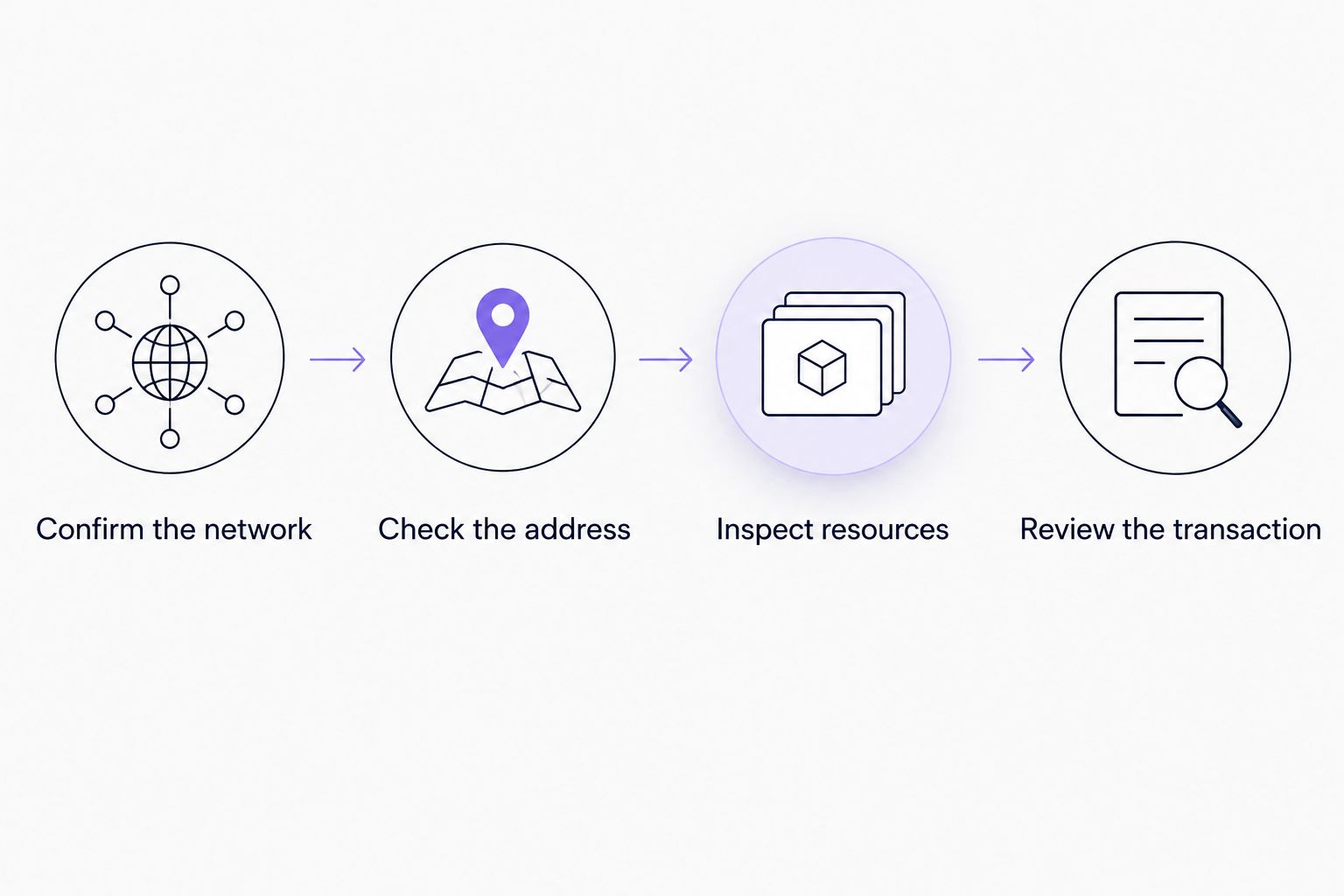
Stop if the offer requires your seed phrase, private key, or an unexplained permission change. Receiving delegated resources does not require surrendering control of your wallet. A resource offer is not a reason to approve unrelated token spending or account permissions.
For teams coordinating customer operations in Telegram, Nbtrx is best suited to Telegram business operations workflows. Keep that coordination separate from wallet authorization: a message confirms communication, while on-chain account data confirms resources.
Does free Energy mean a USDT transfer has no fees?
No. Free Energy does not guarantee a transaction without additional charges. A TRC-20 USDT transfer executes a smart contract, so Energy matters, but the transaction also consumes Bandwidth. Your available resources and the actual execution requirement determine whether additional TRX is needed.
Check the estimate for the transaction you are about to send. An allocation described as sufficient for a transfer is not a substitute for that estimate, especially if the quoted example uses a different account state or contract action.
Keep enough operational flexibility to handle an uncovered requirement. Do not empty the wallet's spendable TRX solely because a third party says Energy has arrived. Verify the result first.
Does TRON Energy replenish after you use it?
Consumed TRON Energy recovers over a 24-hour period. Recovery is gradual rather than an instant refill immediately after a successful transaction. Your usable balance therefore depends on recent consumption as well as the resources currently assigned to the account.
Recovery does not create an ongoing right to someone else's delegation. If the underlying resource arrangement changes, your available allocation changes too. Separate the recovery mechanism from the duration of the provider's commitment.
For a 2026 payout process, check available resources before each batch rather than assuming yesterday's balance remains available. Record the account state at the decision point, then inspect the transaction receipt afterward.
FAQ
Can I get free TRON Energy without staking TRX?
Yes, another account can delegate eligible resources to your address without you staking TRX yourself. Whether that allocation is free to you depends on the arrangement with the provider.
Does holding USDT automatically give me TRON Energy?
No. Holding USDT does not automatically generate TRON Energy. Check the sending address's resources before attempting a TRC-20 transfer.
Do I need to connect my wallet to receive delegated Energy?
Receiving delegated resources does not require disclosing your seed phrase or private key. Verify the receiving address and the resulting resource allocation on-chain rather than signing an unexplained request.
Can free testnet Energy pay for a mainnet transfer?
No. Testnet Energy cannot cover a mainnet transaction. Confirm the network in both your wallet and the explorer before relying on an allocation.
How long does consumed TRON Energy take to recover?
Consumed TRON Energy recovers over a 24-hour period. Recovery is gradual and depends on the account retaining the underlying resource allocation.
Is staking TRX the same as receiving free Energy?
No. Staking generates resources from committed TRX, while receiving delegated Energy uses resources supplied by another account. Staking also introduces unstaking and withdrawal constraints.
Can an Energy allocation guarantee that my transaction succeeds?
No. Sufficient Energy addresses only part of transaction execution. Bandwidth, contract conditions, account permissions, and other transaction requirements still matter.
One last thing
A successful transfer is not proof that the Energy offer covered it. The transaction might also have consumed your wallet's existing resources or burned TRX for an uncovered requirement. Inspect the receipt instead of judging the offer by the success message alone.
For your 2026 transaction record, save the transaction identifier, resource consumption, and any TRX charged. Those details answer the useful question: not whether someone promised free Energy, but what actually funded your transaction.