
Buying TRON Energy is worth it in 2026 when the Energy you actually use costs less to obtain than the TRX your transactions would otherwise burn. It is not automatically worthwhile for occasional transfers, and rented Energy does not remove Bandwidth requirements, delivery risk, or the need to check the receiving wallet before signing.
- Is buying TRON energy worth it? Compare usable rental coverage against the TRX burn your wallet estimates.
- TRON smart-contract transactions use Energy and Bandwidth; renting Energy addresses only the Energy requirement.
- Choose rental for planned contract activity, not because a provider advertises a large allocation.
- Verify delegated resources in your wallet before sending; never share a seed phrase to receive Energy.
Is buying TRON energy worth it in 2026?
Buy Energy only when a transaction-level comparison shows an advantage. A large allocation is not a saving if you use little of it, receive it after sending, or lose access before completing the planned transactions.
Start with your wallet's transaction estimate, your existing resources, and the rental terms. The guide to TRON Energy for USDT transfers covers a specific contract-transfer use case; do not apply the same assumptions to every TRON transaction.
| Approach | Best for | Main advantage | Main limitation |
|---|---|---|---|
| Rent delegated Energy | Planned smart-contract activity within a defined window | Obtain resource coverage without staking your own TRX | Unused coverage and delivery problems can erase the benefit |
| Burn TRX as needed | Occasional activity where convenience matters most | Avoid arranging a separate resource allocation | Insufficient Energy causes the transaction to consume TRX for execution |
| Stake TRX for resources | Recurring activity and willingness to commit TRX | Obtain resources through the network's staking mechanism | Requires capital and attention to staking and withdrawal rules |
These are resource-management choices, not investment recommendations. None guarantees that a transfer succeeds or that its recipient is legitimate.
Why this matters
A token balance and a transaction-resource balance answer different questions. You can hold the token you want to send while lacking sufficient resources to execute its transfer without burning TRX.
TRON distinguishes 2 resource types: Energy and Bandwidth. Smart-contract execution consumes Energy, while transaction data consumes Bandwidth; a basic TRX transfer does not have the same resource profile as a token-contract interaction.
That distinction changes the buying decision. Before comparing providers, establish whether your intended action needs Energy at all, then determine how much of that need your wallet already covers.
Renting Energy: best for scheduled contract activity
Renting makes sense when you know which wallet will send, which contract it will call, and when the activity will happen. Match the allocation to that workload rather than selecting a package by its headline size.
The advantage is operational flexibility. You obtain delegated resource coverage without making your own staking commitment, provided the arrangement actually delivers the resources required.
The drawback is coordination. Your sending wallet, delegation window, transaction timing, and workload must align; excess Energy outside your usable window adds no value to the completed transfer.
Recommendation: choose rental for a defined batch of activity with verified delivery and clear terms. Skip an allocation whose duration or receiving-address requirements you cannot establish before committing.
Burning TRX: best for occasional activity
Paying through TRX burn avoids a separate rental workflow. Your wallet estimates the transaction, and the network uses available resources and charges for uncovered execution according to its rules.
This approach suits a person who prioritizes completing an occasional transaction without managing an additional service. It also provides the baseline against which a rental should be judged.
The limitation is exposure to the transaction's resource demand. Do not assume that a familiar token amount implies a familiar execution requirement; inspect the actual wallet estimate before signing.
Recommendation: use the wallet's current burn estimate as your comparison baseline. Convenience has value, but it should be a deliberate choice rather than the result of overlooking your resource balance.
Staking TRX: best for recurring resource needs
Staking is an alternative when your contract activity is recurring and you are willing to commit TRX. TRON's staking mechanism allows resource allocation, so the comparison extends beyond rental versus immediate burn.
The advantage is direct management of your resource position. You can plan around resources associated with your own stake instead of arranging a separate rental for each workload.
The drawback is capital commitment and resource administration. Check the network's current unstaking and withdrawal rules before deciding that staking is an acceptable substitute for keeping TRX liquid.
Recommendation: evaluate staking against your recurring workload, not a single transfer. For a 2026 operating plan, include the need to keep funds accessible alongside the need for transaction resources.
Why the value of buying TRON Energy varies
The useful comparison is not simply whether a provider's advertised offer looks attractive. These factors determine whether an allocation fits your actual transaction:
- Existing resources. Energy already accessible to your wallet reduces the additional allocation you need.
- Contract execution. Different contract calls require different execution work; estimate the intended action rather than copying an unrelated transfer.
- Usable duration. The delegation must remain usable when you submit the planned transactions.
- Delivery timing. An allocation delivered after you send cannot cover the earlier transaction.
- Workload completion. Resources reserved for transactions you never submit do not contribute to savings.
- Bandwidth coverage. Energy does not replace the separate resource requirement for transaction data.
For your 2026 comparison, record these conditions before ordering. A rental that works for one wallet and schedule is not automatically suitable for another.
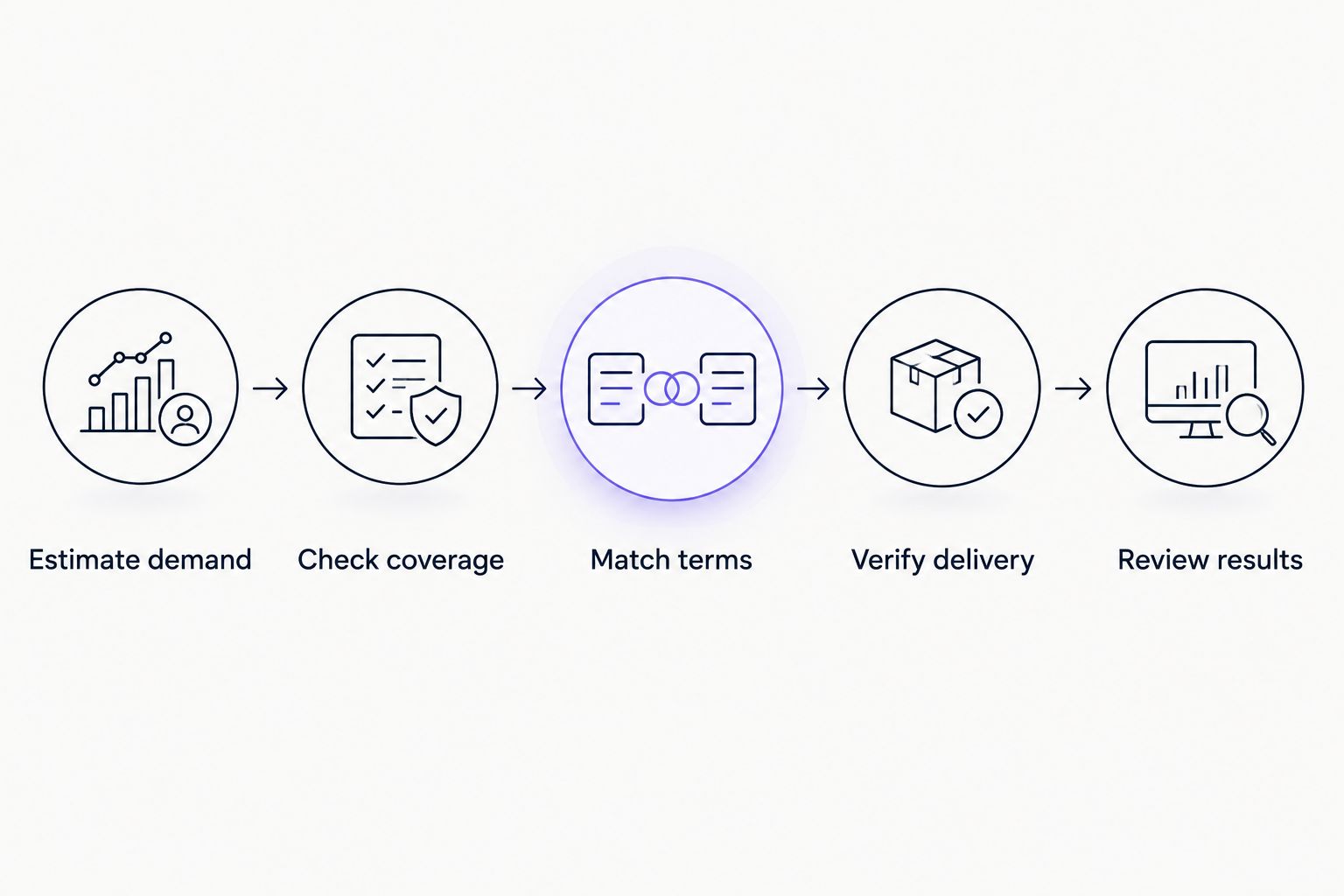
How do you check whether an Energy rental is worthwhile?
Use the same transaction for both sides of the comparison. Comparing a rental package with an unrelated transfer estimate produces a misleading result even when both figures are accurate.
- Estimate demand. Prepare the intended transaction in your wallet without signing it. Review its resource estimate and the TRX burn associated with any shortfall.
- Check coverage. Inspect the sending address's existing Energy and Bandwidth. Identify the uncovered requirement rather than purchasing the full estimated demand again.
- Match terms. Confirm the receiving address, delegation duration, delivery conditions, and usable allocation. Read the total commitment, not just the headline offer.
- Verify delivery. Check the address's resource balance through your wallet or a trusted TRON explorer before submitting the transaction.
- Review results. After execution, compare the transaction receipt with your estimate. Use the result to plan the next workload instead of assuming every call behaves identically.
For an unfamiliar setup, start with 1 test transaction before committing a larger operational batch. A successful test confirms that particular workflow; it does not guarantee identical resource consumption for different contracts or later transactions.
Keep the test relevant. Use the intended sending wallet and the intended kind of contract interaction, then examine actual resource use and any remaining TRX burn.
What should you verify before choosing a provider?
Separate a provider's delivery claim from evidence that the resources reached your address. A website confirmation is not the same thing as usable on-chain coverage.
Check the following before proceeding:
- The exact TRON address that will receive delegated resources.
- What starts and ends the usable delegation window.
- Whether the stated allocation covers the intended workload.
- What the provider requires you to authorize or sign.
- What happens if delivery fails or arrives after the agreed window.
- How you can verify delivery independently of the provider's interface.
Receiving delegated resources does not require surrendering your seed phrase or private key. Reject any request for those credentials, and inspect every wallet prompt instead of treating it as a routine setup step.
Nbtrx offers Telegram business operations tools. Evaluate that business-tool role separately from any TRON resource requirement; a messaging workflow does not establish Energy delivery, wallet safety, or transaction savings.
Does buying Energy make sense for a single USDT transfer?
For 1 USDT transfer, buy Energy only if the usable allocation beats the wallet's uncovered-execution estimate. Check existing resources first, because the wallet might already have enough coverage for part or all of the contract execution.
Do not assume the token amount determines the resource requirement. Review the prepared transaction, confirm the destination, and make the resource decision before you sign.
Should you buy Energy before every transfer?
Check both of TRON's 2 resource types before deciding; do not buy Energy automatically. A simple TRX transfer and a smart-contract transaction do not have identical requirements.
For repeated activity in 2026, make resource inspection part of the sending checklist. A standing habit of buying first and checking later creates unnecessary commitments.
Can you reuse Energy after a transaction?
Consumed TRON resources recover over a 24-hour period under the network's resource model. That recovery is different from a rental agreement's duration: the delegation must still be accessible when you need it.
Do not schedule another batch solely because resources recover. Check the current resource balance and the delegation's remaining usable window before relying on renewed coverage.
FAQ
Is buying TRON Energy worth it in 2026?
Buying TRON Energy is worthwhile when the usable rental coverage costs less than the TRX your planned contract activity would otherwise burn. Include existing resources, delegation duration, and Bandwidth requirements in the comparison.
Do I need Energy to send TRX?
A basic TRX transfer uses Bandwidth rather than smart-contract Energy. Check the transaction type before buying resources intended for contract execution.
Does renting Energy remove every transaction fee?
Renting Energy does not remove every transaction-resource requirement. Bandwidth remains separate, and insufficient Energy coverage can still leave execution that consumes TRX.
Is staking TRX better than renting Energy?
Staking suits recurring resource needs when you accept the capital commitment; renting suits a defined workload without staking your own TRX. Compare resource coverage, operating effort, and access to your funds.
Do I need to share my private key to receive Energy?
You do not need to share your private key or seed phrase to receive delegated Energy. Reject requests for either credential and inspect any transaction you are asked to sign.
How can I tell whether rented Energy arrived?
Check the receiving address's resource balance in your wallet or a trusted TRON explorer. Verify usable resources before sending rather than relying only on a provider's order confirmation.
Does unused rented Energy guarantee future savings?
Unused rented Energy does not guarantee future savings. Your next transaction must occur while the delegation remains usable, and its resource demand must fit the available coverage.
One last thing
Energy answers how a contract executes, not whether the transfer is safe. A fully covered transaction can still send tokens to the wrong address or authorize an unwanted contract action.
Keep the decisions separate in your 2026 checklist: verify the recipient and requested action, then verify resources, then sign. Resource planning belongs inside transaction control, not in place of it.