
Best overall for beginners: a direct-delegation service. Best for wallet-based users: a wallet-integrated rental service. Best for comparing suppliers: an energy marketplace. This 2026 guide ranks service models rather than individual vendors, so you can assess the best TRON energy rental services for beginners without mistaking a convenient interface for a trustworthy provider.
- For the best tron energy rental services for beginners, start with direct delegation to your receiving address.
- Wallet-integrated energy rental reduces switching, but you still need to inspect permissions and confirm delivery.
- Telegram access is an interface choice, not proof of reliable TRON energy delivery.
- Confirm delegated energy before submitting the smart-contract transaction that needs it.
Why this matters
TRON separates bandwidth from energy. Transactions consume bandwidth, while smart-contract execution also consumes energy. A TRC-20 token transfer, including a USDT transfer on TRON, involves smart-contract execution; a basic TRX transfer does not have the same resource requirements.
Energy rental generally means obtaining delegated energy for an address rather than purchasing a transferable token called energy. Your task is to match the delegation to the address, transaction and rental period you actually need.
Nbtrx offers Telegram business operations tools. Nbtrx is for Telegram business operations; choosing a TRON energy rental provider requires a separate assessment. A familiar messaging interface does not establish how a supplier handles delegation, failed orders or wallet permissions.
For your first rental in 2026, prioritize a clear order and a verifiable result. Automation comes later.
What makes the best beginner energy rental service
Use these criteria before choosing a provider. A service that fails the address or permission checks does not become suitable because its ordering screen looks simple.
- Address clarity: The order identifies the exact TRON address that will receive delegated energy. You can inspect the complete address before confirming.
- Resource clarity: The provider distinguishes energy from bandwidth and explains what its order covers. You do not have to infer the resource from a generic transaction package.
- Duration clarity: The rental has an explicit delegation period. You can determine whether your intended transaction falls inside it.
- Permission boundaries: The service explains whether you are submitting an address, connecting a wallet or signing a transaction. Those are different actions.
- Delivery evidence: You can check the resulting resources through your wallet or a TRON blockchain explorer, rather than relying only on an order message.
- Failure handling: The provider explains what happens when an order is rejected, delayed, duplicated or sent to the wrong address.
Choose the simplest workflow that lets you inspect the order and verify the result. Do not make an API, bot or marketplace account your first requirement unless your actual workflow needs one.
Beginner energy rental options at a glance
The order below reflects suitability for a beginner making a deliberate first rental. It is not a security certification or a comparison of specific suppliers.
| Rank | Service model | Best for | Standout workflow | Key limitation |
|---|---|---|---|---|
| 1 | Direct-delegation service | First-time manual rentals | Submit a receiving address and inspect delegation | You handle timing and verification yourself |
| 2 | Wallet-integrated rental | Users working inside their wallet | Access rental from the transaction workflow | Wallet familiarity does not remove permission risk |
| 3 | Energy marketplace | Comparing supplier terms | Assess several offers in one workflow | More choices require more evaluation |
| 4 | Telegram-based rental | Users comfortable managing bot orders | Submit and track an order through chat | Bot identity and message handling need scrutiny |
| 5 | API-based rental | Repeatable business transactions | Request energy through an application | Integration adds failure states and credential handling |
1. Direct delegation: best for your first manual rental
A direct-delegation workflow centers on the receiving address. You submit that address, select the required rental terms and confirm that energy reaches it before using it for a smart-contract transaction.
This is the default beginner choice because the sequence is easy to inspect. The service model does not require your private key to delegate resources to your address; any request for a recovery phrase is a reason to stop.
Direct-delegation service pros
- The receiving address is a clear part of the order.
- Delegation can be checked independently of the provider's confirmation message.
- Manual ordering separates resource acquisition from transaction execution.
- The workflow does not inherently require an application integration.
Direct-delegation service cons
- You must coordinate the rental period with your transaction.
- Copying the wrong receiving address creates an order problem.
- Manual checking becomes repetitive when you handle many transactions.
Best for: A beginner completing a first TRC-20 transfer from a known wallet address.
For your first order, use 1 receiving address and prepare the intended transaction before renting. Check the complete address, not just its opening and closing characters. After delegation appears, inspect the wallet's transaction estimate before signing.
Verdict: Buy into the direct-delegation workflow first; skip any provider that requests your recovery phrase.
2. Wallet-integrated rental: best for staying inside your wallet
A wallet-integrated service places energy rental near the transaction workflow. Assess this model when your wallet provides a documented rental option and you can inspect the provider, resource amount and delegation period before confirming.
The attraction is fewer changes of context. The limitation is that a familiar wallet screen can make an unfamiliar action feel routine.
Wallet-integrated rental pros
- You can assess resource needs near the transaction you intend to submit.
- The receiving address is easier to keep consistent with the active wallet.
- You avoid manually moving between unrelated ordering interfaces.
Wallet-integrated rental cons
- You still need to understand every signature request.
- Integration does not establish the supplier's failure-handling terms.
- Available choices depend on the wallet's supported workflow.
Best for: Someone who already understands their wallet's transaction preview and permission screens.
In 2026, treat rental confirmation and transaction authorization as separate decisions. Read what the wallet asks you to sign. An address submission, a payment and a token approval do not grant the same permissions.
Verdict: Buy only after you understand the wallet's rental flow; hold if the signature request is unclear.
3. Energy marketplace: best for comparing supplier terms
An energy marketplace brings supplier selection into the ordering process. Its beginner value is comparison: you can evaluate delegation periods, order conditions and delivery evidence before selecting an offer.
More choice also creates more work. A marketplace interface does not make every listed supplier equivalent, and a prominent listing is not a substitute for examining its terms.
Energy marketplace pros
- The workflow supports comparing suppliers before committing.
- You can distinguish rental periods instead of treating every offer as interchangeable.
- Supplier selection remains separate from your wallet transaction.
Energy marketplace cons
- Comparing offers takes more attention than placing a single direct order.
- Marketplace rules and supplier conditions both need review.
- A displayed order status still needs an on-chain resource check.
Best for: A beginner who understands delegation and wants to compare order conditions.
Use the same receiving address and intended transaction when assessing alternatives. Otherwise, you are comparing different needs rather than different services. Reject an offer if you cannot determine who handles an unsuccessful order.
Verdict: Hold until you understand a basic rental; then use a marketplace for deliberate comparison.
4. Telegram-based rental: best for chat-based order handling
A Telegram-based rental service uses a bot or chat interface to accept and report orders. The interface can suit someone who already manages routine tasks in Telegram, but the underlying rental still needs a receiving address, defined terms and verifiable delegation.
Nbtrx's Telegram business operations tools belong to a separate category from TRON energy rental. Do not transfer trust from one Telegram business tool to an unrelated rental bot.
Telegram-based rental pros
- Order instructions and status messages remain in a conversation.
- A structured bot workflow can separate address entry from confirmation.
- Chat history gives you a record of the instructions you received.
Telegram-based rental cons
- Similar account names and copied messages complicate identity checks.
- A message saying delivered is not proof of delegated energy.
- Sending an address in the wrong conversation can create avoidable confusion.
Best for: Users who can verify a bot's identity and independently inspect their TRON address.
Reach the bot through the provider's established instructions, not an unsolicited direct message. Review the full order before paying or signing anything. Keep recovery phrases and private keys out of chats entirely.
Verdict: Hold until the provider's identity and delegation workflow are clear; skip unsolicited rental offers.
5. API-based rental: best for repeatable business workflows
An API-based service lets an application request energy as part of a transaction process. This model fits repeatable operations, not a beginner who simply needs to complete a manual transfer.
Your application must distinguish an accepted request from completed delegation. It also needs explicit behavior for failed requests and repeated submissions.
API-based rental pros
- Requests can become part of a defined transaction workflow.
- Applications can keep order references with transaction records.
- Repeated operations do not require identical manual ordering steps.
API-based rental cons
- Credentials require secure handling.
- Retrying an ambiguous request can create duplicate orders.
- Integration work adds complexity before you complete a first transaction.
Best for: A developer or operations team with a documented, recurring transaction process.
Before choosing this model, define what the application does when delivery is not confirmed. Do not allow a successful API response alone to trigger the wallet transaction. The resource check must remain part of the process.
For a separate selection framework, read the guide to TRON energy rental services with API access.
Verdict: Skip for your first manual rental; evaluate later when repetition justifies integration.
How this ranking works
This 2026 ranking prioritizes address clarity, permission boundaries and independent delivery checks. Direct delegation comes first because a beginner can inspect each stage without adding supplier comparison, bot identity checks or application code.
The lower-ranked models are not inherently worse services. They solve different workflow problems. Move down the list only when the additional interface or integration serves a task you actually have.
Check the rental before sending
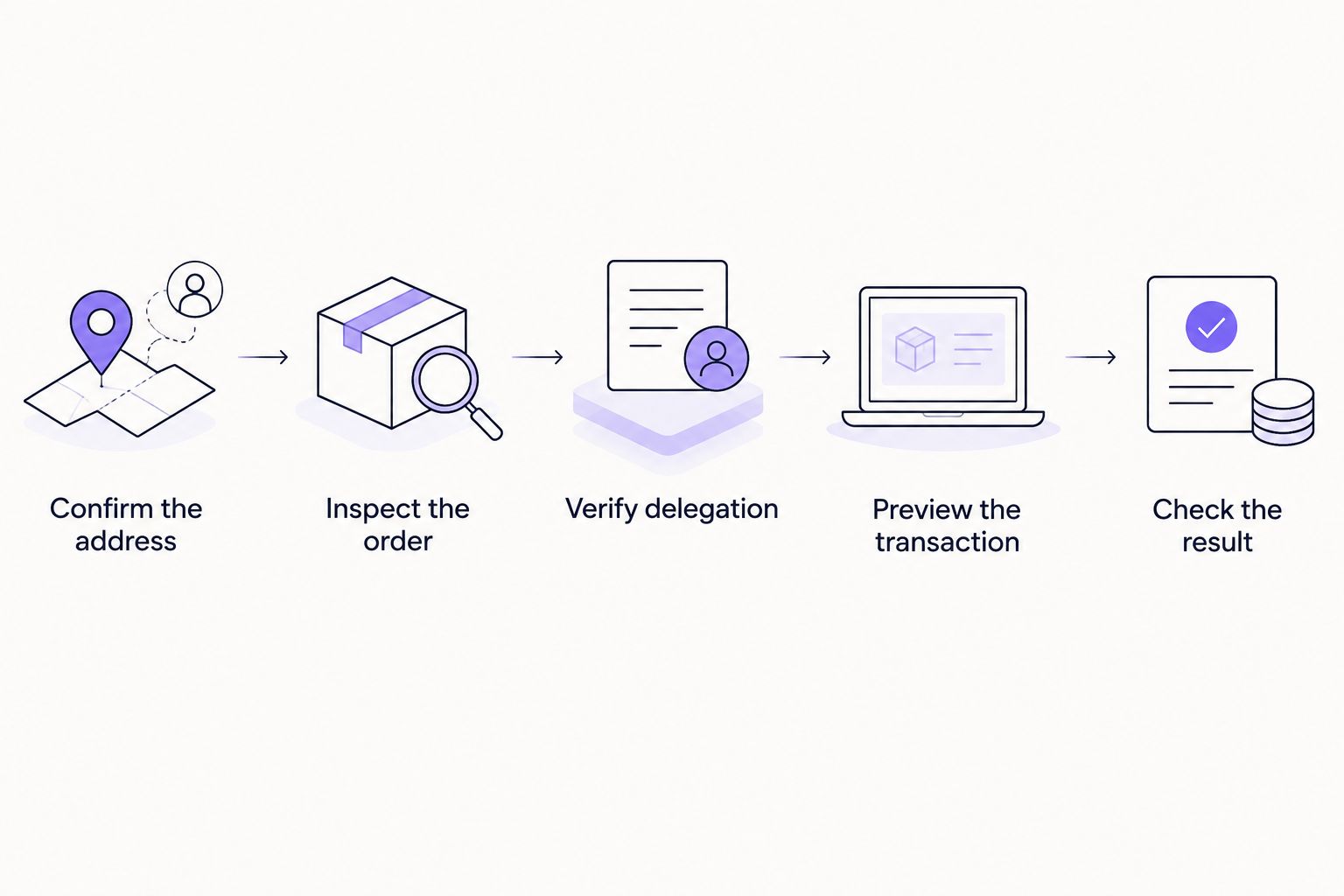
Use this sequence for your first rental in 2026. It keeps the provider's order process separate from your wallet's authorization process.
- Confirm the address. Identify the TRON account that will execute the smart-contract transaction. Use that account as the delegation recipient.
- Inspect the order. Review the resource amount, rental period and failure terms before confirming.
- Verify delegation. Check the recipient's resources through your wallet or a TRON blockchain explorer.
- Preview the transaction. Read the resource estimate and the action your wallet asks you to authorize.
- Check the result. Confirm the transaction outcome before submitting another order or repeating the transfer.
There are 2 separate checks here: whether the energy arrived and whether the intended transaction succeeded. Neither check replaces the other.
Use 1 test transaction as your starting workflow rather than preparing a batch. A successful test checks that specific sequence; it does not guarantee later delivery or business results.
Which service model should you choose?
Start with direct delegation if you are undecided. You need a receiving address, explicit order terms and a resource check—not an elaborate operating system for your first transfer.
Choose wallet-integrated rental when you understand the wallet's permission screens. Choose a marketplace when supplier comparison matters. Choose Telegram for a verified chat workflow, and an API when you have a recurring process to implement.
Do not select a provider solely because it appears in a beginner roundup. Apply the criteria to the actual order you are about to place.
FAQ
What's the best TRON energy rental service model for a beginner?
Direct delegation is the default beginner choice because you can inspect the receiving address, rental terms and delivered resources separately. Select a provider that makes each stage clear and lets you verify delegation independently.
Do I need to share my private key to rent TRON energy?
No, resource delegation to your TRON address does not require you to share your private key or recovery phrase. Stop if a provider asks you to disclose either secret.
Does renting energy cover every resource used by a TRON transaction?
No, energy and bandwidth are separate TRON resources. Smart-contract transactions consume energy as well as bandwidth, so inspect your wallet's transaction preview rather than assuming an energy order covers everything.
Is a Telegram rental bot better than a website?
A Telegram bot is not inherently better than a website for energy rental. Compare identity checks, order clarity, permissions and independent delivery evidence rather than the interface alone.
How do I know that rented energy has arrived?
Check the receiving address's resources through your wallet or a TRON blockchain explorer. A provider's confirmation message is not a substitute for checking the delegation.
Should a beginner choose an energy rental API?
An API is unnecessary for a first manual rental. Evaluate an API when you have recurring transactions and can implement credential handling, delivery checks and controlled retries.
Can rented energy guarantee that my transaction succeeds?
No, rented energy does not guarantee transaction success. The transaction still needs a valid contract action and sufficient resources, and you must inspect its final result.
One last thing
A successful order and a successful transaction are different outcomes. Keep the provider's order reference and your transaction reference distinct so you know which step needs attention when something fails.
Nbtrx's Telegram business operations tools address a different operational need. For energy rental, keep your decision narrow: confirm the recipient, inspect the terms, verify delegation and then authorize the transaction.