
Instead of manually arranging Energy before every exchange withdrawal, connect your withdrawal queue to resource checks, rental requests, and on-chain verification so signing waits until the sending wallet has sufficient resources. This 2026 guide explains the backend workflow for TRON energy rental API integration without assuming that an exchange or rental provider exposes a particular endpoint.
- TRON energy rental API integration belongs between withdrawal approval and transaction signing, with resource verification before broadcast.
- Delegate Energy to the address executing the smart contract, not automatically to the withdrawal recipient.
- Use persistent order identifiers and reconcile uncertain responses before submitting another rental request.
- Nbtrx Telegram business operations tools suit member and partner workflows; keep withdrawal authorization in your exchange backend.
Why this matters
TRON smart-contract execution consumes Energy, while transaction data consumes Bandwidth. Renting Energy addresses one resource requirement; it does not remove every transaction requirement or replace withdrawal approval.
Put the integration at the point where your exchange controls transaction execution. If an external exchange signs and broadcasts withdrawals from its own wallets, an API customer cannot assume control over that exchange’s resource management.
Nbtrx offers Telegram business operations tools. Keep that operational layer separate from the wallet service that authorizes withdrawals, manages resources, and signs transactions.
For a 2026 implementation, define readiness as verified resources on the sending address—not an accepted rental request. That distinction determines whether a withdrawal proceeds safely or reaches the signing service before delegation arrives.
Before you start
- Confirm wallet control and access. You need an approved withdrawal event, access to the sending wallet’s resource state, rental-provider credentials, and permission to modify the signing workflow. Never give a rental provider the wallet’s private key.
- Obtain the provider’s actual API contract. Check authentication, request fields, supported environments, order lookup, duration semantics, status definitions, and error responses. Use the guide to TRON energy rental services with API access to frame provider evaluation, then verify implementation details against current documentation.
- Resolve the address gotcha before setup. Energy must be available to the account executing the contract. For a conventional token withdrawal, that is the sending wallet—not the customer’s destination address. Also confirm whether your provider can support your test environment before building a test plan around it.
The configuration labels below describe fields you create in your own integration. They are not claimed to be buttons, settings, or endpoint names in an exchange or provider dashboard.
Withdrawal trigger configuration
Register the approved withdrawal event
- Connect the resource worker to the event emitted after withdrawal approval but before signing. Do not trigger rentals from an unapproved customer request.
- Create a persistent record containing withdrawal_id, network, sender_address, contract_address, and workflow_state. These are suggested internal field names; map them to your existing schema.
- Filter for TRON contract calls that require an Energy check. Keep native transfers and unrelated networks outside this rental path.
- Store the withdrawal’s execution parameters with the record. An estimate for one contract call does not establish readiness for a different call.
- Acquire a sender-level lock or reservation before estimating resources. Concurrent withdrawals from the same wallet must not each assume that the same available Energy belongs to them.
Expected result: one approved withdrawal creates one tracked workflow record, and another worker cannot independently allocate the same wallet resources to competing work.
Use the withdrawal identifier as the business reference throughout the workflow. Keep the rental order identifier separate: a withdrawal and a provider order describe different objects, and merging them makes reconciliation harder.
For the initial deployment, process 1 withdrawal at a time per sending wallet. This is a conservative configuration choice, not a TRON protocol limit. Increase concurrency only after implementing resource reservations and recovery from interrupted workers.
Resource and rental configuration
Calculate the resource gap
- Read the sending account’s current resource state from your TRON infrastructure. Calculate remaining Energy from the resource fields rather than treating the account’s total allocation as unused capacity.
- Estimate the intended contract execution using a method supported by your node or service. Keep the sender, contract, amount, and call data consistent with the pending transaction.
- Account for resources already reserved by other approved withdrawals. A fresh chain reading alone does not describe commitments still waiting in your queue.
- Set required_energy, available_energy, and reserved_energy in your internal record. Calculate the uncovered requirement after subtracting usable, unreserved Energy.
- Apply a documented safety-margin policy. Validate that policy against your own execution receipts instead of adopting an unexplained fixed allowance.
Expected result: the worker records either a resource gap requiring action or sufficient resources to continue without a rental request.
Do not hard-code a universal Energy requirement for every token transfer. Contract state and execution paths affect consumption. A copied estimate can remain syntactically valid while failing to describe the transaction you are about to send.
Submit and track the rental request
- Translate the resource gap into the provider’s documented request format. Confirm the meaning and units of the requested quantity and rental duration.
- Set the delegation destination to the verified sending address. Validate the address format before making the request.
- Persist a unique local request reference before sending the order. If the provider supports idempotency, use its documented mechanism; do not invent an idempotency header.
- Submit the request and store the returned provider identifier, response state, and request timestamp. Remove credentials from application logs.
- If the response is uncertain, reconcile through the provider’s supported lookup mechanism before creating another order.
Expected result: your local record connects an approved withdrawal to a traceable rental request, including enough information to investigate a timeout without ordering blindly.
For your 2026 rollout, test 3 failure cases explicitly: a rejected request, an interrupted response, and a rental that is accepted but not yet usable. Each case must leave the withdrawal in a known state.
Verification and signing configuration
Gate execution on observed resources
- Treat provider acceptance as an order event, not permission to sign. Read the sending account’s resources again after the provider reports fulfillment.
- Compare usable resources against the pending transaction’s requirement and existing reservations. Re-estimate if execution parameters changed or the earlier estimate is no longer suitable.
- Check the separate Bandwidth requirement and your transaction-fee policy. Energy availability alone does not establish complete transaction readiness.
- Change workflow_state to your locally defined ready state only when every required check passes. Then release the transaction to your signing service.
- Persist the transaction identifier before handing execution to confirmation tracking. If broadcast returns an uncertain result, investigate the existing signed transaction before constructing a replacement.
Expected result: signing receives an approved transaction whose resource checks passed, while confirmation tracking owns the transaction after broadcast.
Use these stage labels in your operating procedure: Approval, Resource check, Rental request, Resource verification, and Signing. The resource-verification stage is the gate; the rental-request stage is only an attempt to satisfy it.
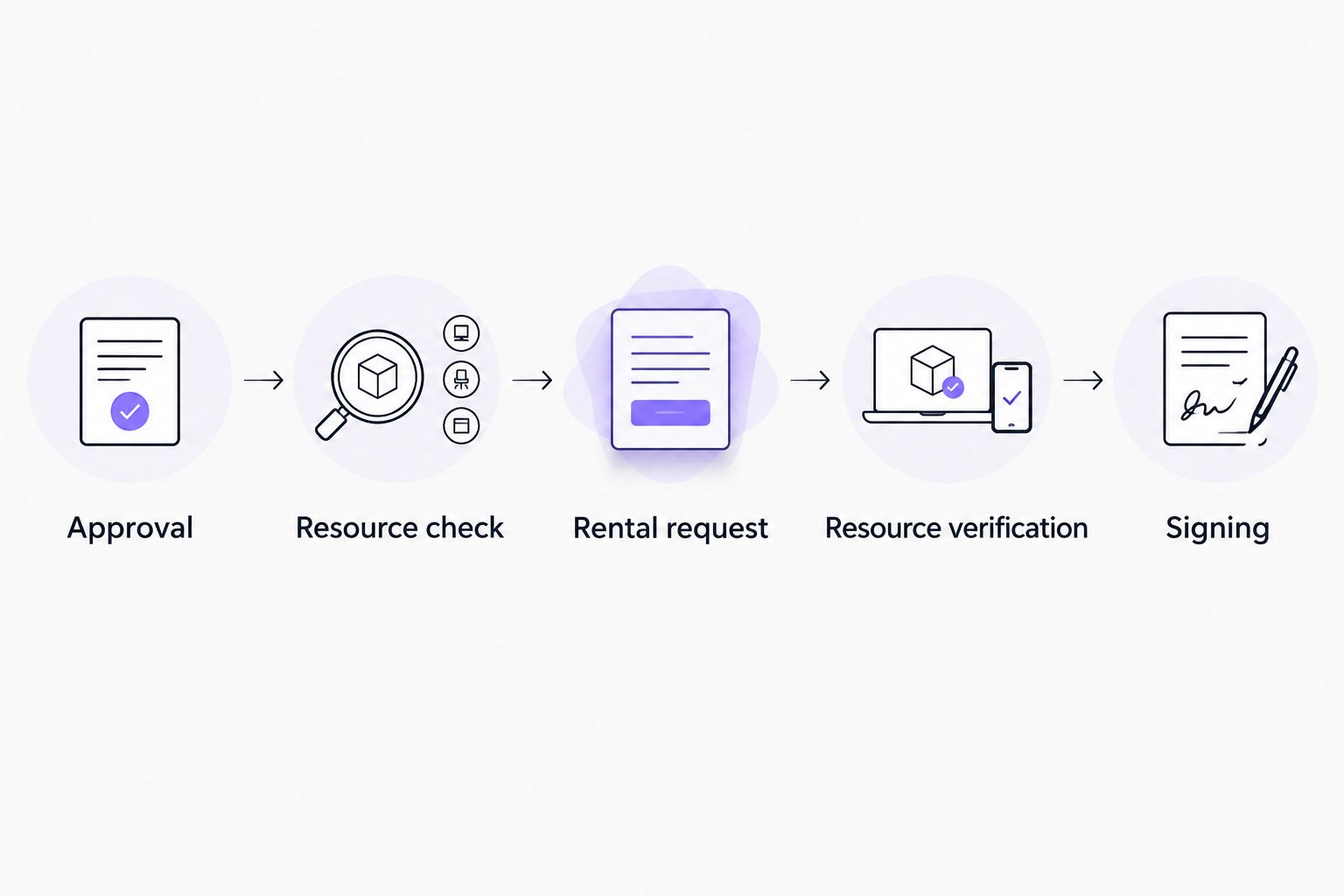
Keep the signing boundary narrow. A worker that can request Energy does not also need permission to approve withdrawals or export signing keys. Separate credentials and responsibilities make individual failures easier to contain.
Replenish Energy when wallet resources change
A second workflow replenishes resources when a monitored sending wallet drops below an internal threshold. This differs from the withdrawal-triggered path: it prepares capacity without waiting for an individual approved transaction.
- Monitor resource state for an allowlisted set of sending wallets.
- Define a replenishment threshold from measured withdrawal demand and your operating policy.
- Check pending rentals and resource reservations before requesting more Energy.
- Verify the resulting resources on-chain and record when the replenishment becomes usable.
- Stop replenishment when the wallet is disabled or the monitoring data is stale.
Best for predictable withdrawal activity: threshold replenishment prepares shared wallet capacity, but requires monitoring and controls against repeated orders. Best for transaction-specific control: withdrawal-triggered rental ties the resource decision to a known contract call, but adds a readiness stage to the withdrawal path.
| Workflow | Best for | Advantage | Limitation |
|---|---|---|---|
| Withdrawal-triggered rental | Explicit control per approved withdrawal | Connects the resource decision to a specific transaction | Withdrawal execution waits for resource readiness |
| Threshold replenishment | Sending wallets with recurring activity | Prepares resources before an individual withdrawal arrives | Requires thresholds, monitoring, and duplicate-order controls |
For a 2026 launch, choose one workflow as the authority for placing orders. If you combine both, make them share the same reservations and pending-order records. Otherwise, two individually correct workers can order against the same resource gap.
Troubleshooting
The provider reports success, but the withdrawal lacks Energy
Check the delegated address first, then read that address’s current resource state. Confirm that the provider’s success status means fulfillment rather than request acceptance. Keep the withdrawal paused until your readiness checks pass.
A timeout produces duplicate rental orders
An interrupted response does not prove rejection. Look up the original order using the provider’s supported reference or query mechanism. Add a persistent local submission lock so a restarted worker cannot submit the same unresolved request again.
The transaction consumes more resources than expected
Compare the estimate’s inputs with the actual signed call and inspect the execution receipt. Check for changed parameters, competing wallet activity, or an unsuitable estimate. Adjust your estimation and reservation policy using observed execution data.
Resources appear sufficient, but execution still fails
Read the transaction result instead of classifying every failure as an Energy problem. Contract rejection, authorization errors, and transaction configuration require different fixes. A failed transaction is not a reason to purchase another rental automatically.
Workers remain stuck after a restart
Recover from persisted workflow states rather than restarting every withdrawal from the beginning. Reconcile unresolved orders, inspect any stored transaction identifier, and resume only the next incomplete stage. Release reservations through a controlled recovery path, not by deleting records.
Customize your workflow
Add operational controls after the basic path survives failure testing. Start with an allowlist of sending addresses, credential rotation, a pause control for new rental requests, and alerts for unresolved orders. Record who owns each alert and what action resolves it.
Nbtrx Telegram business operations tools fit member and partner coordination. Keep customer operations messages free of private keys, API secrets, and sensitive withdrawal data; a notification channel does not replace the exchange’s approval record.
For the 2026 operating runbook, assign separate owners for provider reconciliation and transaction reconciliation. The former determines what happened to a rental request. The latter determines what happened to a signed withdrawal. Combining those questions creates unsafe retry decisions.
FAQ
How do I connect an exchange API to automated TRON Energy rental?
Insert a resource worker between approved withdrawals and transaction signing. The worker checks the sending wallet, requests missing Energy through the provider’s documented API, and verifies resources before releasing the transaction.
Can I automate Energy rental for withdrawals from an exchange I do not control?
You cannot assume control over an external exchange’s signing wallets or resource management. Automation requires an integration point the exchange explicitly supports, or a withdrawal system whose execution you control.
Which address should receive rented TRON Energy?
The address executing the smart contract needs access to the Energy. For a conventional token withdrawal, use the sending wallet rather than automatically delegating to the customer’s recipient address.
Does renting Energy remove every TRON transaction requirement?
No. TRON transactions also involve Bandwidth, and the contract call must satisfy authorization and execution rules. Check all readiness conditions before signing.
Should my integration retry a rental request after a timeout?
Reconcile the original request before submitting another rental order. A timeout leaves the outcome uncertain, so immediate resubmission can create duplicates.
Is a successful rental API response enough to broadcast a withdrawal?
No. Verify usable resources on the sending account and check the pending transaction’s requirements before signing and broadcasting.
Does this guide document a Nbtrx TRON rental endpoint?
No. This guide describes an exchange-side integration architecture, not a Nbtrx rental endpoint. Use your selected rental provider’s current documentation for authentication, request fields, and order-status behavior.
One last thing
A successful rental order is not a successful withdrawal. Track rental fulfillment, resource readiness, broadcast, and transaction execution as separate outcomes. That separation gives your recovery process a precise question to answer before it retries anything.


