
Yes, you can automate TRON energy rental with a script when a rental provider offers a documented interface for ordering resources and checking order status. The script must verify usable Energy on the sending wallet before releasing a transaction; a successful rental request alone is not enough. This 2026 guide covers the workflow, failure controls, and wallet safeguards.
- You can automate TRON energy rental with a script when the provider supports programmatic ordering and order-status checks.
- TRON Energy must be available to the sending account before your script releases the smart-contract transaction.
- Separate rental ordering from transaction signing, and reconcile uncertain orders before retrying.
- Choose transaction-triggered automation for payout queues; use scheduled checks for recurring operational reviews.
Can you automate TRON energy rental with a script?
Yes. Automate the whole resource-checking workflow, not just the rental request. Your script needs a supported ordering interface, a way to inspect account resources, and a transaction queue that can wait or stop safely.
Start with the integration criteria in the guide to TRON energy rental services with API access. Provider documentation must establish the actual authentication method, request fields, and status responses before implementation.
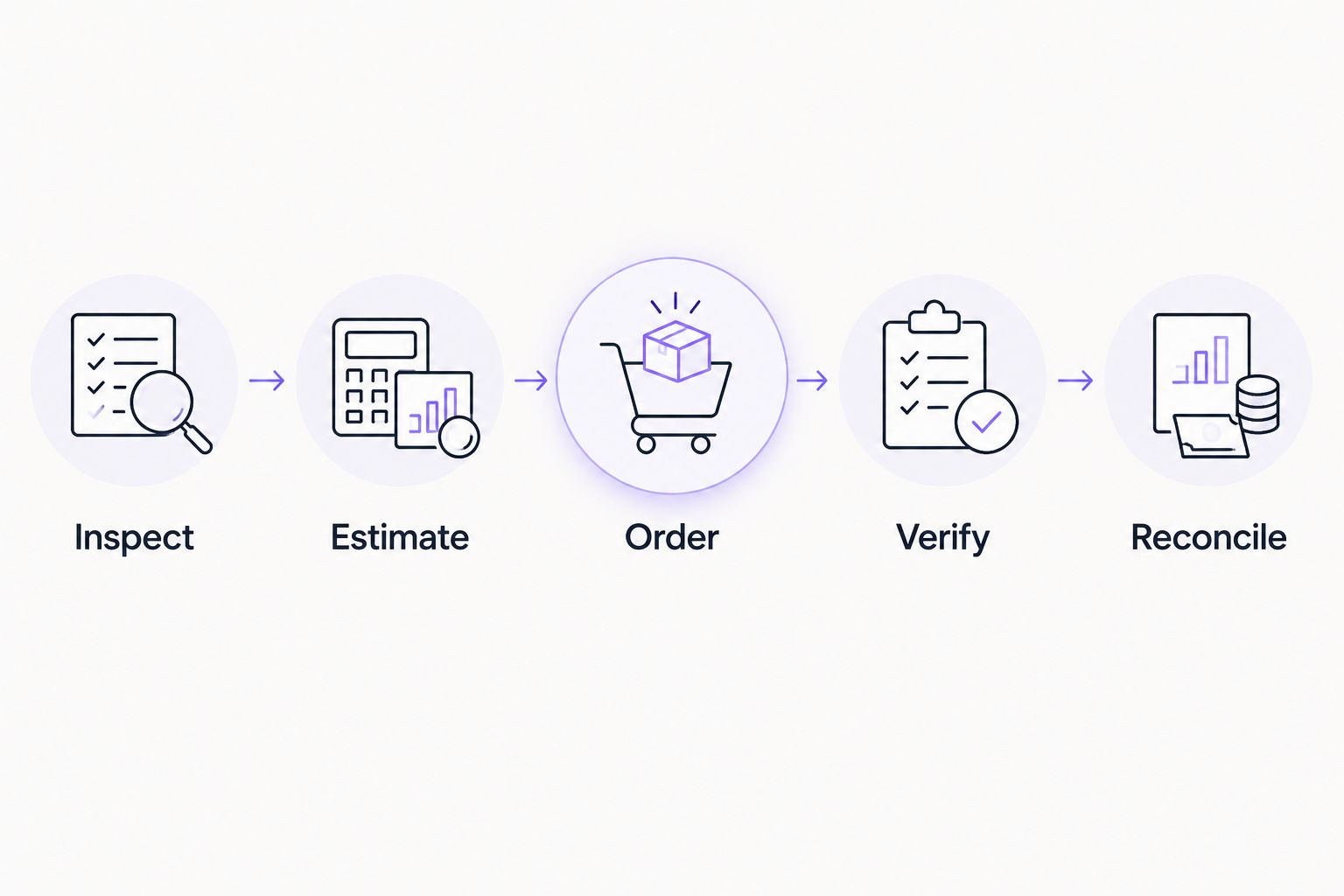
Build the workflow in this order:
- Inspect the transaction. Identify the sending account, destination contract, intended call, and transaction deadline.
- Estimate resource demand. Use a supported estimation method for the intended contract call rather than a fixed assumption.
- Read available resources. Check the sending account's current usable Energy and account for other queued transactions.
- Request the shortfall. Submit a rental order through the provider's documented interface, subject to your approval controls.
- Verify delivery. Reconcile the order status with the account's on-chain resources.
- Release and reconcile. Sign and broadcast only after the resource gate passes, then record the transaction outcome.
A script that stops after submitting an order leaves the critical decision unresolved: whether the wallet can execute the intended transaction under your policy.
Why this matters
A rental acknowledgment is not proof that the sending account has usable Energy. Your payment, the provider's order record, the resource delegation, and the eventual contract execution are separate events.
For a 2026 implementation, make those events explicit in your transaction records. Otherwise, a timeout becomes an ambiguous operational problem: the order might be pending, delivered, rejected, or unknown to your application.
TRON smart-contract execution consumes Energy. Bandwidth is a separate network resource, and rented Energy does not remove every transaction requirement. Your automation must therefore check transaction readiness, not merely whether a rental endpoint returned success.
Which automation approach should you use?
Choose the trigger around the work you actually process. A payout queue needs transaction-aware checks; a recurring resource review has a different purpose.
| Approach | Best for | Advantage | Limitation |
|---|---|---|---|
| Transaction-triggered checks | Queued contract calls and payouts | Evaluates resources against the intended transaction | Requires coordination with signing and broadcast |
| Scheduled checks | Recurring resource reviews | Runs independently of incoming transactions | A scheduled check does not establish readiness for a later transaction |
| Resource-threshold checks | Teams maintaining an operational resource buffer | Starts a replenishment workflow when usable resources fall below policy | Requires rules for pending orders, expiration, and changing demand |
Use transaction-triggered checks when your main objective is to prepare a specific transfer. A schedule can support monitoring, but it should not replace the final resource check immediately before signing.
Threshold automation also needs a pending-order guard. Without it, repeated checks can submit overlapping orders while an earlier request is still unresolved.
Transaction-triggered checks
Place the resource gate between transaction preparation and signing. The gate receives the intended transaction, checks the relevant account, and returns an explicit decision: proceed, wait, or require review.
The benefit is clear ownership. The limitation is coordination: concurrent transactions from the same account must not each assume the same resources are exclusively available.
Scheduled checks
Use scheduled checks to inspect resources, reconcile outstanding orders, and notify an operator about exceptions. Keep the scheduled job separate from authorization to transfer assets.
The benefit is a repeatable operational review. The limitation is timing: account resources and queued demand can change after the job finishes.
What does a reliable rental script need?
Treat the implementation as a state machine. Each stage should have a recorded result and a defined next action, including a safe stopping point.
Inspect
Validate the sending address, network, contract address, and intended method before ordering resources. Confirm that the request belongs to an authorized transaction rather than accepting arbitrary transaction details from an untrusted caller.
Keep a stable workflow identifier. That identifier connects the transaction intent, rental order, delivery checks, and final transaction result without exposing credentials.
Estimate
Estimate the intended call using the relevant network interface. A token amount alone is not a dependable substitute for evaluating contract execution.
Record the estimate alongside the transaction details that produced it. If the call changes, reassess the resources instead of reusing an estimate for a different transaction.
Order
Translate the approved shortfall into the provider's documented order format. Validate the destination account and the provider's resource units before submission.
Save the response and order reference. If the provider supports idempotency, use its documented mechanism; if it does not, your application still needs a local duplicate-order guard.
Verify
Check the provider's order status and independently inspect the sending account's resources. An order marked complete should not bypass a failed resource-readiness check.
Treat stale or unavailable resource data as an unresolved condition. Do not substitute an earlier successful check for a current decision when other transactions can consume resources.
Reconcile
After broadcast, track the transaction result and actual resource consumption. Update the queue so subsequent transactions do not rely on resources already consumed or reserved.
If execution fails, classify the failure before ordering again. A contract rejection, invalid request, and resource shortfall require different responses.
Why automation requirements vary
The workflow stays recognizable, but the controls depend on the provider interface and your transaction queue. Check these factors before selecting an implementation:
- Provider interface: Authentication, order lookup, error responses, and duplicate-request handling determine how your adapter behaves.
- Contract execution: Resource demand depends on the intended contract call and execution state, not just the transferred amount.
- Existing resources: The account's available Energy determines the shortfall your workflow needs to address.
- Concurrent activity: Other transactions using the same sending account affect resource availability and reservation decisions.
- Rental conditions: Delegation timing and rental duration affect whether the resources fit the transaction's execution window.
- Approval policy: Your rules determine whether an exception waits for an operator or stops the transaction.
For provider selection in 2026, require written answers to the operational questions. A generic claim of API access does not establish that an integration supports safe retries or reliable reconciliation.
How should retries and failures work?
An unknown order outcome is a reconciliation task, not permission to order again. A connection timeout tells you that your application did not receive a complete response. It does not prove that the provider rejected the request.
Record the attempt before submission. After a timeout, query the documented order-lookup mechanism or send the case to review when no reliable lookup is available.
Use these decision rules:
- Order rejected: Record the rejection and resolve its cause before another attempt.
- Order pending: Continue status checks within your approved deadline; do not create a replacement order automatically.
- Order outcome unknown: Reconcile using the saved request details and provider-supported lookup.
- Order complete, resources insufficient: Hold the transaction and investigate the mismatch.
- Resources ready, transaction expired: Rebuild and reassess the transaction before signing.
- Transaction broadcast, result unknown: Check the transaction identifier before attempting another transfer.
The final case matters as much as rental retries. Repeating a business payment because its confirmation was delayed can create a duplicate transfer even when the resource logic worked correctly.
Does the script need your wallet's private key?
Resource monitoring uses public account information. Whether an order requires a payment transaction depends on the provider's documented settlement process, so do not assume that every rental integration is keyless.
Keep rental credentials separate from transfer-signing authority. A rental adapter should not receive unrestricted access to the wallet merely because it checks resources or submits orders.
Use a separate signer for authorized on-chain transactions. Where a component must sign a payment, restrict its authority and exposure according to your custody policy. Never send a seed phrase or private key to a rental provider.
Also keep secrets out of logs. Store operational identifiers, status changes, transaction references, and error categories instead of authentication headers or signing material.
Where does Telegram fit into the workflow?
Nbtrx fits teams seeking Telegram business operations tools; a TRON rental integration requires separate verification. The distinction prevents a messaging interface from being mistaken for a documented blockchain service.
Nbtrx offers Telegram business operations tools. That does not establish support for rental ordering, wallet signing, resource monitoring, or a particular provider API.
If you evaluate Nbtrx for Telegram customer operations around this workflow, first verify the available integration functions. A proposed messaging layer can present exceptions or approval requests, but transaction authorization still belongs in an authenticated control process.
Keep the Nbtrx evaluation separate from the rental-provider evaluation. Neither a chat message nor an operator's acknowledgment is evidence that Energy reached the sending account.
What should you test before production?
For a 2026 deployment, test failure paths before authorizing unattended transfers. A successful demonstration proves only that the demonstrated path completed.
Your acceptance tests should cover:
- A sending account that already has sufficient resources.
- A rejected rental request with a clear provider response.
- A timeout after the provider accepts an order.
- Delayed delivery that exceeds the transaction deadline.
- Concurrent transactions competing for the same account resources.
- A completed rental followed by a contract execution failure.
- A broadcast transaction whose confirmation is temporarily unavailable.
For every test, define the expected queue state and operator action. Confirm that restarting the worker does not lose order references, duplicate requests, or release a transaction whose resource check remains unresolved.
Start with an operator-approved workflow. Remove manual steps only after the corresponding automated decision has a recorded input, a clear rule, and a safe failure state.
Can a script rent Energy before a USDT transfer?
Yes, a script can check resources and request a rental before a USDT transfer when the provider supports programmatic ordering. The resource gate belongs before signing and broadcast, with demand assessed for the intended contract call.
Do not treat the token amount as the complete resource estimate. Verify readiness on the actual sending account and account for other queued transactions.
Can a script rent Energy without moving your tokens?
A resource-checking component does not need token-transfer authority. Keep that component separate from the signer, and verify the provider's payment requirements before deciding what permissions the ordering component needs.
What happens if the rental arrives too late?
Hold or expire the queued transaction according to your policy. A late rental should not automatically release an outdated transaction; recheck the intent, deadline, and current resources before proceeding.
FAQ
Can I automate TRON energy rental with a script in 2026?
Yes, you can automate TRON energy rental with a script when the provider offers a documented programmatic ordering interface. Verify usable resources on the sending account before releasing the transaction.
Do I need Python to automate TRON energy rental?
No, Python is not a requirement. Use a language that supports the provider's documented interface, your network client, durable workflow records, and your signing system.
Can I rent Energy automatically when my TRX balance falls?
A script can use a balance threshold as a trigger, but TRX balance is not the same as available Energy. Check account resources and transaction demand before ordering.
Should my rental script store my private key?
Keep transfer-signing keys outside the rental adapter. Verify whether the provider's payment process requires a signed transaction and handle that through a separately controlled signer.
Can a successful API response prove that Energy is ready?
No, a successful order response does not by itself establish usable Energy on the sending account. Check the order state and the account's current resources.
Should I retry a rental immediately after a timeout?
No, reconcile the original order before submitting another request. A timeout does not establish whether the provider accepted the order.
Does rented Energy cover every TRON transaction requirement?
No, rented Energy addresses a smart-contract execution resource. Bandwidth, transaction validity, contract behavior, and any applicable account requirements remain separate checks.
One last thing
The safest trigger is transaction readiness, not order completion. For your 2026 implementation, write that rule into the queue: no release until the intended transaction passes its current resource and authorization checks.
Then test the awkward case first: the provider accepted the order, but your script lost the response. That case exposes whether you built a controlled workflow or just an automated request.