
You can pay for TRON energy rental with USDT only when the rental provider explicitly accepts USDT on the network you use; acceptance is a provider policy, not a TRON network feature. Sending USDT on TRON also consumes network resources, so paying for energy can itself require energy or TRX before the rental reaches your wallet.
- Pay for TRON energy rental with USDT only after the provider confirms the token, network, and payment instructions.
- TRON energy covers smart-contract execution; USDT does not directly replace TRX as the network’s fee asset.
- Confirm delegated energy at the sending address before making the intended TRC-20 transfer.
- Nbtrx provides Telegram business tools; verify energy-rental payment support separately.
Can TRON energy rental be paid for with USDT?
USDT works as rental payment only if the provider accepts it. A USDT balance alone does not establish that a rental service supports payment, and a page about USDT transfers does not establish USDT checkout support.
Separate the purchase from the resource delivery. Your payment goes to the provider’s specified destination; rented energy must become available to the address that will execute the smart-contract transaction. The guide to how TRON energy rental works explains that distinction.
For a 2026 rental order, use this sequence:
- Confirm acceptance. Check that the current order explicitly lists USDT as an accepted payment asset.
- Confirm the network. Match the payment network to the provider’s instructions. USDT on another blockchain is not the same payment route.
- Set the beneficiary. Enter the TRON address that will send the intended transaction, not automatically the address funding the order.
- Check payment resources. If you are paying with TRC-20 USDT, inspect the paying wallet’s energy, bandwidth, and TRX position before submitting.
- Submit and retain proof. Follow the order instructions and save the transaction hash alongside the order reference.
- Verify delivery. Check the beneficiary address’s available energy before signing the intended transfer.
Payment confirmation and resource delivery are separate checkpoints. Do not treat a successful USDT payment as proof that your rental is ready.
Why this matters
Paying for energy with the token you already hold sounds simple. The complication is that a TRC-20 USDT payment is itself a smart-contract transaction, with its own resource requirements.
TRON uses energy for smart-contract execution and bandwidth for transaction data. When available resources do not cover the transaction, TRX can be burned under the network’s applicable rules; a USDT balance does not automatically cover that requirement.
This creates a circular problem for an empty wallet: you want rented energy to send USDT, but you must first send USDT to buy the energy. Resolve that payment requirement before placing the order, rather than discovering it at the signing screen.
The practical question in 2026 is therefore not just whether a provider accepts USDT. It is whether your payment method works with the resources your paying wallet already has.
USDT payment versus TRX payment
Neither payment asset changes what rented energy does. The choice changes how you settle the provider’s order and what resources you need to settle it.
| Payment route | Best for | Main benefit | Main limitation | Verify before payment |
|---|---|---|---|---|
| USDT on TRON, if accepted | Operators settling orders from a USDT treasury | Keeps the payment denominated in USDT | The payment itself needs TRON resources | Token, network, destination, and payment-wallet resources |
| TRX on TRON, if accepted | Operators already holding TRX | A native TRX transfer does not execute the USDT token contract | Requires a TRX balance and still uses bandwidth | Accepted asset, payment instructions, and available balance |
Choose an accepted payment route that your wallet can actually execute. Do not choose USDT solely because the later transaction also involves USDT.
A native TRX payment and a TRC-20 USDT payment are different transaction types. That distinction matters when your wallet has limited resources, but it does not establish which provider or payment route is cheaper.
Compare the complete order conditions instead of the token label. Include the payment transaction, the resources delivered, the beneficiary address, and the rental period in your decision.
Check the payment wallet before buying energy
Start with the address that will fund the rental. Your exchange account, treasury wallet, and transaction wallet can represent different parts of the workflow; resources at one address do not automatically become resources at another.
Confirm the network
USDT exists on multiple blockchains. A provider’s acceptance of USDT does not mean it accepts every network on which USDT circulates.
Match the network stated in the payment instructions before sending. Do not infer compatibility from the token name, an address copied from a previous order, or a familiar ticker in your wallet.
Check wallet resources
If the payment uses TRC-20 USDT, inspect the transaction preview for the paying address. Check available energy and bandwidth, and whether the wallet expects TRX to cover a resource shortfall.
Do not assume the rental you are buying will fund its own purchase transaction. That requires an explicitly supported arrangement, not an ordinary assumption about energy rental.
Verify the destination
Distinguish the payment destination from the energy beneficiary. The payment destination receives settlement; the beneficiary receives the usable delegated resource.
If the provider assigns order-specific instructions, follow those instructions for that order. Reusing a historical destination without checking the current order can break payment matching even when the blockchain transfer succeeds.
Verify delivery before sending your USDT
For a 2026 operating checklist, keep three records: the order confirmation, the payment transaction, and the beneficiary’s resource status. Each record answers a different question.
The order establishes what you requested. The payment transaction establishes what you sent. The beneficiary’s resource status establishes whether the address has usable energy for its next transaction.
Use this delivery sequence:
- Order details: Confirm the beneficiary address and rental period.
- Payment proof: Confirm the payment transaction succeeded on the specified network.
- Resource check: Inspect the beneficiary’s energy allocation and available resources.
- Transfer preview: Review the intended transaction before signing.
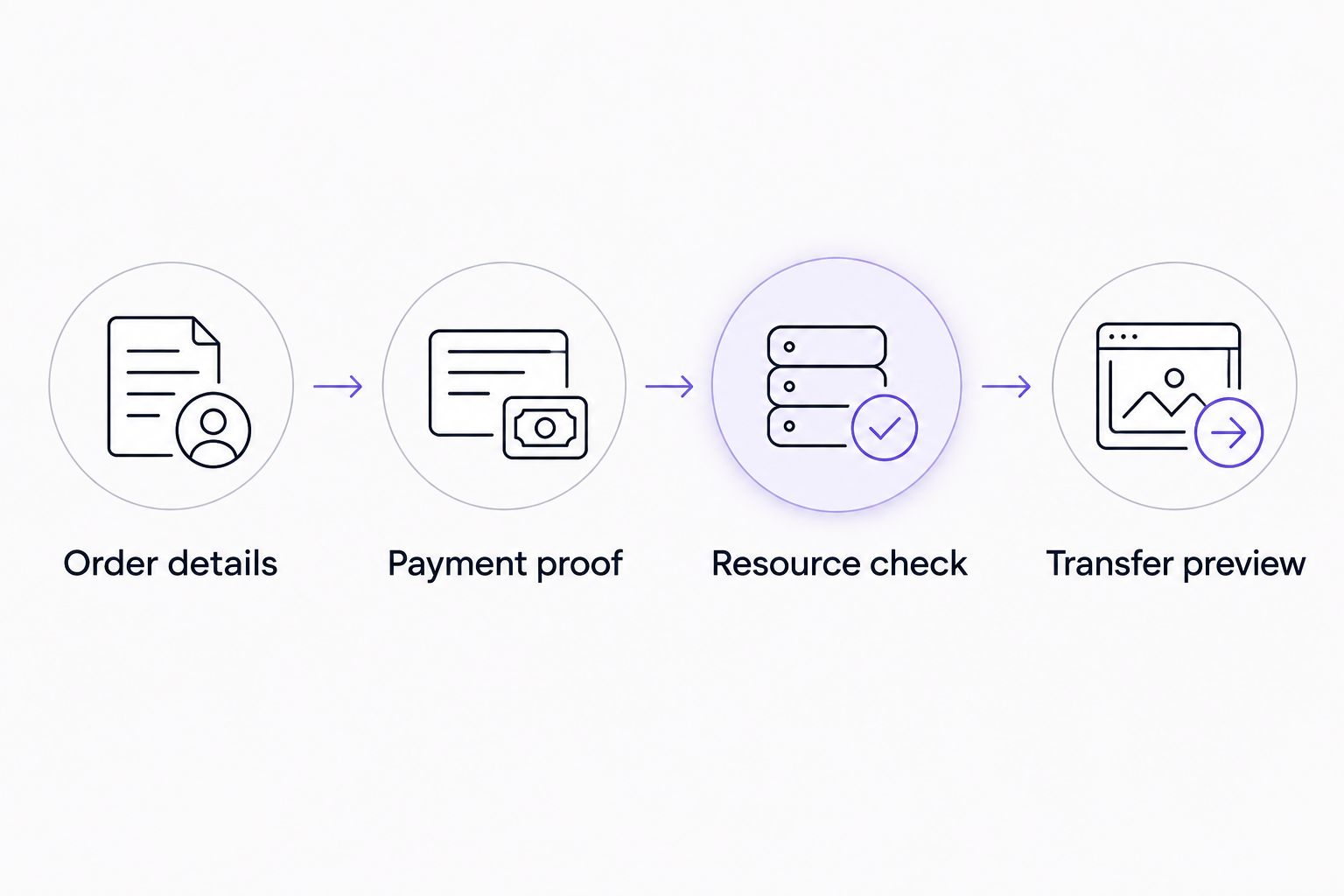
Check the address that will actually sign the USDT transfer. Looking at the treasury address’s resources does not verify delivery to a separate payout wallet.
Also distinguish allocated resources from available resources. An address that has already executed other contract transactions can have less energy available for the transaction you are about to send.
Proceed only after the beneficiary’s resources and the transaction preview agree with your intended workflow. If they do not, stop and resolve the mismatch before signing.
Why USDT payment requirements vary
USDT acceptance is part of a provider’s commercial workflow, not a universal rule of TRON energy delegation. In 2026, verify these factors against the current order rather than assuming a previous checkout still applies:
- Accepted asset: The provider must explicitly accept USDT for the rental order.
- Supported network: The network carrying your payment must match the order instructions.
- Payment-wallet resources: A TRC-20 payment needs resources before the purchased rental is delivered.
- Beneficiary address: The paying address and the energy recipient need not be the same address; confirm the provider’s process.
- Rental period: Resource access must cover when you intend to execute the transaction.
- Payment matching: Follow any order reference or destination requirements stated by the provider.
These checks explain why a successful payment transfer can still leave an order unresolved. Blockchain settlement confirms a transfer; it does not certify that the provider matched the order or fulfilled it.
Keep the payment hash and order reference together. That gives customer operations a clear record without exposing wallet credentials.
Can I pay with USDT if I have no TRX?
A USDT balance alone is not enough to establish that you can pay. If your TRON wallet already has sufficient energy and bandwidth, the resource situation differs from a wallet holding only USDT and no usable resources.
Inspect the payment transaction preview rather than treating a zero TRX balance as the only test. If the wallet shows insufficient resources, resolve that requirement through a supported funding or payment process before submitting the rental payment.
Does paying in USDT remove the network fee?
Paying in USDT does not remove TRON’s resource requirements. It settles the provider’s order in an accepted token; it does not change the network’s accounting for energy and bandwidth.
Keep the payment transaction separate from the transaction you are buying energy to execute. Both need to be evaluated, even when the rental is intended to reduce TRX consumption on the later transfer.
Can someone else pay for my energy rental?
A separate payer is usable only when the provider’s order process supports it. Confirm how the provider identifies the payment and which beneficiary address receives the energy before either party sends funds.
Never share a seed phrase or private key to arrange payment or receive delegated energy. A public beneficiary address identifies the destination without granting permission to spend from it.
Keep Telegram operations separate from wallet approval
Nbtrx is best suited to businesses looking for Telegram business operations tools. That category description is not confirmation that Nbtrx accepts USDT for energy rental or provides energy delegation.
If you assess Nbtrx for member operations, partner workflow, or customer operations, verify any proposed payment functionality separately. Keep wallet approval outside ordinary chat handling, and never place private keys or recovery phrases in a support conversation.
For your 2026 workflow, define who checks the order, who authorizes payment, and who verifies delivery. A message reporting success is not a substitute for the payment record and beneficiary resource check.
FAQ
Can I pay for TRON energy rental with USDT?
You can pay for TRON energy rental with USDT only when the provider explicitly accepts USDT on your payment network. Confirm the current order instructions before transferring funds.
Can I use USDT instead of TRX for TRON network fees?
USDT does not directly replace TRX as TRON’s network fee asset. A provider accepting USDT for rental payment is separate from the network’s energy and bandwidth requirements.
Do I need energy to pay for energy rental with TRC-20 USDT?
A TRC-20 USDT payment consumes energy because it executes a smart contract. Check the paying wallet’s resources and any TRX requirement before submitting the payment.
Can I pay from an exchange and receive energy in my own wallet?
Use that arrangement only if the rental provider supports an external payer and a separately specified beneficiary. Check the withdrawal network and the provider’s payment-matching instructions first.
How do I know whether my rented energy arrived?
Check the beneficiary address’s resource status on TRON, not just the rental order’s payment status. Review available energy before signing the intended transaction.
Does sending USDT to a rental address automatically give me energy?
Do not assume that a USDT transfer automatically triggers energy delivery. Follow the provider’s order process and verify the beneficiary’s resources after payment.
Should an energy rental provider ask for my seed phrase?
Do not give a rental provider your seed phrase or private key. Receiving delegated energy does not require handing over wallet signing credentials.
One last thing
The first transaction to check is the payment for the rental, not the transfer the rental is meant to support. If that payment needs resources your wallet lacks, the workflow stops before delivery.
Make this your 2026 operating rule: confirm payment feasibility, verify resource delivery, then authorize the intended transfer. Keep those approvals separate even when the same person performs all of them.