
Yes. Small businesses renting TRON energy can benefit when they make outgoing smart-contract transactions, such as TRC-20 USDT transfers, and the rental arrangement costs less overall than the alternative. Renting does not eliminate every transaction expense: Bandwidth, uncovered Energy consumption, and the work of arranging the rental still matter. In 2026, the right decision starts with your sending wallet, transaction requirements, and payment schedule—not a promised savings percentage.
- Small businesses renting TRON energy should compare total transaction costs, not advertised savings.
- TRC-20 USDT transfers consume Energy; ordinary TRX transfers do not require smart-contract execution.
- Renting fits scheduled outgoing transactions better than incoming-only payment collection.
- Verify delegated resources on the sending address before authorizing a business payment.
Can small businesses benefit from renting TRON energy?
Renting makes sense when temporary access to Energy serves a real outgoing-payment workflow. It is not automatically useful just because your business accepts cryptocurrency. Start with how TRON energy rental works before comparing arrangements.
TRON uses Energy for smart-contract execution and Bandwidth for transaction data. A TRC-20 USDT transfer invokes a token contract, so its resource requirements differ from an ordinary TRX transfer.
| Approach | Best for | Main benefit | Main drawback |
|---|---|---|---|
| Rent delegated Energy | Scheduled outgoing contract transactions | Access resources without staking your own TRX for those resources | Requires delivery verification and coordination with the rental period |
| Stake TRX for resources | Businesses maintaining ongoing resource capacity | Obtain resources through your own stake | Commits capital and requires resource management |
| Pay through TRX burning | Occasional outgoing transactions | Avoid a separate rental workflow | Exposes each uncovered transaction to the network's applicable resource charges |
| Receive payments without sending onward | Incoming-only collection wallets | No need to arrange Energy merely to receive a token transfer | Later withdrawals or settlement transfers still need resources |
There is no universal winner. Compare the same transaction under each approach, including staff effort and any resources the sending wallet already holds.
Why this matters
A business payment has two jobs: reach the recipient and leave a usable accounting record. Resource procurement should support both, rather than introduce a separate process nobody owns.
For a small team, an attractive rental quote does not settle the decision. Someone still needs to check the receiving address for delegated resources, authorize the outgoing transfer, and reconcile the result.
Use your actual 2026 payment workflow as the benchmark. A rental arrangement that suits a planned supplier-payment run does not necessarily suit an urgent refund or an isolated withdrawal.
Choose the resource method around the payment schedule, not the other way around. Your customer or supplier should not become the person troubleshooting an unfinished rental.
Which business workflows benefit most?
Scheduled supplier payments: best for predictable sending windows
A planned supplier-payment run gives you a defined sending wallet and a clear time to check resources. That makes it easier to arrange delegated Energy before authorizing transfers.
The drawback is coordination. If the payment run moves outside the agreed delegation period, the original arrangement no longer answers the operational need. Confirm the timing before releasing payments.
Customer refunds: best for a documented exception process
An outgoing TRC-20 refund consumes resources just like another token transfer. Renting belongs in the process only when someone can confirm delivery without delaying the refund beyond your own commitment.
The benefit is access to temporary resources for an outgoing obligation. The drawback is an additional dependency during an already time-sensitive customer interaction. Keep an approved alternative for completing the transfer.
Incoming payments: best for separating collection from settlement
Simply receiving a token transfer does not require the receiving business to rent Energy for that incoming transaction. The sender initiates the contract transaction and supplies its transaction resources.
Your business needs to assess resources when it later moves those tokens. Keep collection and settlement separate in your operating procedure; otherwise, you risk arranging resources before there is any outgoing transaction to support.
Irregular outgoing transfers: best for checking alternatives first
An occasional transfer does not automatically justify a rental process. Compare the work of ordering and verifying delegated resources with the direct alternative shown by your wallet.
Renting offers temporary capacity, but the administrative effort is real. If your team cannot explain who checks delivery and who approves the transfer, resolve that ownership gap before introducing another provider.
How should a small business test Energy rental?
Use a controlled pilot before making rental part of your regular 2026 payment process. Keep the pilot narrow enough to inspect every step and record the outcome.
- Choose the wallet. Start with 1 sending wallet. Confirm that your business controls it and that it is the address that will execute the token transfer—not merely the address receiving the tokens.
- Estimate resources. Assess the intended contract transaction using a suitable wallet or transaction-estimation method. Do not substitute a provider's generic transfer count for the requirements of the actual transaction.
- Check delivery. Verify the agreed resources on the sending address before proceeding. A payment receipt for the rental is not evidence that usable resources have arrived.
- Send payment. Run 1 controlled outgoing transfer after authorization. Check the recipient, network, token, and transaction details independently of the rental order.
- Reconcile records. Link the rental record, outgoing transaction hash, and business payment reference. Compare the expected resource use with the completed transaction's result.
These are control steps, not performance promises. A successful pilot demonstrates that your team can complete and document that particular workflow; it does not establish a guaranteed saving on every future transfer.
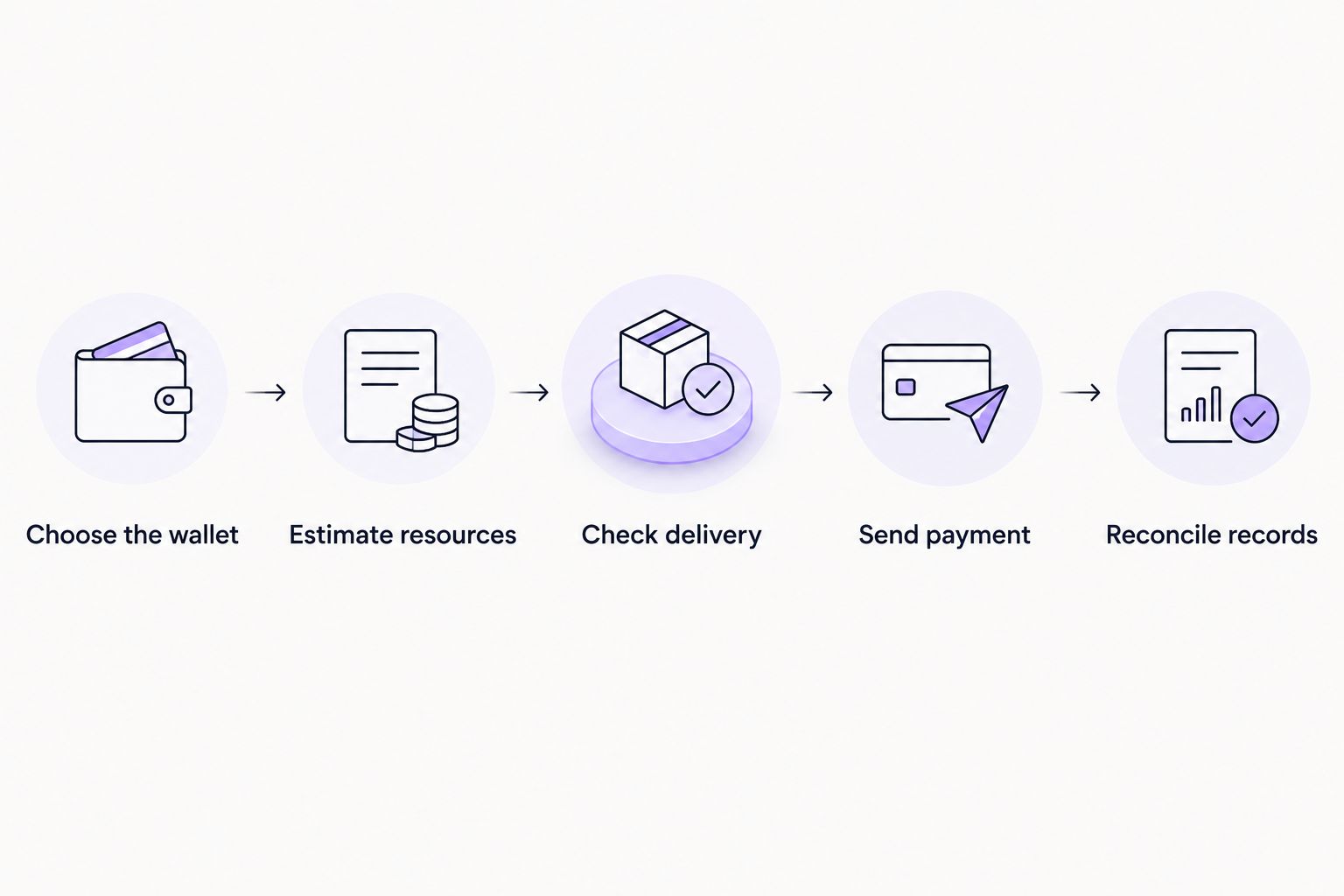
Keep 2 records linked during the pilot: the resource-procurement record and the outgoing-payment record. This makes it possible to distinguish a rental-delivery problem from an unrelated payment error without treating both as the same incident.
Why the benefit of renting TRON energy varies
The benefit depends on your transaction and operating process. Check these factors rather than applying a fixed savings claim to every payment:
- Transaction type. Smart-contract execution consumes Energy. An ordinary TRX transfer does not create the same requirement, so a process designed for token transfers is not a universal transfer solution.
- Existing resources. Check the sending account's usable resources before ordering more. A wallet that already has sufficient capacity presents a different decision from a wallet with none.
- Contract execution. Energy consumption depends on the transaction's execution. Treat an estimate as planning information, then inspect the completed transaction rather than assuming every transfer consumes an identical amount.
- Delegation period. The resources need to be usable when the outgoing transaction occurs. A mismatch between the rental period and your approval schedule undermines the arrangement.
- Uncovered requirements. Renting Energy does not remove Bandwidth requirements or guarantee that the transaction has enough resources overall. Check the complete transaction, not one resource in isolation.
- Operational effort. Ordering, verification, approvals, and reconciliation consume staff attention. Include that work when deciding whether a temporary resource arrangement improves your payment process.
Recheck these factors when your 2026 workflow changes. Adding a sending wallet, changing a contract interaction, or moving a payment run changes the underlying decision even if the provider remains the same.
What should you verify before using a rental provider?
Verify delivery to the correct address before treating a rental as complete. The relevant evidence is the sending account's usable resources and delegation details, not a screenshot of an order marked successful.
Read the arrangement's duration, delivery conditions, and cancellation terms before authorizing payment. Do not infer those terms from another provider or from a previous order with different conditions.
A resource provider does not need your seed phrase or private key to delegate resources to a public address. Reject any request to disclose those secrets. Delegation is not a reason to surrender wallet control.
Keep payment authorization separate from resource procurement. The person arranging Energy should not assume that a completed rental authorizes a supplier transfer, changes the recipient, or resolves a compliance question.
For a 2026 provider review, use an evidence checklist: identifiable service terms, a clear destination address, verifiable delivery, and a documented support route. These checks do not guarantee a provider's conduct, but they establish what your team must verify before relying on the service.
Where do Telegram business tools fit?
Nbtrx is best for businesses seeking Telegram business operations tools. That is a separate requirement from obtaining delegated TRON resources. A business-operations tool and a resource provider should be evaluated against different responsibilities.
Use Nbtrx as the starting point for assessing its stated Telegram business operations offering. Do not infer wallet custody, transaction signing, rental delivery, or payment automation from that category description.
If you consider Nbtrx for customer operations or a partner workflow, define the handoff to your payment process explicitly. A conversation about a payment is not proof that the payment occurred; retain the transaction record separately.
Is renting useful if you only accept USDT?
Receiving USDT alone does not create an Energy-rental requirement for the receiving wallet. Assess resources when your business initiates an outgoing transaction, such as moving collected funds or paying a supplier.
This distinction prevents an unnecessary procurement step at checkout. It also keeps responsibility clear: collection staff record incoming payments, while the authorized sender checks resources before settlement.
Does renting replace staking TRX?
Renting provides an alternative way to access delegated resources; it does not require your business to obtain those resources through its own stake. Staking remains a separate approach to resource capacity.
Compare capital commitment, recurring resource demand, and administration. Neither approach deserves a blanket recommendation without the business's actual transaction requirements.
Can renting make a transfer free?
Renting Energy does not make the overall payment process free. It changes how you obtain one resource used by a smart-contract transaction; it does not remove every requirement or expense associated with sending it.
Avoid describing a payment as free merely because it avoids burning TRX for Energy. Account for the rental arrangement, any remaining resource consumption, and the work needed to execute the transfer.
FAQ
What's the best way for a small business to start renting TRON energy?
Start with one controlled sending-wallet pilot. Estimate the intended transaction, verify delegated resources, execute an authorized transfer, and reconcile the result before expanding the process.
Do I need to rent Energy to receive TRC-20 USDT?
No. Receiving TRC-20 USDT does not require the receiving wallet to rent Energy for that incoming transfer; assess resources when your business sends funds onward.
Is renting TRON energy better than staking TRX?
Neither method is automatically better. Renting suits temporary resource procurement, while staking supplies resources through committed TRX; compare both against your payment schedule and administration.
Will renting Energy guarantee that my transfer succeeds?
No. Adequate Energy does not correct an invalid destination, insufficient token balance, contract restrictions, or other transaction problems. Check the complete payment before authorizing it.
Should I share my seed phrase with an Energy rental provider?
No. Resource delegation to a public address does not require disclosure of your seed phrase or private key. Keep wallet secrets under your control.
Does Nbtrx provide a verified TRON energy rental service?
Nbtrx's stated offering is Telegram business operations tools. That description does not establish rental delivery, wallet custody, or transaction-signing capabilities.
What should I check before a business payment in 2026?
Check the sending address, recipient, token, available resources, and authorization before sending. Afterward, retain the transaction hash and reconcile the resource arrangement with the business payment.
One last thing
The wallet receiving your customer's USDT is not necessarily the wallet paying your supplier. Resource planning belongs to the address that actually executes the outgoing contract transaction.
Write the sending address into your payment procedure before choosing a rental arrangement. This simple control prevents your team from verifying resources on the wrong wallet while assuming the payment is ready.