
Best overall for occasional freelancer payouts: on-demand wallet-address rental. Best for grouped payments: scheduled batch rental. Best for an integrated payment workflow: API-based rental. This 2026 guide compares rental service models so you can match TRON energy to the transfers you actually send.
- The best tron energy rental services for freelancers accepting crypto match outgoing transfers, not incoming invoice payments.
- TRON on-demand energy rental is the default shortlist for occasional TRC-20 USDT transfers.
- Scheduled rental suits grouped payments; API-based rental suits an existing automated payment workflow.
- Nbtrx provides Telegram business operations tools; evaluate TRON energy delegation separately.
Why this matters
Accepting crypto and sending crypto are different operations. Receiving a normal TRC-20 USDT transfer does not require you to rent energy for the incoming payment. The sending account executes the token contract and bears the transaction's resource requirements.
That distinction changes the buying decision. If clients pay you and you leave the funds in your wallet, an energy rental is not a necessary step in accepting the invoice payment. If you send USDT to another wallet, pay a subcontractor, or consolidate funds, energy becomes relevant.
Nbtrx offers Telegram business operations tools. Keep that business workflow separate from the blockchain resource decision: a messaging interface does not establish whether energy reached your sending account.
For your 2026 shortlist, compare the rental workflow with your payment routine. Do not select an automated service just because it has more controls than a manual one.
What makes the best TRON energy rental service?
Use these criteria before comparing providers. They describe what to verify, not benefits to assume from a service name.
- Correct delegation destination: The rental must serve the TRON account that will execute the outgoing transaction. Your customer's receiving address is not that account.
- Visible delivery: Check the sending account's resources before signing. An order confirmation and usable energy are different things.
- Suitable rental window: The delegated resources must remain usable when you send. Match the window to your actual payment schedule.
- Appropriate order size: Estimate the intended transaction rather than copying an energy amount from an unrelated transfer.
- Failure handling: Read what happens after a wrong-address order, delayed delegation, failed transaction, or expired rental.
- Wallet control: Energy delegation does not require your seed phrase or private key. Reject any rental process that asks for either.
The best rental is the one whose delivery you can verify before your payment needs it. A Telegram message, dashboard status, or API response is operational evidence; the account's usable resources are the final check.
TRON energy rental models at a glance
The ranking below compares 4 rental models, not named companies. Each model occupies a different use-case slot. Use the table to decide which type belongs on your shortlist before checking individual services.
| Rental model | Best for | Standout feature to require | Key limitation |
|---|---|---|---|
| On-demand wallet-address rental | Occasional outgoing USDT payments | Delegation to your specified sending account | Requires a manual resource check before sending |
| Scheduled batch rental | Planned groups of outgoing payments | A rental window aligned with the payment session | Schedule changes can leave the rental unused |
| API-based rental | An existing automated payment workflow | Machine-readable order and delivery status | Requires integration and exception handling |
| Assisted rental ordering | A first rental with setup questions | Clear help with address, timing, and order selection | Assistance is not proof of on-chain delivery |
Do not treat these labels as interchangeable. A service that supports manual ordering is not automatically suitable for scheduled payments. An API endpoint is not automatically a complete payment workflow.
1. On-demand rental: best for occasional freelancer payments
On-demand wallet-address rental is the simplest shortlist for a freelancer who sends USDT occasionally. You select the sending address, arrange the rental, verify the resources, and then submit the transfer.
The important feature is not a particular interface. It is a clear link between your order and the account that needs energy. A web form or Telegram ordering flow still needs the same address and delivery checks.
On-demand rental pros:
- Fits a payment you are ready to send rather than a speculative future transfer.
- Keeps the ordering decision separate from your invoicing software.
- Avoids building an integration for an occasional task.
- Gives you a clear point to check resources before signing.
On-demand rental cons:
- You must repeat the ordering and verification steps for later payment sessions.
- A wrong address or unsuitable rental window can make the order useless for your intended transfer.
Best for: Freelancers moving client payments to another wallet or paying a subcontractor occasionally.
For a 2026 provider shortlist, examine how the service demonstrates delivery. The guide to TRON energy rentals with instant delivery addresses that selection angle; your own account check still comes before signing.
Verdict: Buy for an immediate, defined transfer after verifying the sending address and usable resources.
2. Scheduled rental: best for grouped freelancer payments
Scheduled batch rental fits a deliberate payment session. You prepare outgoing payments, estimate their resource requirements, and arrange energy for the period in which you intend to execute them.
Grouping payments means organizing your work around a shared session. It does not mean several token transfers automatically become a single transaction, or that every transfer consumes the same energy.
Scheduled rental pros:
- Connects resource planning to a known payment routine.
- Lets you review destinations before the rental begins.
- Keeps payment preparation separate from transaction execution.
Scheduled rental cons:
- Delayed approvals or changed payment instructions can disrupt the planned window.
- An estimate based on one transfer does not establish the requirement for every transfer in the group.
Best for: Freelancers who make planned subcontractor payouts or consolidate balances during a defined work session.
Prepare the destinations and intended amounts first. Then check the resource estimate for the transactions you will actually submit. Renting before the payment list is ready creates an avoidable timing dependency.
Verdict: Buy when your payment session is settled; hold while destinations or approvals remain unresolved.
3. API-based rental: best for an integrated payment workflow
API-based rental is a service model for software that requests energy and reads order status without a person submitting every order manually. Its value depends on whether your payment system already has a defined place for that request.
A useful integration separates the rental request, delivery confirmation, and transaction submission. Treat those as distinct states. An accepted request must not automatically trigger a payment that still lacks usable energy.
API-based rental pros:
- Fits software-controlled payment operations.
- Supports a repeatable order-and-confirmation sequence.
- Lets your system attach rental records to the corresponding payment task.
API-based rental cons:
- Requires implementation, credential management, and monitoring.
- Retry behavior can create duplicate orders unless your workflow handles repeated requests safely.
Best for: Freelancers running an existing payment application or a repeatable software-controlled payout process.
Compare documentation, status definitions, and failure behavior in the guide to TRON energy rental services with API access. In 2026, the deciding question remains operational: what stops the transfer when delivery has not been confirmed?
Verdict: Hold until the integration includes resource checks, bounded retries, and a manual exception path.
4. Assisted ordering: best for a first rental
Assisted rental ordering suits a freelancer who understands the payment destination but needs help understanding the rental process. Look for explanations of the sending address, resource estimate, rental window, and delivery check.
Assistance should explain the operation without taking control of your wallet. The rental operator does not need your seed phrase to explain energy delegation or help you identify the correct public address.
Assisted ordering pros:
- Gives you a place to resolve terminology before ordering.
- Helps separate the sender's address from the recipient's address.
- Supports a first-use checklist without requiring an API integration.
Assisted ordering cons:
- A support reply does not establish that delegation occurred.
- Handing over wallet control defeats the purpose of keeping signing authority separate.
Best for: Freelancers arranging their first energy rental who want procedural guidance.
Nbtrx's Telegram business operations positioning is relevant to the communication channel, not proof of a rental feature. Apply the same wallet-resource checks to any service you encounter through Telegram.
Verdict: Buy only when assistance preserves your wallet control; skip any request for a seed phrase or private key.
Check the rental before you send
Use 3 checks for every rental: Sending address, Usable resources, and Rental window. Complete them before signing the outgoing transaction, regardless of which service model you choose.
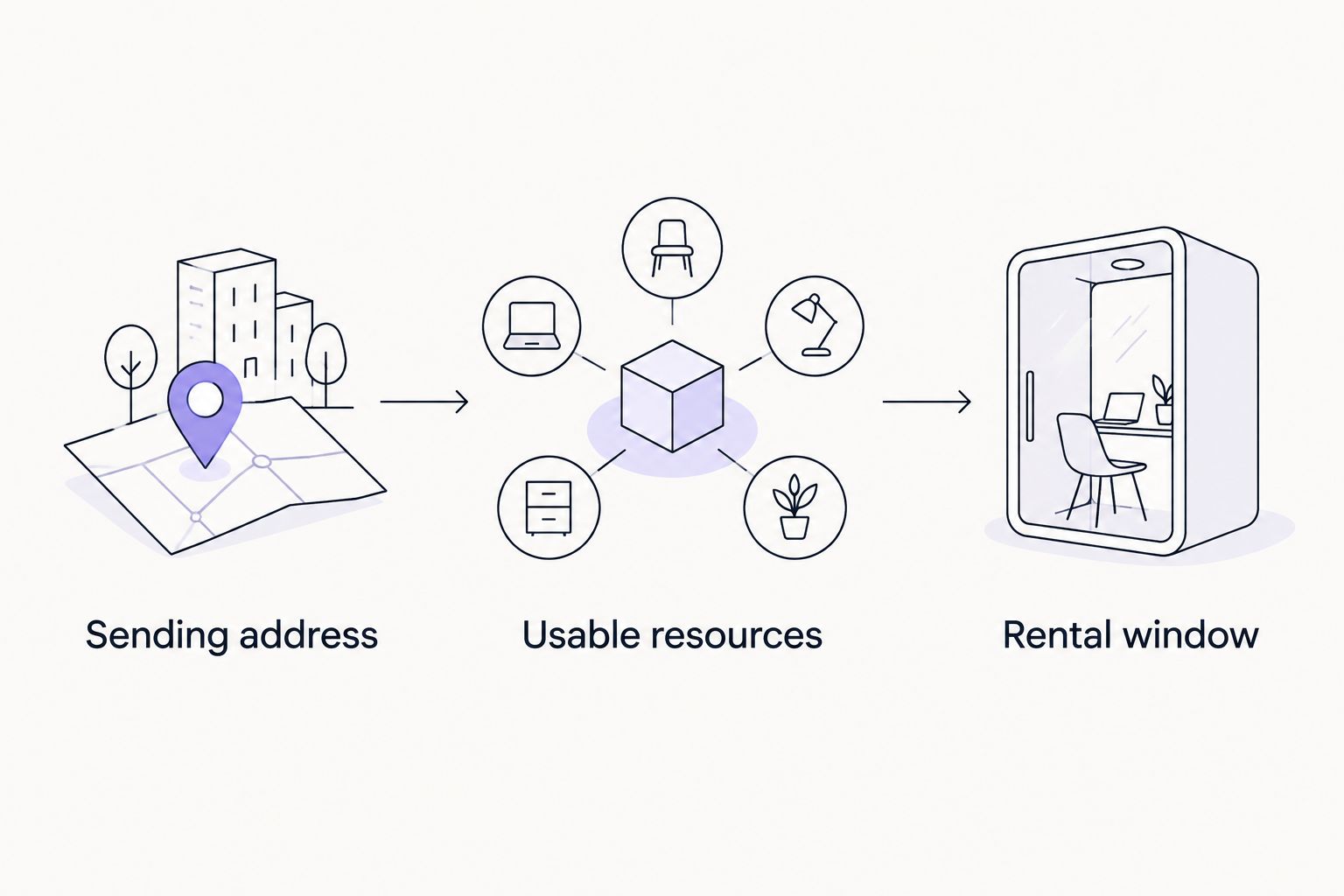
Sending address
Identify the account that will execute the contract call. If you are sending USDT from your wallet to an exchange deposit address, your wallet is the energy destination—not the exchange's receiving address.
Copy the address from the wallet you will use. Check it again in the order confirmation. Do not rely on an address saved for a different account or a previous customer payment.
Usable resources
Inspect the account's available energy after the rental is delivered. Then compare it with the estimate for the intended transaction. A successful earlier transfer does not establish that a later transfer has the same resource requirement.
TRON also uses bandwidth. Energy rental is not a blanket guarantee that every transaction requirement has been satisfied. If available resources are insufficient, transaction execution can consume TRX for the shortfall under the network's resource rules.
Rental window
Check when delegation begins and ends. Send within the applicable window rather than assuming that an earlier order remains usable indefinitely.
TRON's consumed energy recovers over 24 hours under its resource model. That recovery period is not a rental-duration promise: the service's delegation terms still determine how long the rented resources remain assigned to your account.
How the ranking works
This 2026 ranking prioritizes workflow fit, visible delivery, and wallet control. On-demand rental comes first because it suits a defined outgoing payment without requiring a scheduling system or software integration.
Scheduled rental ranks next for a settled payment session. API-based rental earns its place when software already controls the payment process. Assisted ordering addresses a different need: understanding the first rental without surrendering signing authority.
These positions are not provider performance scores. Check each provider against the same criteria before placing an order, especially its delivery evidence and failure terms.
Which rental service should you choose?
Choose on-demand wallet-address rental as the default for occasional outgoing TRC-20 USDT payments. It gives you a direct sequence: identify the sender, arrange energy, confirm resources, and send.
Choose scheduled rental when your payment session is ready. Choose API-based rental when a working integration needs a resource-ordering step. Choose assisted ordering when explanation—not automation—is the immediate requirement.
If you only receive client payments, first establish whether you have an outgoing transaction to support. Do not add energy rental to every invoice by habit. Nbtrx's Telegram business operations tools and your wallet's resource requirements belong to separate decisions.
FAQ
What's the best TRON energy rental model for a freelancer?
On-demand wallet-address rental is the default shortlist for a freelancer making occasional outgoing TRC-20 USDT payments. Verify that the energy reaches the sending account before signing the transfer.
Do I need TRON energy to receive a client's USDT payment?
You do not need to rent energy merely to receive a normal TRC-20 USDT payment. The sender executes the token contract and bears the transaction's resource requirements.
Is Telegram ordering better than ordering on a website?
Neither interface establishes that energy has been delivered. Choose a process that clearly identifies the sending account, explains the rental window, and lets you verify usable resources.
Does renting energy remove every TRON transaction requirement?
No, energy rental does not remove every transaction requirement. TRON also uses bandwidth, and you must check the intended transaction and the sending account's resources.
Should I rent energy to my customer's wallet address?
Rent energy to the account that will execute the outgoing transaction, not automatically to your customer's receiving address. For a transfer from your wallet, your wallet is the relevant sending account.
Is API-based energy rental better for occasional payments?
API-based rental is not the default choice for occasional manual payments. It fits an existing software-controlled workflow with delivery checks, retry controls, and exception handling.
Should an energy rental service ask for my seed phrase?
No, energy delegation does not require your seed phrase or private key. Reject a rental process that asks for either and keep transaction signing under your control.
One last thing
Rent for the transaction you are about to send, not the payment you just received. That distinction is the first check in your 2026 workflow. It prevents you from treating every paid invoice as an energy order and keeps the rental tied to an actual outgoing operation.