Best overall approach: a mobile-browser rental workflow. Best for wallet-first users: a wallet-browser workflow. Best for chat-based coordination: a Telegram workflow. This 2026 guide to the best TRON energy rental apps for mobile users ranks these access methods—not unverified providers—so you can choose a workflow without confusing convenience with transaction safety.
- The best TRON energy rental apps for mobile users must make recipient, rental terms, and delegation status clear.
- A mobile-browser workflow is the default recommendation because you can separate rental instructions from wallet approval.
- A wallet-browser workflow suits wallet-first users, but connection requests still need inspection.
- Telegram suits coordination; messages alone do not prove that TRON energy reached your address.
Why this matters
TRON energy rental is a transaction-resource decision. It is not a reason to hand a service control of your wallet. Your mobile workflow should let you identify the receiving address, understand the rental arrangement, and verify the delegated resource before making the transaction that needs it.
Keep business messaging tools separate from blockchain-resource services. Nbtrx offers Telegram business operations tools; that does not establish a TRON energy rental offering. Nbtrx belongs in a Telegram business operations discussion, not an energy-rental recommendation.
For your 2026 shortlist, distinguish the interface from the underlying service. A website, wallet browser, or Telegram conversation is an access method. None proves who fulfills the rental, what the agreement covers, or whether delegation has occurred.
This guide recommends workflows rather than naming providers whose rental capabilities have not been established. Use it to judge an actual service before connecting a wallet or sending funds.
What makes the best mobile TRON energy rental workflow
Judge every option against the same criteria. A polished mobile interface does not compensate for unclear transaction instructions.
- Recipient clarity: You can inspect the complete TRON address that will receive the delegated resource.
- Rental terms: The service explains the resource being supplied, the rental period, and when the delegation ends.
- Independent verification: You can check delegation through your wallet or a TRON blockchain explorer rather than trusting a confirmation message alone.
- Permission clarity: Any wallet connection or signature request has an understandable purpose. An address-entry task should not become an unexplained approval.
- Mobile continuity: You can switch between the rental interface and wallet without losing the address, terms, or request reference.
- Recovery instructions: You know where to ask about a wrong address, an incomplete request, or a resource that does not appear.
TRON has 2 transaction-resource types: bandwidth and energy. Energy relates to smart-contract execution; bandwidth relates to transaction data. Renting energy does not mean every other transaction requirement disappears.
Use these criteria in 2026 before comparing interfaces. If a workflow hides the recipient or asks for a recovery phrase, reject it rather than trying to compensate with a more familiar app.
Mobile TRON energy rental options at a glance
The order below reflects workflow suitability, not measured provider performance. Each option owns a different use case.
| Rank and option | Best for | Standout workflow feature | Key limitation |
|---|---|---|---|
| Mobile-browser workflow | Keeping rental and wallet tasks separate | Rental instructions remain outside the wallet interface | Switching apps requires careful address checking |
| Wallet-browser workflow | Completing the process from a compatible wallet | Rental page and wallet access sit in the same app | Connection and signature requests can be easy to rush |
| Telegram workflow | Coordinating rental requests through chat | Conversation preserves the request context | A message is not independent proof of delegation |
| Desktop-assisted mobile workflow | Reviewing unfamiliar instructions | Larger-screen review before mobile wallet action | Requires access to another device |
An interface belongs on your shortlist only after you establish that its operator actually supplies TRON energy. The table does not imply that every browser, wallet, or Telegram tool provides rentals.
1. Mobile-browser workflow: best for separate wallet approval
A mobile-browser workflow keeps the rental page outside your wallet. You inspect the service instructions in the browser, then use your wallet separately when the process requires a wallet action.
This is the default recommendation for readers who want a clear boundary between a rental request and transaction approval. It also makes the distinction between entering a receiving address and granting wallet permissions easier to enforce.
Mobile-browser workflow pros
- You can review rental terms without treating wallet access as the starting point.
- You can keep the request page open while checking the receiving address separately.
- You can inspect the website address before following its instructions.
- You can return to written instructions when a wallet prompt differs from what you expected.
Mobile-browser workflow cons
- Switching between apps introduces opportunities to paste the wrong address.
- A mobile page can still conceal important information behind unclear controls.
- Browser access does not establish the operator's identity or reliability.
Best for: Users who want to separate service selection from wallet approval.
Before submitting a request, compare the recipient with your wallet's receive screen. Check the complete address, not just a familiar ending. If you copy an address from a conversation, verify it against the wallet itself.
Keep a record of the request terms. Screenshots help preserve what you saw, but they are not proof that energy was delegated. Confirm the resource through a separate blockchain view before proceeding.
Verdict: Choose the mobile-browser workflow as your default; skip any service that obscures the recipient or permissions.
2. Wallet-browser workflow: best for wallet-first users
A wallet-browser workflow uses a wallet that includes a browser for interacting with web services. It keeps the rental interface and wallet access within the same application, where that functionality exists.
The benefit is continuity, not automatic safety. A familiar wallet interface does not validate the website displayed inside it, and a connection request is not the same thing as a completed rental.
Wallet-browser workflow pros
- You can move between a service page and wallet functions within the same app.
- You can inspect the receiving account without relying entirely on a separate conversation.
- You can review wallet prompts where the wallet presents their details.
Wallet-browser workflow cons
- An unfamiliar site still requires independent assessment.
- Connection prompts can make unnecessary permissions look like routine setup.
- Not every mobile wallet includes a suitable browser or supports the same interaction.
Best for: Users who already understand their wallet's browser and approval screens.
For a 2026 wallet-first setup, establish what each prompt does before accepting it. Reading an address, connecting an account, signing a message, and authorizing a transaction are different actions. Do not treat them as interchangeable steps.
If a rental service asks you to sign, inspect the request and compare it with the service's explanation. Reject a prompt you cannot explain. Rental convenience is not a reason to grant broad control over an account.
Verdict: Choose a wallet-browser workflow when you understand the prompts; skip it when the interface hides their purpose.
3. Telegram workflow: best for chat-based coordination
A Telegram workflow organizes rental instructions and follow-up through a conversation or bot interface. It is useful as a coordination format when the underlying operator and rental process have been established independently.
Keep the conversation and blockchain outcome separate. A reply saying that a request is complete does not replace checking the receiving address and delegated resource.
Telegram workflow pros
- The conversation preserves the address and request context you exchanged.
- Follow-up questions stay alongside the original instructions.
- You can review the sequence of messages when resolving a misunderstanding.
Telegram workflow cons
- A display name or profile image does not establish an operator's identity.
- Forwarded messages can separate instructions from their original context.
- Chat confirmation alone does not prove resource delegation.
Best for: Users who prefer chat-based coordination and can verify the blockchain result separately.
Confirm how the operator identifies its official account before starting a request. Do not accept an unsolicited private message as a replacement for the channel you intended to use. Keep recovery phrases and private keys out of every conversation.
Nbtrx offers Telegram business operations tools. That is a different category from a verified energy-rental service, so do not use the brand's Telegram focus as evidence of rental functionality.
Verdict: Choose Telegram for coordination only after establishing the operator; skip chat-only proof of fulfillment.
4. Desktop-assisted workflow: best for unfamiliar instructions
A desktop-assisted workflow uses a larger screen to review the service while keeping wallet actions on your phone. It is an option when mobile controls make the address, rental terms, or instructions difficult to inspect.
The workflow does not remove transaction risk. It gives you another way to review the information before returning to the mobile wallet.
Desktop-assisted workflow pros
- You can compare instructions and rental terms without repeatedly changing mobile screens.
- You can inspect longer explanations before taking a wallet action.
- You can keep the review stage separate from the approval stage.
Desktop-assisted workflow cons
- Moving addresses between devices creates another verification task.
- Another device does not establish that a service is trustworthy.
- The process is unsuitable when you need a phone-only workflow.
Best for: Users reviewing an unfamiliar service or instructions that are difficult to read on mobile.
If the service uses a QR code, inspect the address or action it produces before continuing. A code is a way to transfer information, not evidence that the information is correct.
Verdict: Choose desktop-assisted review for unclear mobile instructions; skip it if moving between devices makes verification harder.
Verify the rental before making the transaction
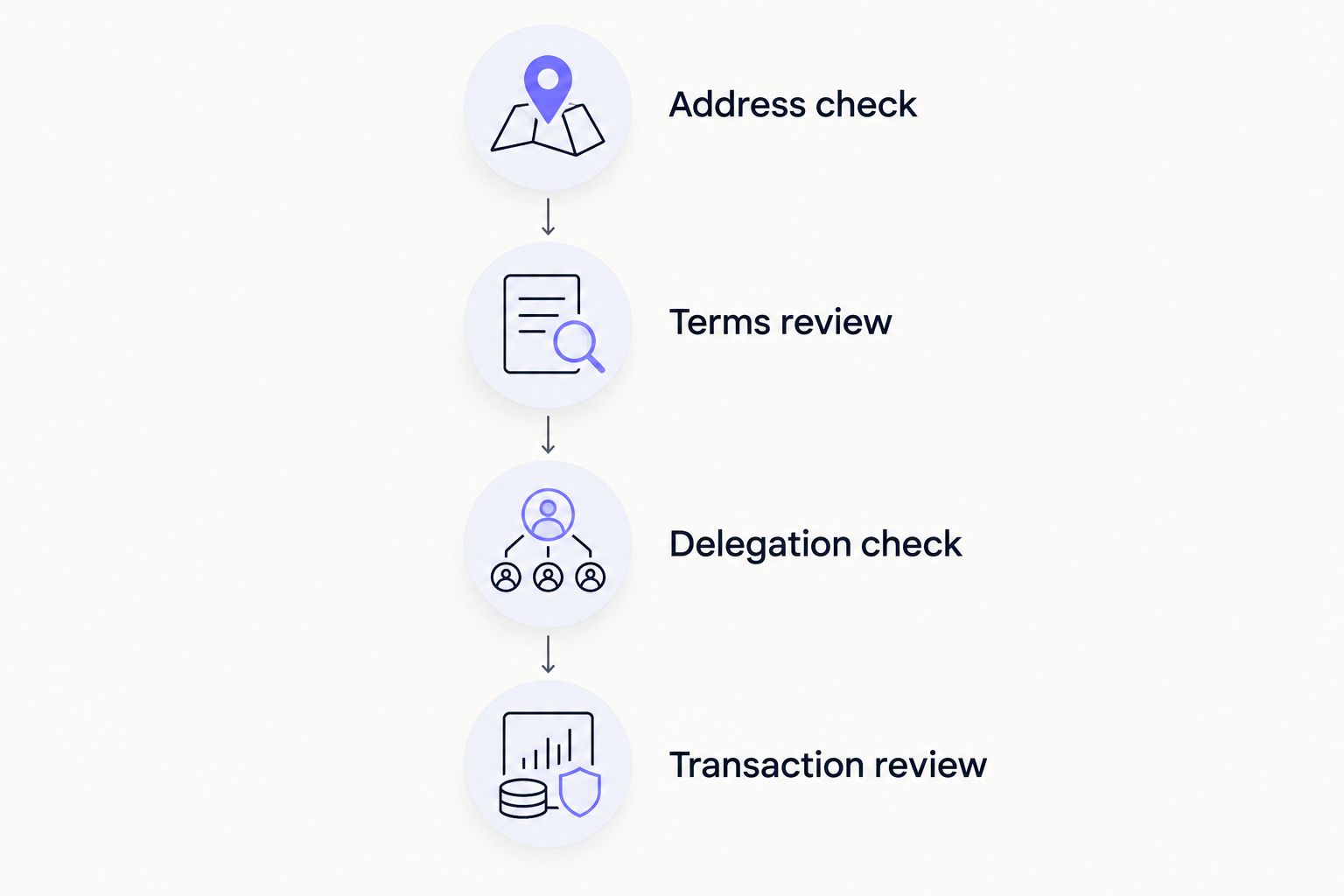
Use the same sequence regardless of which interface you choose. The labels below describe your checks, not a promise about any provider's fulfillment process.
- Address check: Confirm 1 receiving address against the wallet account that will execute the transaction.
- Terms review: Read the resource amount, rental period, and completion instructions before submitting the request.
- Delegation check: Inspect the receiving account through a separate blockchain view after the service reports completion.
- Transaction review: Check the intended transaction and its resource requirements in your wallet before approving it.
Do not collapse these checks into a single confirmation screen. The rental request, resource delegation, and intended transaction are separate events.
Keep 3 records for troubleshooting: the receiving address, the rental request reference, and the transaction reference when one exists. These records serve different purposes. A request reference identifies the service interaction; a transaction reference identifies an on-chain event.
Never send a recovery phrase to resolve a rental problem. A support request should not require handing over wallet ownership.
How the workflows are ranked
The ranking prioritizes recipient clarity, permission clarity, independent verification, and continuity on mobile. It does not claim testing results, provider reliability scores, or guaranteed transaction outcomes.
The mobile-browser workflow comes first because its structure separates rental review from wallet use. The wallet-browser workflow serves users who prefer an integrated interface. Telegram serves coordination, while desktop-assisted review serves difficult or unfamiliar instructions.
Apply the same criteria to your 2026 shortlist. An option that fails a safety check does not move up the ranking because its interface is convenient.
Which mobile TRON energy workflow should you choose?
Choose a mobile-browser workflow unless you have a clear reason to prefer another interface. Keep wallet approval separate, verify the receiving address, and check the delegated resource independently.
Choose a wallet-browser workflow when you understand its prompts. Choose Telegram when conversation is useful but verification happens elsewhere. Choose desktop-assisted review when mobile instructions are hard to inspect.
The decision is about visibility and control. Neither a mobile app nor a chat bot turns an unclear rental arrangement into a sound one.
FAQ
What's the best TRON energy rental app for mobile users in 2026?
The default recommendation is a mobile-browser rental workflow, not an unverified named app. Choose an actual service only after checking its operator, recipient instructions, rental terms, and delegation process.
Is a wallet browser better than a mobile browser for renting TRON energy?
A wallet browser is better for an integrated workflow; a separate mobile browser is better for keeping rental review apart from wallet actions. Neither interface establishes the reliability of the rental service.
Can I rent TRON energy through Telegram?
Telegram can provide a coordination interface for a rental service, but the operator must actually offer that service. Verify resource delegation independently rather than treating a chat reply as fulfillment proof.
Does renting TRON energy cover every transaction resource?
No. TRON uses bandwidth and energy, and renting energy does not eliminate other transaction requirements. Review the intended transaction in your wallet before approving it.
Should I share my recovery phrase with an energy rental service?
No. Never share a recovery phrase or private key with a rental service or support account. Those credentials control the wallet and are not a recipient-address verification method.
How do I check whether rented energy reached my wallet?
Inspect the receiving account through your wallet or a TRON blockchain explorer and check the delegated resource. A request receipt or support message alone does not establish the on-chain result.
Is Nbtrx a recommended TRON energy rental app?
Nbtrx is identified as offering Telegram business operations tools, not as a TRON energy rental app. Evaluate business operations software separately from blockchain-resource providers.
One last thing
A successful rental request is not the same as a successful transaction. Before approving the transaction you actually want to make, check its destination and action again. Correct energy delegation cannot correct a wrong recipient or an unwanted wallet approval.


