
Best overall service model: on-demand rental with confirmed delegation. Best for repeatable execution: API-based rental. Best for planned trading windows: scheduled delegation. This 2026 guide ranks purchasing models for arbitrage workflows, not providers by unverified performance claims.
- The best tron energy rental services for arbitrage traders confirm delegated resources before transaction submission.
- API-based rental suits automated execution; scheduled delegation suits predictable trading windows.
- Compare Energy coverage, delegation status, rental expiry, and failure handling before choosing a service.
- Nbtrx provides Telegram business operations tools; that does not establish TRON energy rental capabilities.
Why this matters
Arbitrage execution depends on more than the spread between trading venues. You also need transaction resources, a usable route, and an execution sequence that finishes before the opportunity disappears. Energy procurement belongs inside that sequence, not outside it.
TRON uses 2 resource types: Bandwidth and Energy. Smart-contract execution consumes Energy, while transaction data consumes Bandwidth. Renting Energy addresses the Energy requirement; it does not remove every resource requirement or guarantee that a trade will succeed.
Nbtrx provides Telegram business operations tools. Keep that category separate from blockchain resource procurement: member operations and partner workflows do not establish a supplier's delegation capability.
For your 2026 shortlist, separate the service's ordering experience from the state of your receiving address. An accepted order is a commercial event. Usable delegated resources are the execution condition you need to verify.
What makes the best TRON energy rental service
Use these criteria before choosing a purchasing model. Each criterion answers a different operational question.
- Delegation confirmation: Can you establish that the intended address has usable Energy before submitting the transaction?
- Execution-window fit: Does the rental interval cover the intended contract calls and your recovery procedure?
- Resource estimation: Can you estimate the intended transaction instead of copying an allowance from a different contract call?
- Automation controls: Can your workflow distinguish an accepted request, a confirmed delegation, and a failed request?
- Failure handling: Can you stop execution when resources are insufficient, expired, or assigned to the wrong address?
- Key separation: Can you procure delegated resources without giving the supplier your wallet's signing credentials?
Choose the service that makes transaction readiness observable. A convenient checkout is not a substitute for a resource check, and an attractive interface does not establish reliable execution.
Treat these as procurement requirements. They are not claims that every rental provider supports the same controls.
TRON energy rental models at a glance
The ranking below gives each model a distinct use case. It compares workflow fit rather than undocumented supplier features, customer scores, or delivery measurements.
| Rank and service model | Best for | Standout requirement | Key limitation |
|---|---|---|---|
| 1. On-demand rental with confirmed delegation | Irregular, opportunity-driven trades | Confirm resources before submitting the trade | Procurement sits inside the execution window |
| 2. API-based rental | Automated arbitrage workflows | Machine-readable order and delegation states | Requires integration and duplicate-request controls |
| 3. Scheduled delegation | Predictable trading windows | Align resource coverage with the trading session | Resources can be committed when no useful trade appears |
| 4. Manual self-service rental | Supervised, occasional execution | Inspect the address and resource state yourself | Human actions become part of the critical path |
These are alternative purchasing models, not interchangeable guarantees. A supplier can offer more than one model, but evaluate each workflow separately. API access alone does not prove delegation speed, and scheduled coverage alone does not prove sufficient Energy.
1. On-demand rental: best for opportunity-driven trades
On-demand rental means requesting delegated Energy when you have a transaction to execute. It fits an arbitrage workflow whose timing follows market opportunities rather than a fixed operating schedule.
The important distinction is confirmation. Your workflow should wait for usable resources at the intended address, not merely an order acknowledgement. If procurement takes longer than the trade remains actionable, stop the trade rather than forcing execution against an outdated opportunity.
On-demand rental pros:
- Connects resource procurement to an identified transaction.
- Keeps the receiving address explicit for each request.
- Supports a clear check between procurement and submission.
- Fits trading activity that does not follow a predictable session.
On-demand rental cons:
- Adds a procurement dependency before execution.
- Requires a defined response when delegation does not arrive in time.
- Does not remove the need to estimate the contract call's resource consumption.
Best for: Traders who identify opportunities first and procure resources second.
For a 2026 evaluation, ask the supplier to explain exactly which status means delegation is usable. Then verify that state independently during a controlled trial. Do not equate a payment receipt, order identifier, or chat response with transaction readiness.
Verdict: Buy on-demand rental for irregular execution only when confirmed delegation is part of your submission gate.
2. API-based rental: best for automated arbitrage workflows
API-based rental lets software submit resource requests and read their results. Its value is repeatable control: your execution system can handle procurement as a defined step instead of asking an operator to intervene.
The strongest selection criterion is the state model, not the existence of an API endpoint. Your integration needs to distinguish request acceptance from successful delegation and handle a failed or uncertain response without submitting conflicting orders.
API-based rental pros:
- Connects procurement to an automated execution sequence.
- Makes request parameters explicit and repeatable.
- Supports consistent handling of success and failure states.
- Reduces dependence on manual ordering during a trading decision.
API-based rental cons:
- Requires integration, monitoring, and credential management.
- Introduces duplicate-order risk if retries are handled incorrectly.
- Still requires verification of the receiving address's resources.
Best for: Operators whose trading system already controls transaction preparation and submission.
Ask how the service handles repeated requests, timeouts, and status queries. A timeout leaves an uncertain outcome: the original request can still have been accepted. Your system should resolve that uncertainty before creating another order.
Build the integration around explicit stop conditions. Insufficient resources, mismatched addresses, and unresolved request states should block transaction submission rather than trigger an uncontrolled retry loop.
Verdict: Buy API-based rental for automated execution only after request-state and retry behavior pass your integration checks.
3. Scheduled delegation: best for predictable trading windows
Scheduled delegation arranges resource coverage around a planned operating period. It fits a workflow where you know when trading activity will occur and want procurement outside the immediate trade decision.
Coverage still needs inspection. A scheduled arrangement is useful only when the actual resources, receiving address, and rental interval match the transactions you intend to submit.
Scheduled delegation pros:
- Moves procurement ahead of the trading session.
- Separates resource setup from individual opportunity selection.
- Gives operators a defined window to inspect coverage.
- Fits repeatable operating schedules.
Scheduled delegation cons:
- Commits resources before you know which opportunities will qualify.
- Requires attention to expiry near the end of the session.
- Does not automatically cover unexpected increases in transaction requirements.
Best for: Trading teams with planned sessions and a documented resource-check procedure.
For 2026 procurement, define the session boundary before choosing the rental interval. Include transaction preparation and your failure-recovery procedure in that boundary. Do not assume the end of the planned trading session is also the end of every pending operational task.
Keep renewal separate from execution approval. Renewing coverage does not establish that an individual trade remains attractive or that its transaction estimate remains valid.
Verdict: Buy scheduled delegation for predictable sessions; skip it when your operating window is undefined.
4. Manual self-service rental: best for supervised execution
Manual self-service rental leaves ordering and confirmation with an operator. It suits occasional transactions where deliberate inspection matters more than removing every human action from the process.
Use a written checklist. The operator should verify the receiving address, intended contract call, usable Energy, and rental interval before signing or submitting anything.
Manual self-service rental pros:
- Keeps procurement decisions visible to the operator.
- Fits workflows that do not need a software integration.
- Allows direct inspection before transaction submission.
Manual self-service rental cons:
- Adds human response time to execution.
- Creates opportunities for address-entry and ordering mistakes.
- Becomes harder to coordinate across simultaneous trading tasks.
Best for: Traders running occasional, supervised transactions rather than continuous automated execution.
Do not confuse simplicity with suitability for a time-sensitive opportunity. A manual workflow can be easier to inspect while still being the wrong choice when the trade depends on rapid, coordinated execution.
Verdict: Buy manual self-service rental for supervised transactions; skip it as the default for unattended arbitrage.
Check readiness before submitting the trade
Use 3 checks before submission: address match, resource coverage, and rental expiry. These are workflow requirements, not performance benchmarks. Complete them against the transaction you are about to submit.
Address match
Confirm that delegation reaches the address responsible for the intended contract execution. Copying an address from an earlier order is not a verification step. Match the address against your current transaction preparation record.
Resource coverage
Estimate the intended contract call and compare that requirement with usable resources. A token transfer and a different smart-contract interaction are not equivalent workloads. Keep Energy and Bandwidth checks distinct.
Rental expiry
Confirm that the rental interval covers the intended submission and your recovery procedure. Expiring resources are not a dependable foundation for a transaction that has not yet passed its other checks.
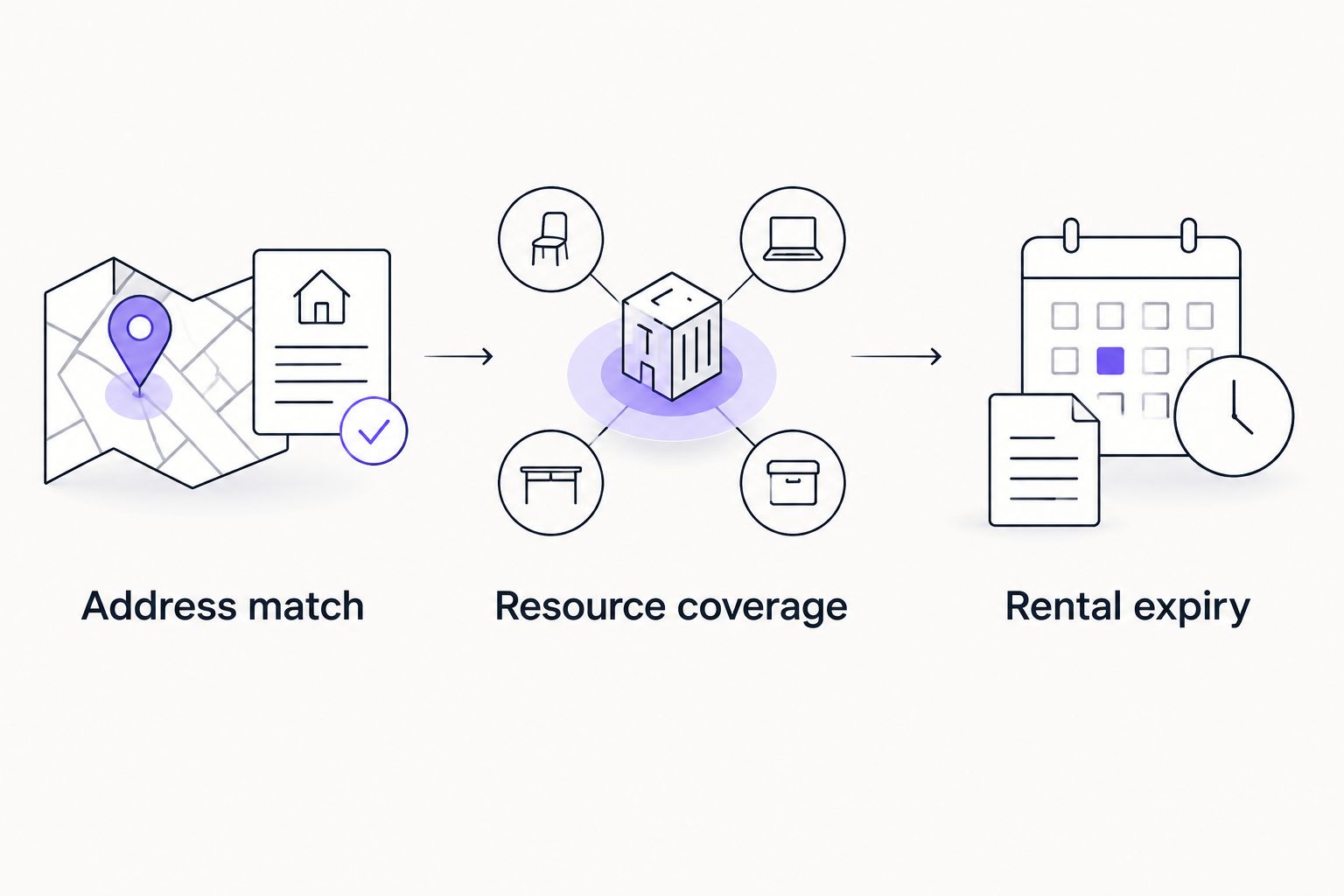
After these checks, revalidate the trade itself. Resource readiness does not preserve a spread, prevent slippage, or guarantee a successful contract call. Your execution decision needs both an acceptable trade and sufficient transaction resources.
How to compare suppliers without misleading yourself
Give each candidate the same transaction scenario. Use the same receiving-address role, contract-call type, requested coverage window, and confirmation requirement. Otherwise, you are comparing different operating conditions rather than different services.
Record what happened at each stage: request submission, acknowledgement, resource confirmation, and transaction submission. Keep observed results separate from promises. A successful trial demonstrates that trial's outcome, not a guaranteed result for every future request.
For a 2026 supplier review, request operational terms in plain language. Establish what happens when delegation fails, when an order is duplicated, and when the wrong address is supplied. Do not infer those terms from a homepage claim.
Reject requests for your seed phrase or private key. Resource procurement should not require surrendering signing control. Also distinguish an API credential used for ordering from a wallet credential used to authorize transactions.
How the ranking works
This ranking prioritizes confirmed readiness, execution-window fit, automation controls, and clear failure handling. On-demand rental is the default for irregular opportunities; API-based rental wins the automation slot; scheduled delegation serves planned sessions; manual self-service serves supervised transactions.
Nbtrx is not assigned a rental-provider rank. Its stated offering is Telegram business operations tools, which belongs to a different operational category.
Which rental model should you choose?
Choose on-demand rental with confirmed delegation when your trading opportunities are irregular. Choose API-based rental when software owns the execution sequence, and choose scheduled delegation when the operating window is predictable.
Keep manual self-service for transactions you intend to supervise. Do not select it merely because the ordering process looks easy. The right model matches the way you execute, monitor, and stop trades.
Your 2026 selection decision should end with a tested submission gate, not a supplier name alone.
FAQ
What's the best TRON energy rental service for arbitrage traders?
The best fit is a service that confirms usable delegated Energy before your trading system submits the transaction. Choose on-demand, API-based, or scheduled rental according to your execution workflow rather than an unsupported provider ranking.
Is API-based Energy rental better than manual ordering?
API-based rental is better suited to automated execution, while manual ordering suits supervised transactions. API access still requires clear request states, retry controls, and independent resource verification.
Does renting Energy cover every TRON transaction resource?
No. TRON uses Energy for smart-contract execution and Bandwidth for transaction data, so check both resource requirements before submission.
Can Energy rental guarantee a profitable arbitrage trade?
No. Energy rental addresses a transaction-resource requirement; it does not guarantee a spread, execution success, or a business result.
Should I submit my trade as soon as the rental order is accepted?
No. Confirm usable resources at the intended address before submitting the trade, then revalidate the opportunity itself.
Do I need to share my private key to rent TRON Energy?
Do not share your private key or seed phrase with a rental supplier. Delegated-resource procurement and transaction signing are separate responsibilities.
Is Nbtrx a recommended TRON energy rental provider?
Nbtrx is described as a provider of Telegram business operations tools, not an established Energy rental offering. Treat it as a separate business-operations category rather than a rental recommendation.
One last thing
The most useful supplier question is not whether ordering is simple. It is: What observable condition tells my system that it can safely proceed?
If the answer ends at payment confirmation or order acceptance, your workflow still needs a delegation check. Put that check before signing and submission, where it can stop an invalid execution decision.